Spatio-Temporal Effects of County-Level Social Isolation on Prevalence of Diabetes across US Counties, 2012-2020
Abstract Body: Introduction: Despite persistent racial and/or ethnic disparities in the prevalence of diabetes observed in the US, limited research has examined the role of area-level processes, such as county-level social isolation, in diabetes. In particular, the temporal and local effects of social isolation on diabetes have remained unexplored.
Hypothesis: Higher county-level social isolation is locally and temporally related to higher diabetes prevalence over time.
Methods: County-level diabetes prevalence data were obtained from the 2012-2020 CDC United States Diabetes Surveillance System (n=3,199 counties). County-level (2012-2020) isolation index was calculated for White, Black, Hispanic, and Asian adults (range: 0-1, with higher scores indicating an unusually concentrated specific group of people, i.e., greater segregation). Spatio-temporal Gaussian mixed-effects models with random intercepts for county and year and a Matérn spatial correlation were used to estimate local-temporal relationships between social isolation and diabetes prevalence, adjusting for percentages of adults aged≥65 years, inactive, limited healthy food, poverty, and racial and/or ethnic composition.
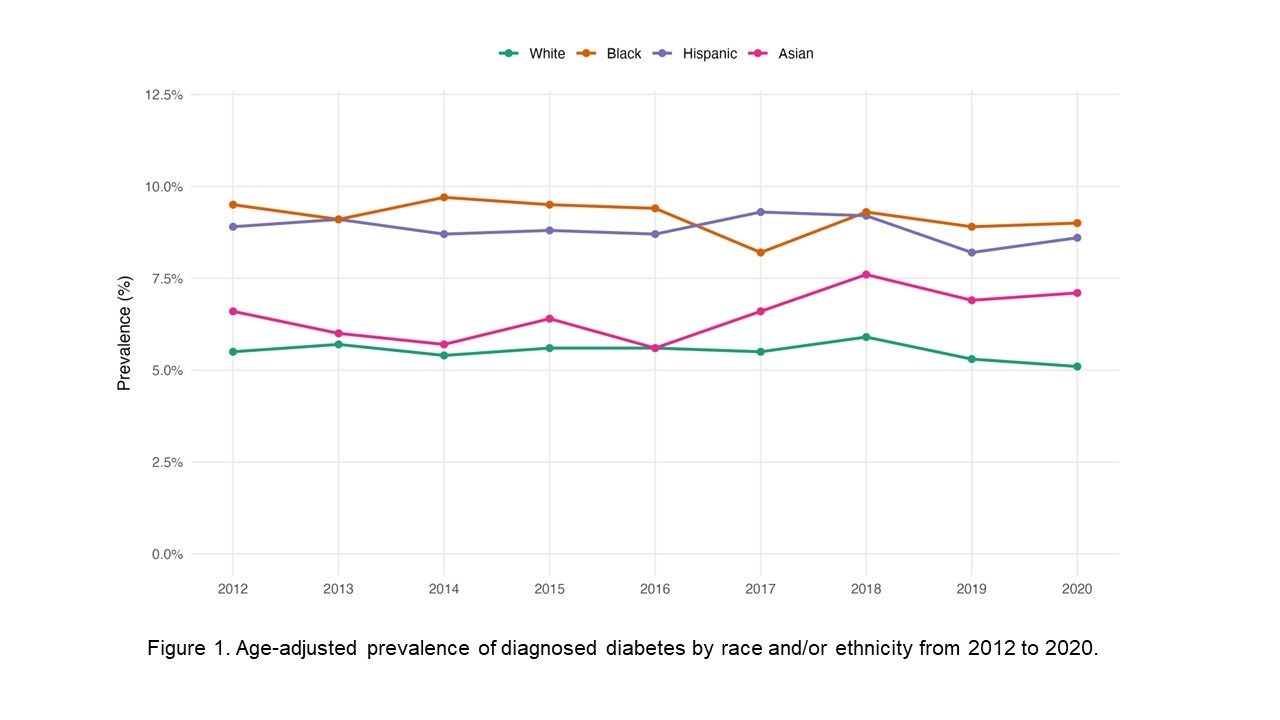
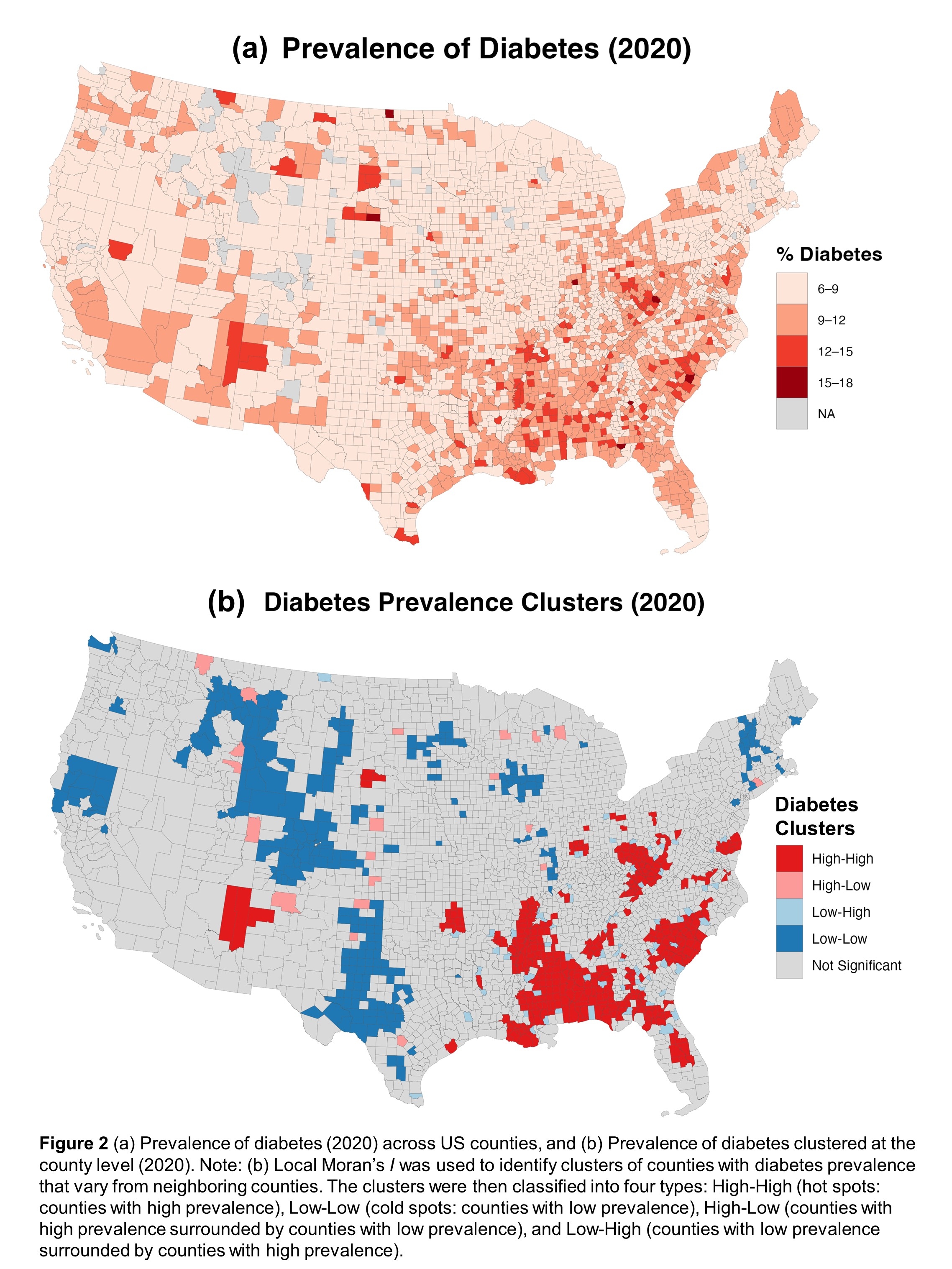
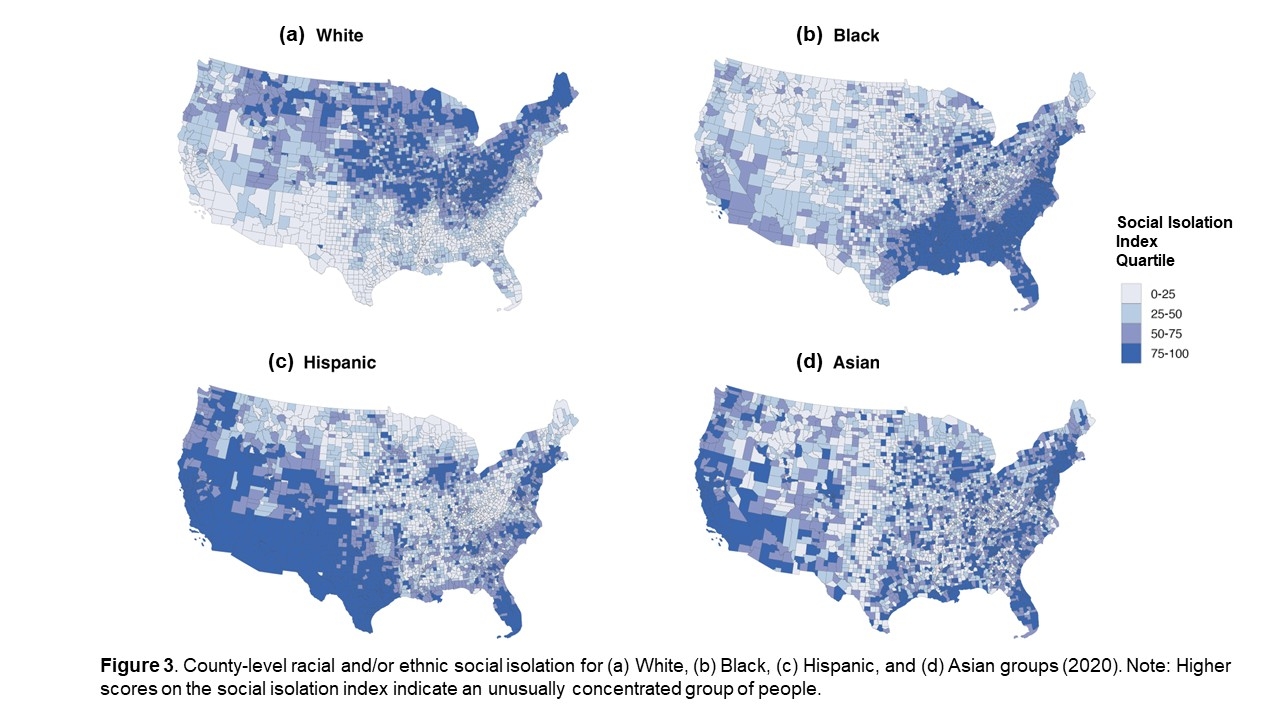
Results: The diabetes prevalence varied by race and/or ethnicity (2012-2020, Figure 1), and across counties (2020, Figure 2a) and clustered in specific regions (2020, Figure 2b). Social isolation also varied across counties by race and/or ethnicity (2020, Figure 3a-d). Random-effects standard deviations were stable across models: county=1.00-1.05 and year=0.06-0.07. During 2012-2020, higher social isolation among Asian, followed by Black and Hispanic adults, was related to a 3.22% (95% CI=2.02-4.42), 2.48% (95% CI=2.00-2.97), and 2.29% (95% CI=1.64-2.94) higher diabetes prevalence. In contrast, higher social isolation among White adults was associated with 0.87% (95% CI=0.33-1.40) lower diabetes prevalence.
Conclusion: Consistent with the hypothesis, Asian, Black, and Hispanic individuals living in highly isolated counties indicated higher diabetes prevalence, whereas the results for White adults did not confirm this relationship. The results underscore the strong need to elucidate how area-level social isolation shapes diabetes risk for specific populations, such as Asian, Black, and Hispanic adults. Public health and local efforts should prioritize high-risk communities to inform local interventions aimed at reducing racial and/or ethnic disparities in diabetes prevalence.
Tamura, Kosuke
(
National Institutes of Health
, Bethesda , Maryland , United States )
Neupane, Suresh
(
Georgia State University
, Atlanta , Georgia , United States )
Khan, Sana
(
National Institutes of Health
, Bethesda , Maryland , United States )
Hu, Lu
(
NYU Grossman School of Medicine
, New York , New York , United States )
Jagannathan, Ram
(
Emory University
, Atlanta , Georgia , United States )