Prevalence and Predictors of GLP-1 Receptor Agonist Use Among U.S. Adults with Diabetes: Findings from the National Health Interview Survey, 2024
Abstract Body: Background: Increasing evidence has shown marked differences in the uptake of glucagon-like peptide-1 (GLP-1) receptor agonists by racial, ethnic, and socioeconomic characteristics. We aimed to leverage novel, nationally representative data to further investigate these variations in the general U.S. population with diabetes.
Methods: Using cross-sectional data from the National Health Interview Survey (2024), we included adults aged ≥18 years with a self-reported history of diabetes and complete data on receipt of GLP-1 injectable medications (yes/no). We used multivariable logistic regression to examine the association between receipt of GLP-1 medications and selected sociodemographic and clinical characteristics (i.e., atherosclerotic cardiovascular disease, obesity, hypertension, and hyperlipidemia). Sample person weights were applied to produce nationally representative estimates.
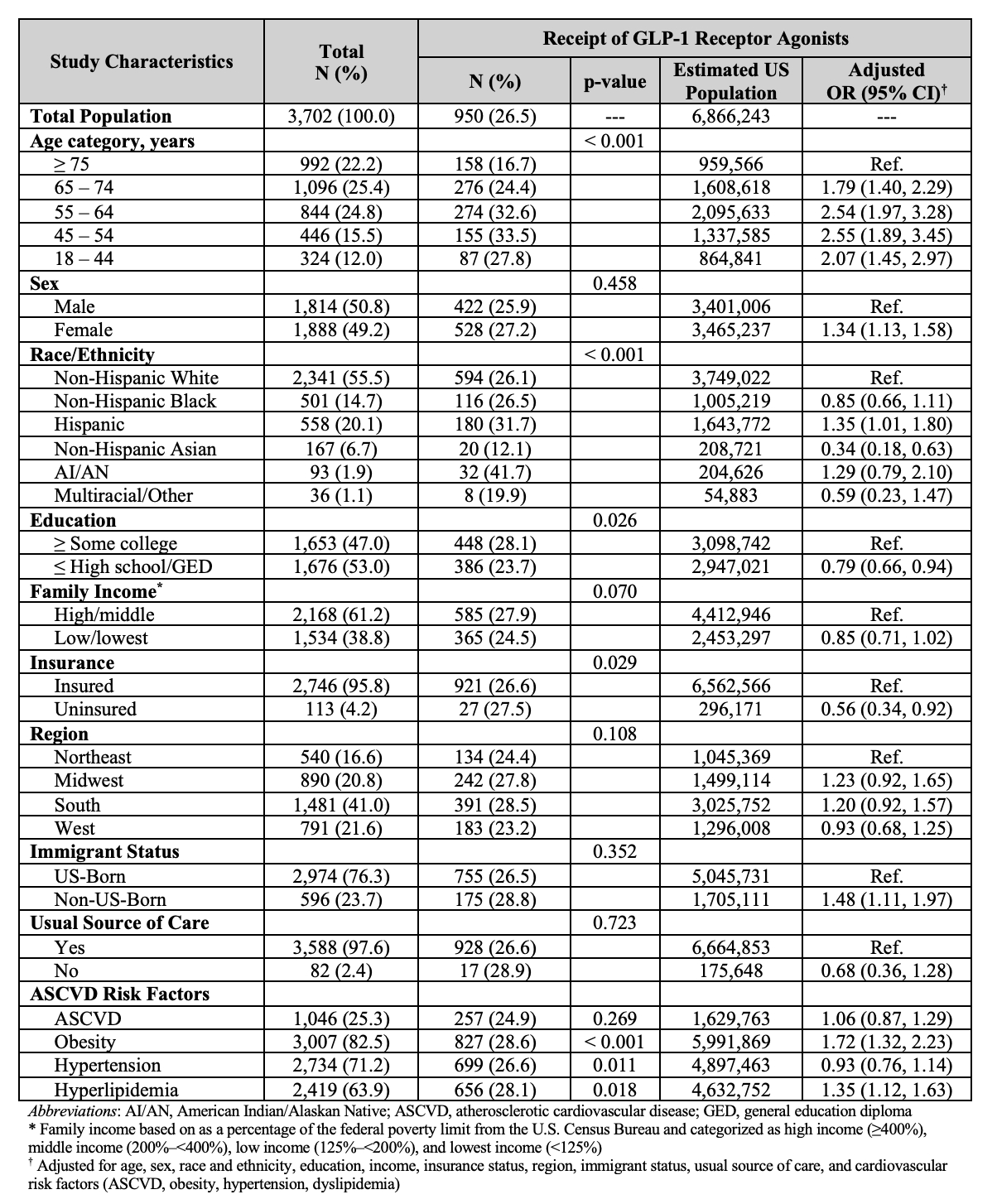
Results: Among 3,702 adults with diabetes (median age: 67.0 years; 49.2% women), 26.5% received GLP-1 medications, which represented nearly 6.9 million individuals with diabetes annually. The proportion of adults who received GLP-1 medications was particularly high among younger adults aged 45-54 years (33.5%), American Indian/Alaska Native (41.7%), and Hispanic individuals (31.7%). After adjusting for potential confounders, sociodemographic characteristics associated with decreased odds of receiving GLP-1 medications included non-Hispanic Asian race (aOR, 0.34 [95% CI, 0.18-0.63]), lower level of completed education (aOR, 0.79 [95% CI, 0.66-0.94]), and uninsured status (aOR, 0.56 [95% CI, 0.34-0.92]). Conversely, women (aOR, 1.34 [95% CI, 1.13-1.58]), Hispanic individuals (aOR, 1.31 [95% CI, 1.01-1.80]), and non-US-born adults (aOR, 1.48 [95% CI, 1.11-1.97]) had higher odds of receiving GLP-1 medications. Individuals with obesity (aOR, 1.72 [95% CI, 1.32-2.23]) and hyperlipidemia (aOR, 1.35 [95% CI, 1.12-1.63]) were also significantly more likely to report receiving GLP-1 medications.
Conclusions: In this nationally representative study of U.S. adults with diabetes, representing nearly 26 million individuals annually, more than 1 in 4 reported receiving GLP-1 injectable medications. Effective strategies are needed to increase equitable access to and uptake of these therapeutic agents in high-risk populations.
Katz, Miriam
(
Yale School of Medicine
, New Haven , Connecticut , United States )
Mszar, Reed
(
Yale School of Public Health
, New York , New York , United States )
Al-kindi, Sadeer
(
Houston Methodist
, Houston , Texas , United States )
Javed, Zulqarnain
(
Houston Methodist
, Houston , Texas , United States )
Jastreboff, Ania
(
Yale School of Medicine
, New Haven , Connecticut , United States )
Krumholz, Harlan
(
Yale School of Medicine
, New Haven , Connecticut , United States )
Lu, Yuan
(
Yale University
, New Haven , Connecticut , United States )
Nasir, Khurram
(
Houston Methodist
, Houston , Texas , United States )