Wearable Data Sharing Preferences for Research Purposes Among U.S. Adults: From Attribute Development to Interactive Dashboard for Research Study Design Optimization
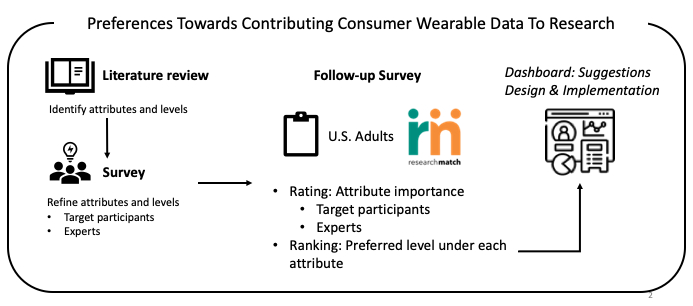
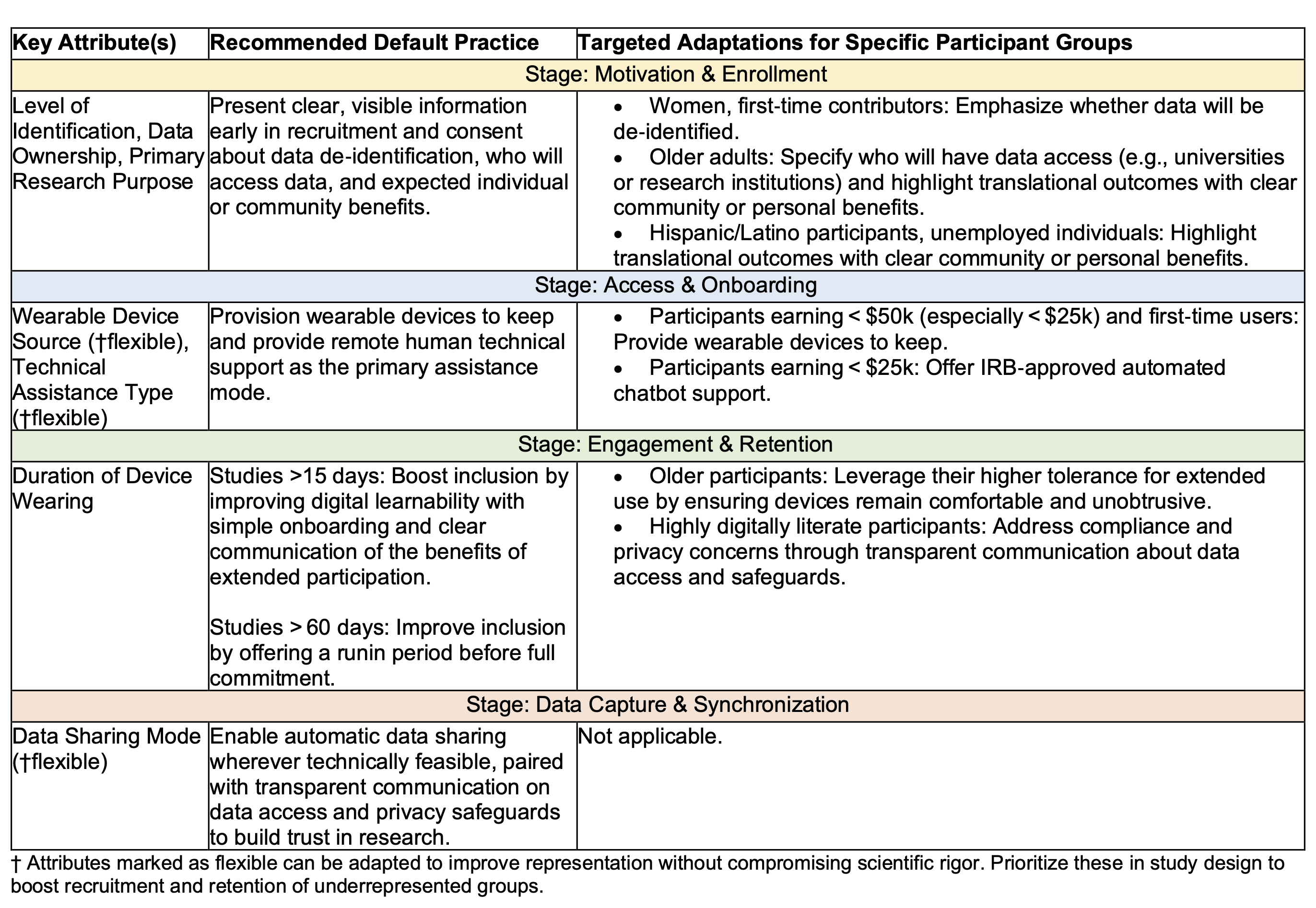
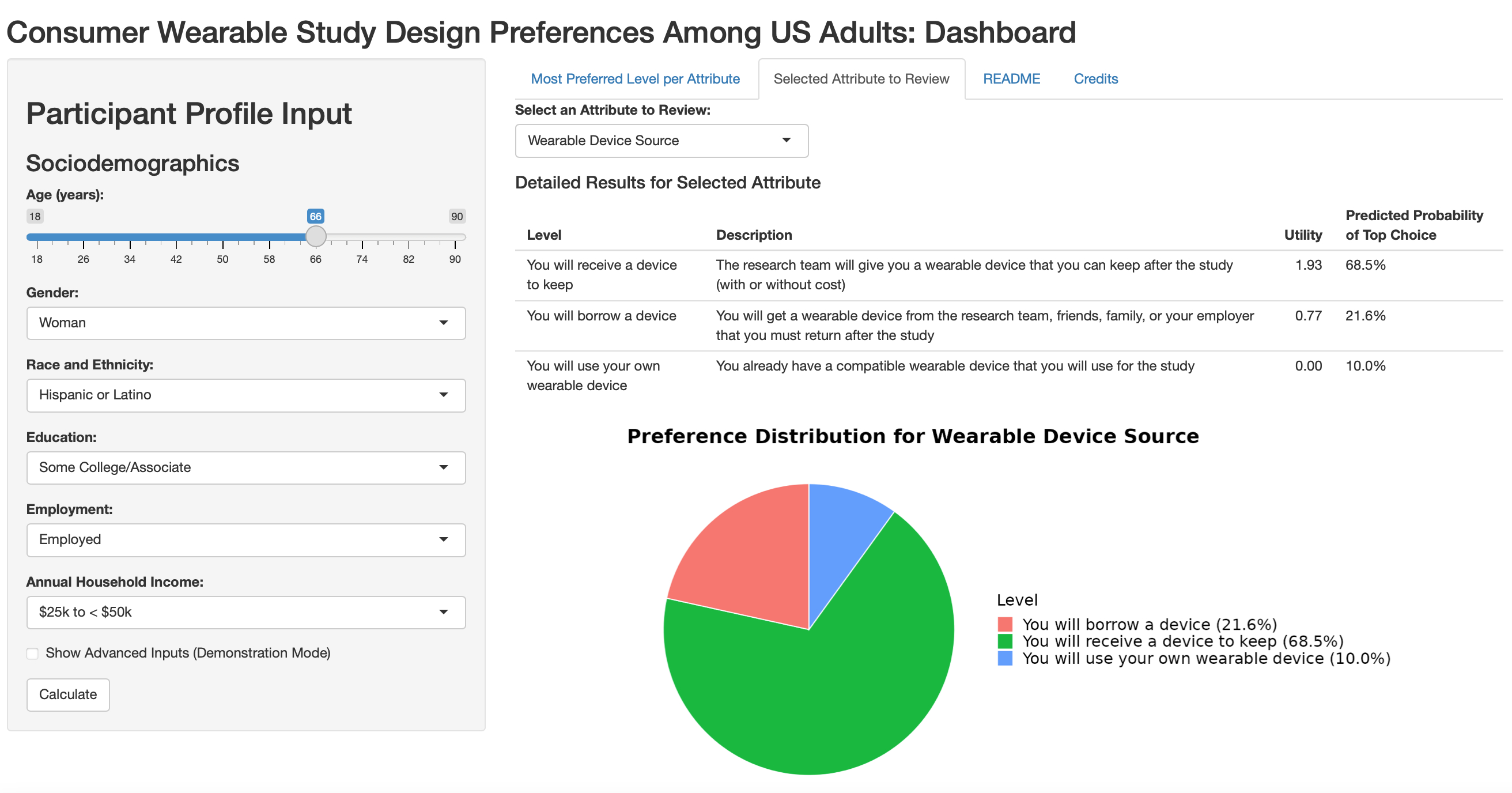
Abstract Body: Background: Consumer wearables such as Fitbit and Apple Watch are increasingly used in health research. Although surveys show high willingness among U.S. adults to share wearable data, actual participation is limited and skewed. Study design factors, such as wear-time requirements, consent formats, and data handling, may influence participation, yet little is known about how the general public prioritizes these features. We aim to assess U.S. adults’ priorities and preferences for study features influencing willingness to share wearable device data for health research. Methods: We conducted a web survey of U.S. adults from ResearchMatch.org, using literature review, clarity ratings, and expert input to refine 16 study attributes from 26 (Figure 1). Participants rated attribute importance and ranked preferences within levels. We used ordinal regressions to identify factors linked to higher importance ratings and rank-ordered logit models for preference predictors. The Johns Hopkins Medicine IRB approved the study (IRB00409571). Results: From the responses of 476 participants (median age 56; 27% racial/ethnic minority; 84% prior wearable users) and 11 domain experts who completed the survey, seven attributes emerged as key: level of identification, data ownership, research purpose, wear duration, device source, technical assistance, and data-sharing mode. Highest importance was assigned to data de-identification (median rating 9; 64% top score). Participants preferred de-identified data (92%), self-owned data (66%), receiving a device to keep (62%), remote human support (73%), and automatic sharing (80%). Importance varied by demographics: device source was more important for Hispanic (odds ratio 3.18 [95% confidence interval 1.05-9.67]) and Black participants (1.96 [1.03-3.75]). Preference for receiving a device to keep was stronger among lower-income participants (<$25k: 3.50 [1.33-9.25]; $25–50k: 2.88 [1.44-5.80]) and those without prior wearable use (4.51 [2.10-9.71]). Conclusion: Focusing on seven participant-prioritized attributes can simplify study design while improving inclusion. Recommendations include emphasizing de-identification, participant data ownership, and translational impact in recruitment, and tailoring engagement for underrepresented and lower-income groups (Table 1). A stage-based framework and interactive dashboard (https://wearhub.shinyapps.io/dashboard_shiny_wearpref/; Figure 2) provide actionable tools to support these strategies.
Song, Shanshan
(
Johns Hopkins School of Medicine
, Baltimore , Maryland , United States )
Ogungbe, Bunmi
(
Johns Hopkins University
, Baltimore , Maryland , United States )