Rising Burden of Endocarditis in OECD Nations: Demographic Shifts and Epidemiological Insights from 1990-2021
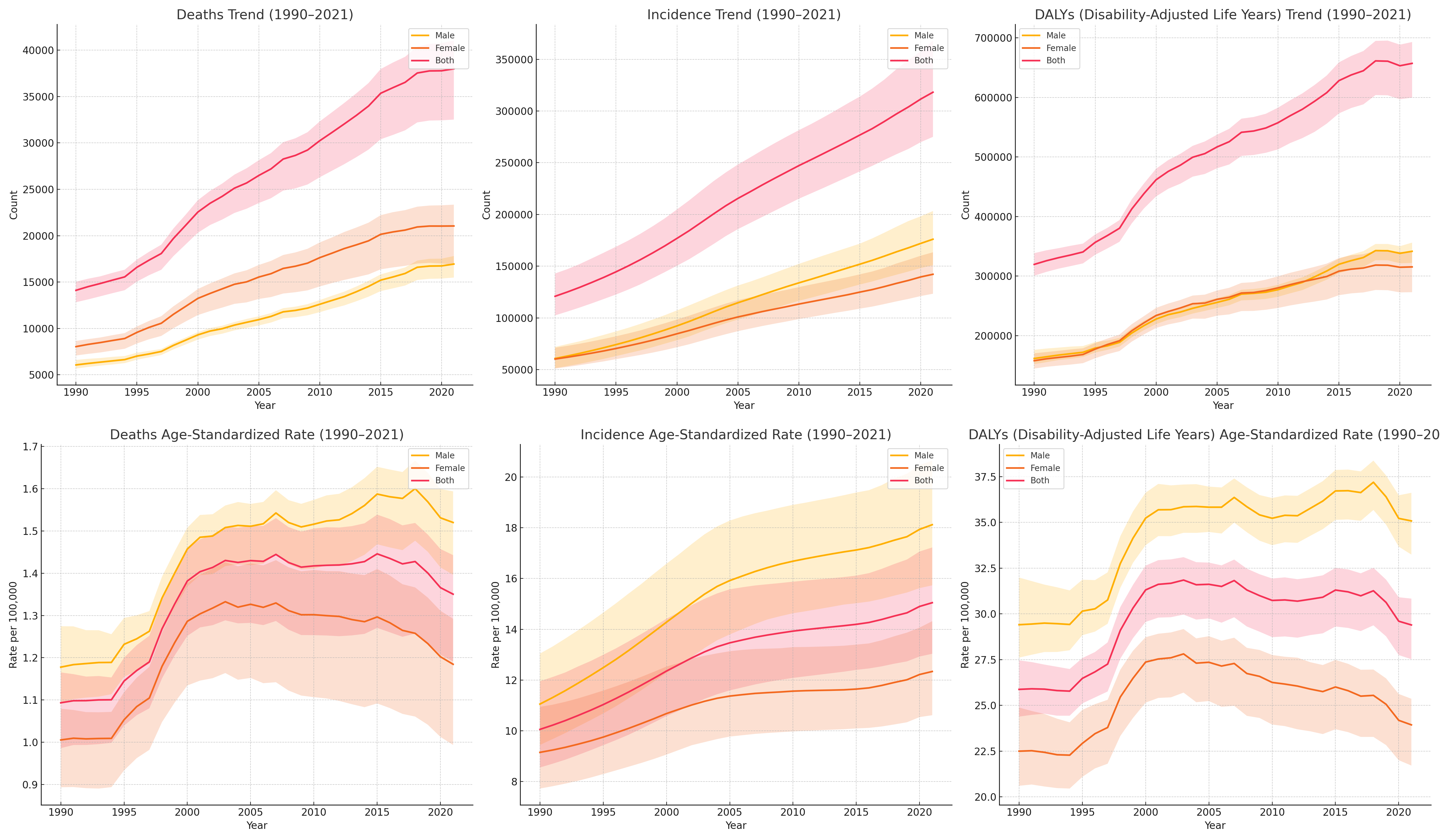
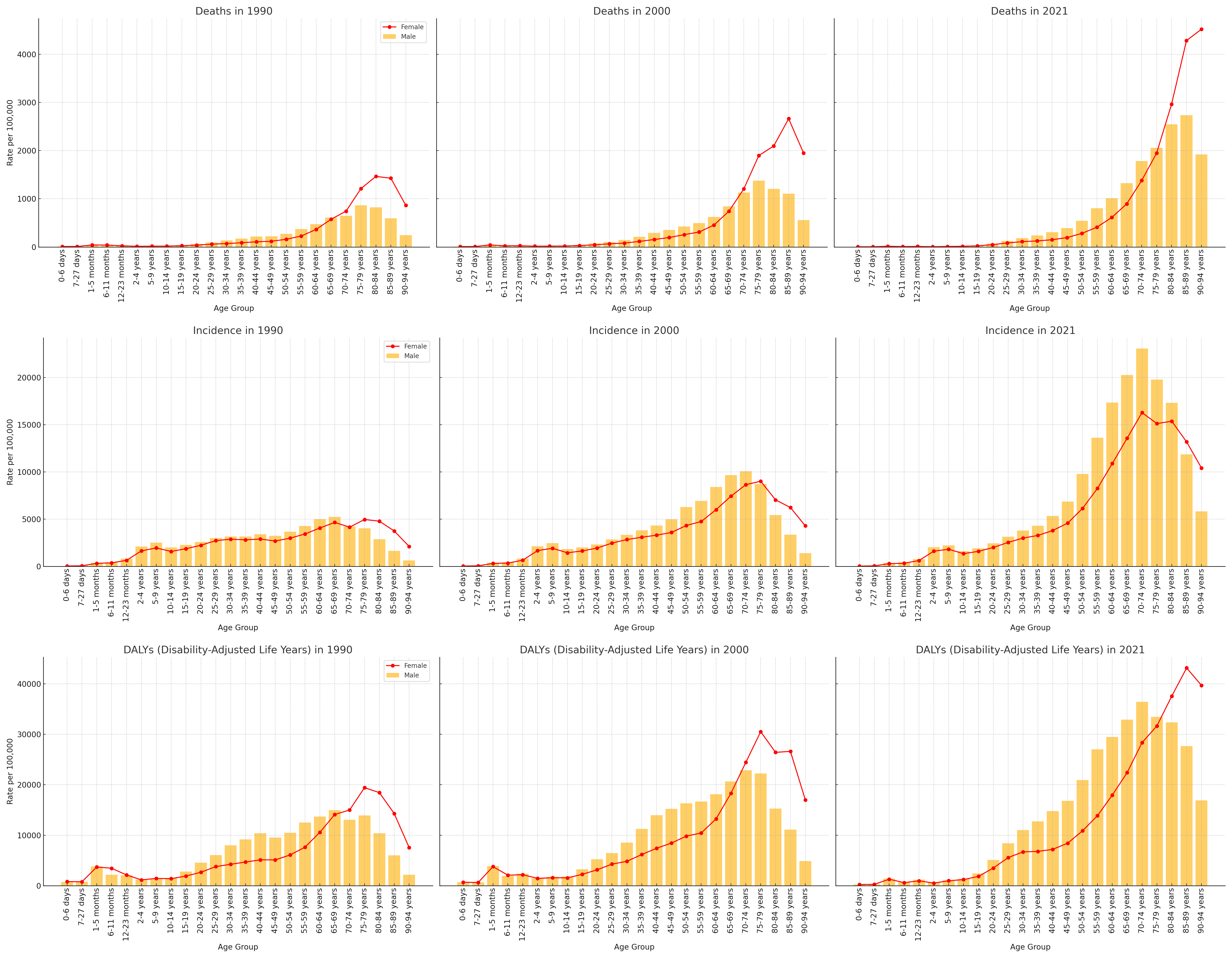
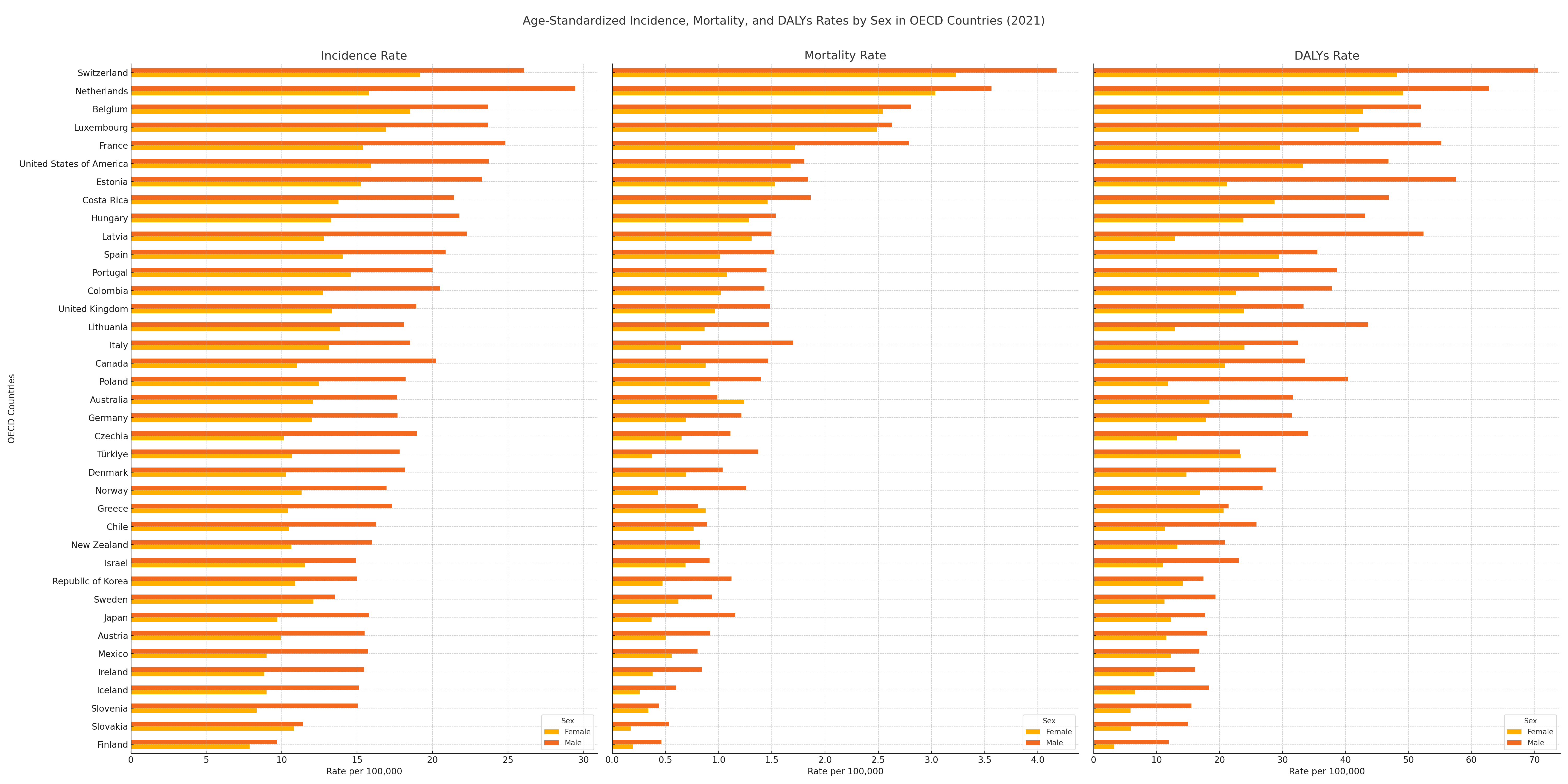
Abstract Body: Background: Endocarditis is associated with substantial morbidity and mortality, particularly in high-income settings. In OECD countries, its burden is exacerbated by aging populations, a higher prevalence of comorbidities, and the widespread use of invasive medical procedures, underscoring the need for targeted surveillance and robust health system responses. Methods: We estimated prevalence, incidence, mortality, and DALYs in 38 OECD countries from 1990-2021 using the global burden of disease study 2021 framework, which integrates standardized case definitions with data from national vital registration systems, hospital records, and epidemiological models. Age-standardized rates were calculated to ensure comparability over time and across countries. Temporal trends were evaluated using annual percentage change (APC) derived from log-linear regression models. All estimates are presented with 95% uncertainty intervals (UIs) and were stratified by sex, age group, and country to capture demographic and regional variations. Results: In 2021, OECD countries accounted for 30.51% of global new cases, 48.79% of global deaths, and 31.64% of total DALYs due to endocarditis. Between 1990 and 2021, the total prevalence increased from 50,244 (95% UI: 43,265–57,640) to 188,436 (159,128–218,790), deaths from 14,108 (12,824–15,039) to 37,985 (32,514–41,026), and DALYs from 319,658 (300,744–338,520) to 657,112 (599,608–692,976). The most significant increase in ASIR was observed in Switzerland (APC: +2.58%), followed by Chile (+2.40%), Netherlands (+2.24%), and Luxembourg (+1.98%). ASMR increased most in the United Kingdom (+4.89%), Netherlands (+4.70%), and Iceland (+4.29%), while the United States showed a slight decline (–0.11%). Age-wise, incidence rates rose by 117% in individuals aged 55+, 26% in those aged 20–54, and declined by 3% in individuals under 20 years. Similarly, mortality rates increased by 60% in the 55+ group, 34% in the 20–54 age group, and decreased by 47% in those under 20 years.
Conclusion: From 1990 to 2021, the burden of endocarditis in OECD countries rose sharply, driven by a growing impact among adults aged 55 and older. While several countries, including the UK and Netherlands, experienced steep rises in incidence and mortality, the USA showed a modest decline. These findings highlight the need for targeted prevention and improved clinical strategies to address the rising burden in aging populations.
Acharya, Sankalp
(
Monmouth Medical Center
, Long Branch , New Jersey , United States )
Khalil, Ghassan
(
Khartoum college of medical sciences
, Khartoum , Sudan )
Gopi, Gokul
(
Ascension Sacred Hearts,
, Pensacola , Florida , United States )
Rathi, Amandeep
(
Government medical college, Amritsar, Punjab, India
, Ambala city , India )
Desai, Hardik
(
Independent Public Health Researcher
, Ahmedabad , Gujarat , India )
Amin, Vishrant
(
JFK University Medical Center
, Milltown , New Jersey , United States )