
Logo

American Heart Association

  11
  0


Final ID: WE544

Rural Patient Populations Overestimate the Effect of Diet on Common Disease Development

Abstract Body: Background: Without proper informational couseling, past studies suggest that patients underestimate the effect of diet in chronic disease progression, specifically in gastrointestinal diseases and type 2 diabetes (T2D). It is unclear, however, the perception of the same patient population on the relative impact that proper diet can play on multiple different diseases. Understanding the complexity of these views and opinions, especially in a rural population, can help identify educational gaps and improve dietary counseling in rural areas.

Hypothesis: We hypothesize that a rural patient population will inaccurately estimate the effect of diet on the development of several common diseases, with considerable variation in perceived dietary impact across conditions.

Methods: This quantitative, cross-sectional, observational analysis utilized an online survey distributed via a HIPPA compliant platform to adults in rural Georgia. Patient responses were analyzed with descriptive statistics while single-sample t-tests assessed mean perception relative to evidence-based data by condition.

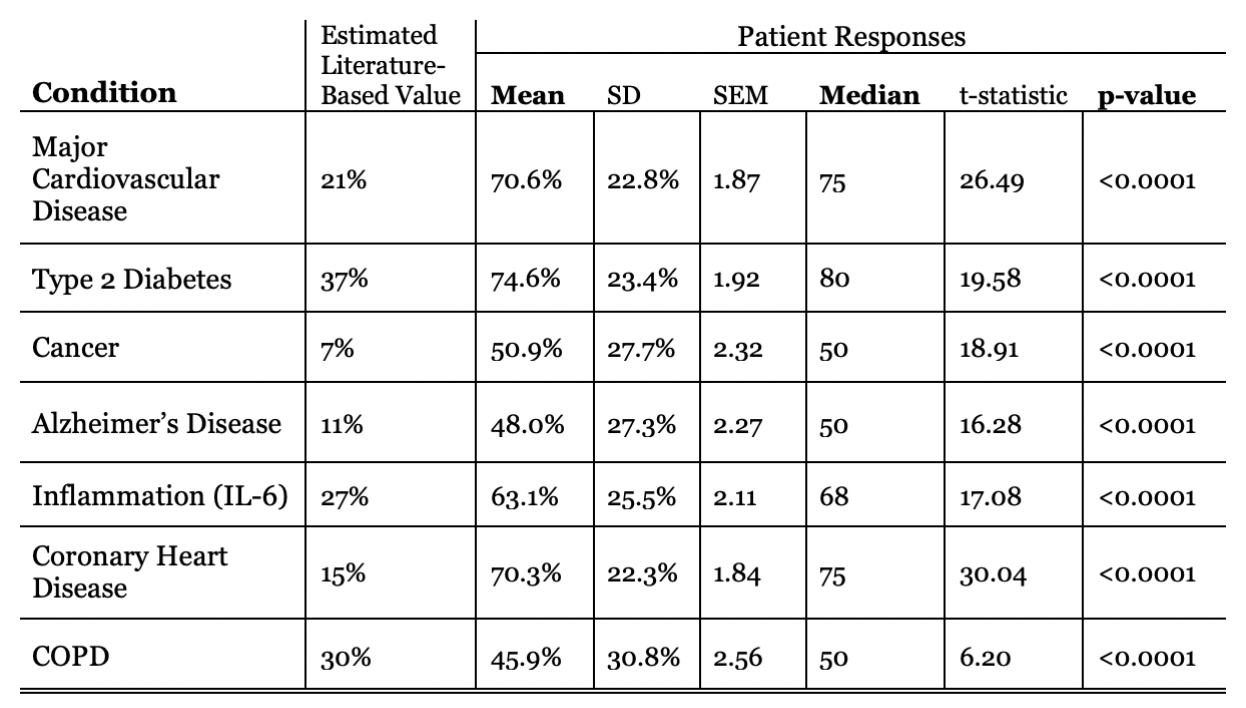
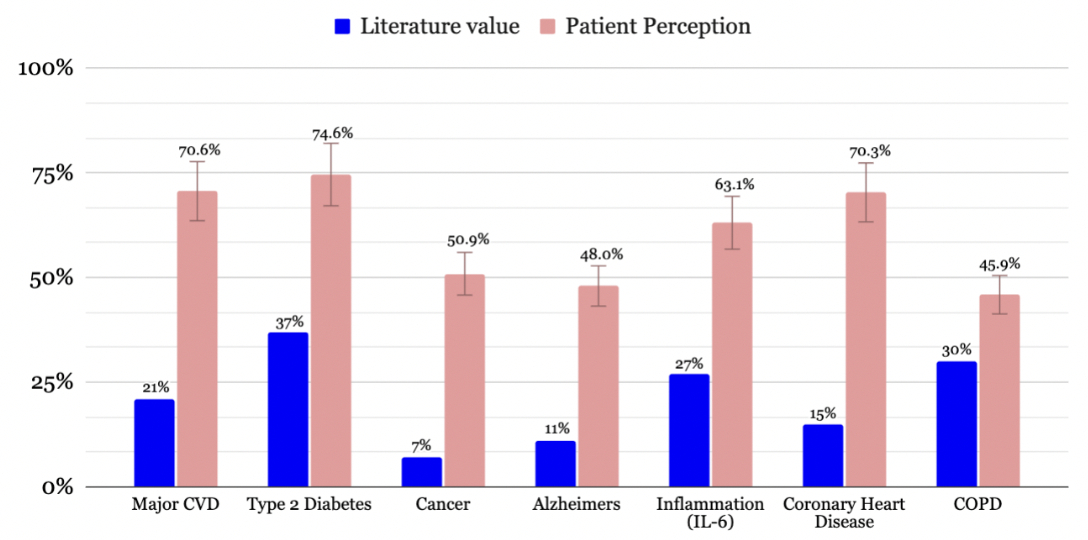
Results: Across all 7 chronic diseases studied, patients demonstrated a high perceived impact of diet, with the average patient responses higher than the literature-based value in all instances (Table 2). The highest mean perceived diet based risk was for T2D (74.6%) and Major Cardiovascular Disease (CVD) (70.6%). Compared to evidence-based literature values, the magnitude of overestimation was most pronounced for cardiovascular conditions, with the perceived reduction of about 71% for Major CVD being over three times the literature value of 21% (Figure 1).

Conclusions: We attribute both targeted public health messaging and intuitive patient knowledge of diease pathology to the high reported responses for diabetes and major CVD. It is important to note the high prevalence of these conditions in the rural population surveyed, possibly increasing baseline knowledge and awareness. Similarly, the largest perception-evidence gaps for these same diseases may occur because while this cause-and-effect linkage messaging is effective for raising awareness, it often lacks quantitative context on the actual risk reduction. This leads to an oversimplified belief in diet as a near-complete preventive solution, overshadowing the multifactorial nature of these diseases which also require pharmacological and alternative lifestyle interventions.
  • Miller, Jered  ( Lake Country Medical Group , Eatonton , Georgia , United States )
  • Pankhania, Gavin  ( Lake Country Medical Group , Eatonton , Georgia , United States )
  • Ton, Dung  ( Lake Country Medical Group , Eatonton , Georgia , United States )
  • Martin, Bill  ( Lake Country Medical Group , Eatonton , Georgia , United States )
  • Al Tibi, Ghaith  ( Albert Einstein College of Medicine , New York , New York , United States )
  • Ford, Camden  ( Atrium Health Navicent , Macon , Georgia , United States )
  • Chronos, Nicolas  ( Lake Country Medical Group , Eatonton , Georgia , United States )
  • Author Disclosures:
Meeting Info:

EPI-Lifestyle Scientific Sessions 2026

2026

Boston, Massachusetts

Session Info:

Poster Session 2

Wednesday, 03/18/2026 , 05:00PM - 07:00PM

Poster Session

More abstracts on this topic:

A blood test based on RNA-seq and machine learning for the detection of steatotic liver disease: A Pilot Study on Cardiometabolic Health

Poggio Rosana, Berdiñas Ignacio, La Greca Alejandro, Luzzani Carlos, Miriuka Santiago, Rodriguez-granillo Gaston, De Lillo Florencia, Rubilar Bibiana, Hijazi Razan, Solari Claudia, Rodríguez Varela María Soledad, Mobbs Alan, Manchini Estefania

Adverse Childhood Experiences Negatively Impact Adult Dietary Patterns and Increase the Risk of Hypertension

Lynn Elena, Brown Alyssa, Wynn Alexandra, Cuffee Yendelela

More abstracts from these authors:
AI Integration Decreased Rural Documentation Burden by 40% in Medicare's Chronic Care Management Setting

Miller Jered, Jimmerson Garrett, Miller Callie, Dey Ashley, Wheeler Caroline, Miller Samuel, Al Tibi Ghaith, Chronos Nicolas

Cumulative Cardiometabolic Risk Increases with A1C Even at Subtherapeutic A1C Levels (5.0% to 5.7%)

Glaze Colton, Ton Martin, Celestin Josiah, Miller Samuel, Miller Jered, Penn Marc, Chronos Nicolas

You have to be authorized to contact abstract author. Please, Login
Not Available