Cumulative Cardiometabolic Risk Increases with A1C Even at Subtherapeutic A1C Levels (5.0% to 5.7%)
Abstract Body:
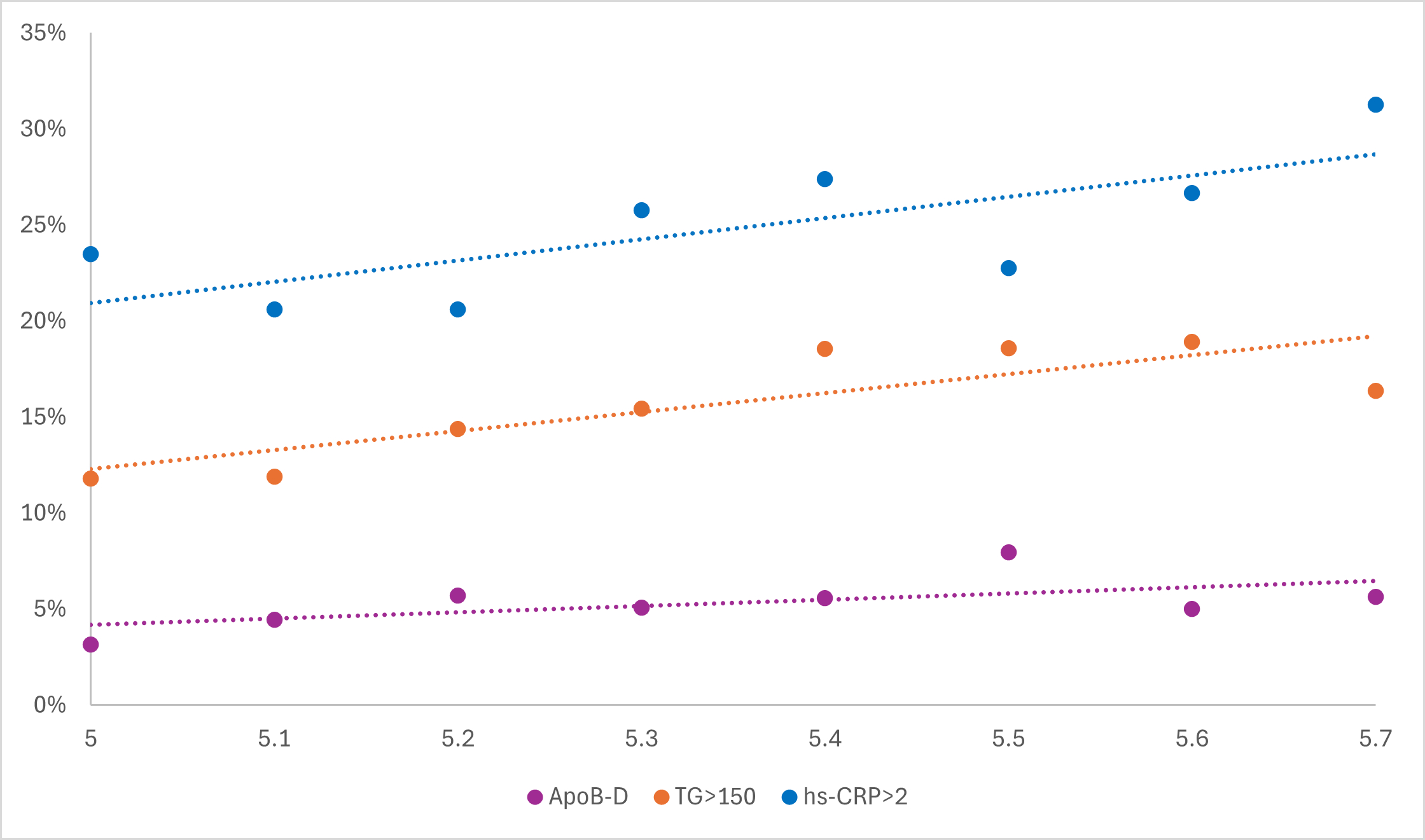
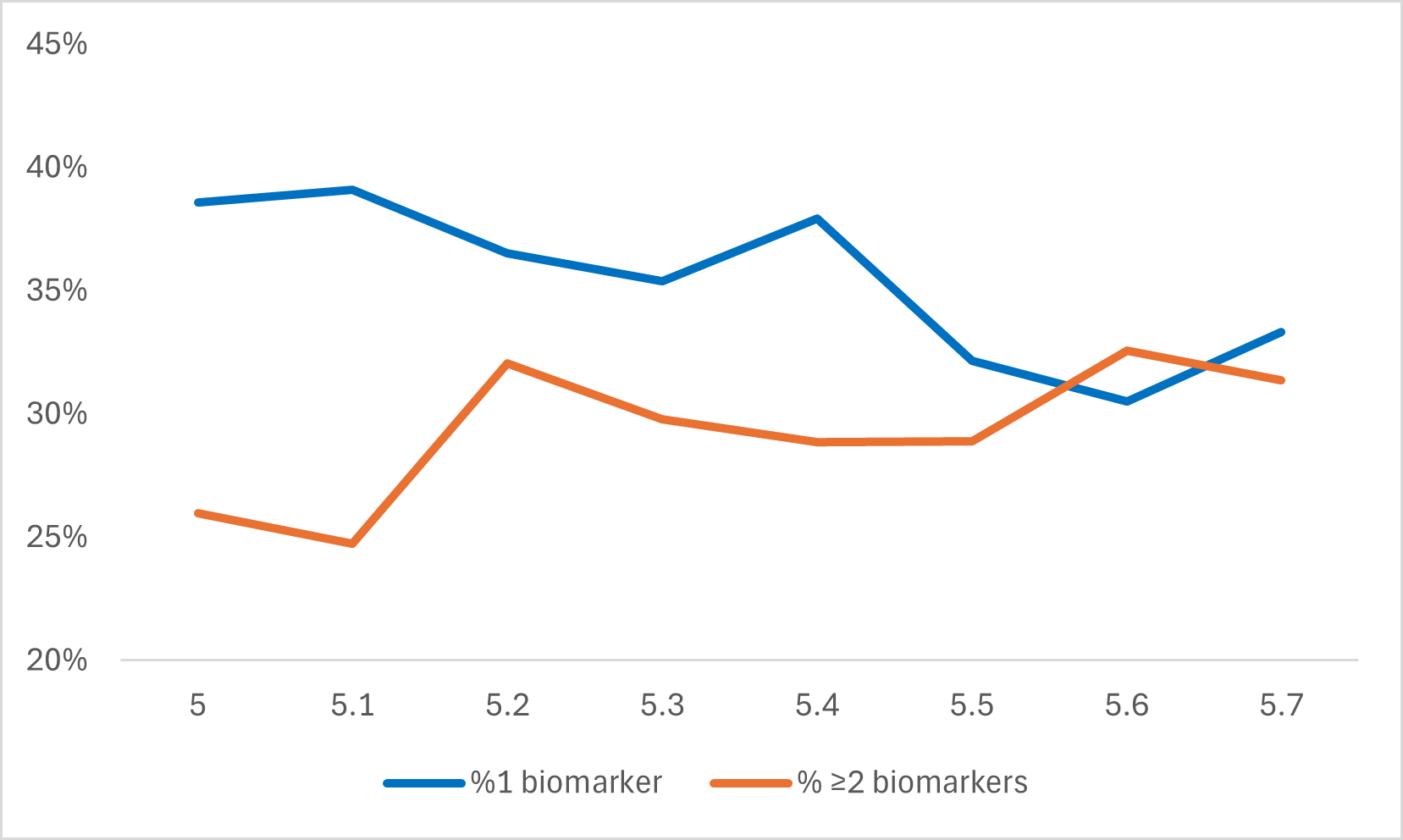
Background: Current guidelines link elevated hemoglobin A1C above 5.7% with increased cardiometabolic risk; lipid profile, hyperglycemia, and vascular inflammation all serve as key risk indicators. We aimed to assess whether these indicators correlationally increase with A1C levels within the normal range, affecting clinical decisions made in preventative care. Hypothesis: In a real-world rural cardiology clinic population, do biomarkers of lipid burden, vascular inflammation, and discordance rise significantly within the A1C range 5.0%–5.7%, suggesting early cardiometabolic risk? Methods: We extracted laboratory results for A1C and corresponding non-HDL, LDL, and HDL cholesterol, triglycerides (TG), apolipoprotein B (ApoB) , myeloperoxidase (MPO), lipoprotein(a) (Lp(a)), high-sensitivity C-reactive protein (hs-CRP), homocysteine (Hcy) and insulin resistance score (IRS) levels measured over a 5-year period from 2019 to 2024. Results: Key biomarkers for 2,373 patients with A1C values between 4.0% and 7.0%, and specifically 1,422 patients with A1C 5.0–5.7%, were analyzed. Lipid abnormalities: As A1C rose through 7%, TG values and the percentage of patients with TG >150 mg/dL increased significantly. ApoB-LDL-C discordance rose linearly with A1C from 4.5%–7%, with a 5–10% increase beginning at A1C 5.0%. Vascular inflammation patterns: Both MPO and Lp(a) levels peaked at A1C 6.6% and 6.9%. The frequency of elevated hs-CRP (defined as >2 mg/L) levels, showed a notable positive correlation with A1C from 5.0%–7.0% (R2=0.17). In contrast, MPO (R2=0.007) and Hcy (R2=0.013) had weak correlations with A1C in this range. IRS demonstrated the strongest positive correlation with rising A1C values from 5.0%–7.0% (R2=0.339) although not as strong when limited to subtherapeutic levels as hs-CRP. In summary: 33.76% of patients with an A1C of 5.0%–7.0% had one elevated marker, 20.15% had two, 8.49% had three, and a small subset had ≥4. The proportion with two or more elevated markers increased across A1C 5.0–5.7%, reflecting cumulative cardiometabolic burden. Elevated TG, apoB-LDL-C discordance, and hs-CRP were the most common abnormal biomarkers in this range (R2=0.70, 0.35, 0.54). Discussion: Despite widespread preventative measures taken by our patient population, trends of increased cardiovascular risk exist at traditionally subtherapeutic A1C values. We conclude that these trends emphasize the importance of proactive medical therapies to overall cardiovascular health.
Glaze, Colton
(
Lake Country Medical Group
, Eatonton , Georgia , United States )
Ton, Martin
(
Lake Country Medical Group
, Eatonton , Georgia , United States )
Celestin, Josiah
(
Lake Country Medical Group
, Eatonton , Georgia , United States )
Miller, Samuel
(
Rush University Medical College
, Chicago , Illinois , United States )
Miller, Jered
(
Lake Country Medical Group
, Eatonton , Georgia , United States )
Penn, Marc
(
Quest Diagnostics
, Cleveland , Ohio , United States )
Chronos, Nicolas
(
Lake Country Medical Group
, Eatonton , Georgia , United States )