Prevalence of Clinical Obesity in Brazilians: Cross-Sectional Results from the Health Survey of São Paulo with a Focus on Nutrition
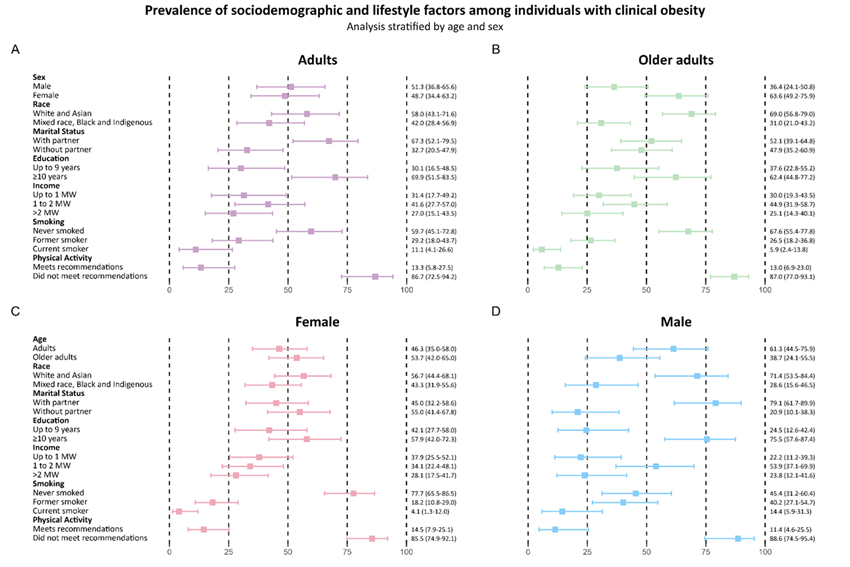
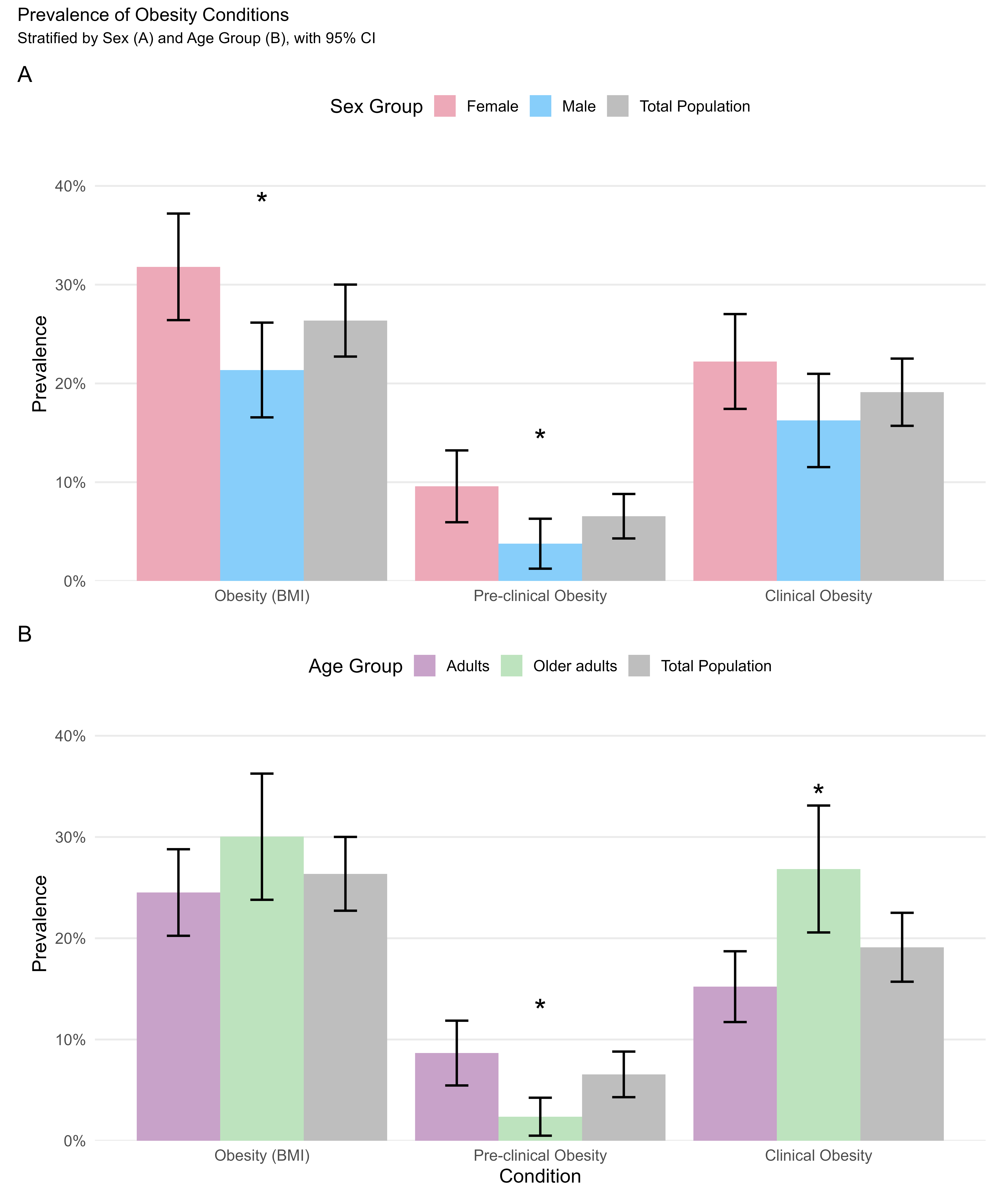
Abstract Body: Introduction: Obesity has traditionally been defined using BMI thresholds. While BMI is useful for population screening, it sometimes misclassifies individuals. Considering this, Lancet Diabetes & Endocrinology Commission introduced a new clinical obesity definition in January 2025, shifting the focus from body size to obesity-related pathophysiology and functional impairment. It remains uncertain whether this approach identifies a group distinct from that classified by classical tools. We examined the prevalence of clinical obesity in São Paulo. Hypothesis: We hypothesized that prevalence varies by sociodemographic and lifestyle factors, with distinct patterns by sex and age. Methods: This representative cross-sectional population-based study included 610 adults and older adults from the 2015 Health Survey of São Paulo with focus on Nutrition. BMI and waist circumference (WC) were measured using standardized procedures and categorized by validated cut-offs. Clinical manifestations were identified using ICD codes and self-reported conditions, following Lancet Diabetes & Endocrinology Commission criteria. Weighted means, prevalence estimates, and 95% confidence intervals accounted for the complex survey design. Analyses were performed in RStudio. Results: Overall, 24.9% (95% CI: 21.5, 28.8) had BMI ≥30 kg/m2. Preclinical obesity occurred in 6.6% (95% CI: 4.6, 9.2), and clinical obesity in 19.1% (95% CI: 15.9, 22.8). BMI ≥30 kg/m2 and preclinical obesity were more frequent among women than men (31.8%, 95% CI: 26.4, 37.2 vs. 9.6%, 95% CI: 5.9, 13.2). Preclinical obesity was higher among adults (8.6%, 95% CI: 5.4, 11.8), and clinical obesity among older adults (26.8%, 95% CI: 20.6, 33.1). Prevalence of clinical obesity among adults was higher for those living with a partner, ≥10 years of schooling, and never smokers; among older adults, for White or Asian individuals, and never smokers. Among women, prevalence was higher among never smokers, whereas among men, it was higher among White or Asian individuals, those living with a partner, and with ≥10 years of schooling. Across all groups, prevalence was higher among those not meeting physical activity recommendations. Conclusion: The new clinical definition identifies a group with distinct sociodemographic and lifestyle patterns. Further studies are needed to determine whether this classification offers advantages over BMI alone in identifying individuals at higher risk and guiding public health actions.
Valentini Neto, Joao
(
University of Sao Paulo
, Sao Paulo , Brazil )
Costa, Marcela
(
University of Sao Paulo
, Sao Paulo , Brazil )
Ferreira, Leticia
(
University of Sao Paulo
, Sao Paulo , Brazil )
Mattei, Josiemer
(
HARVARD CHAN SCHOOL PUBLIC HEALTH
, Boston , Massachusetts , United States )
Macedo Rogero, Marcelo
(
University of Sao Paulo
, Sao Paulo , Brazil )
Mori Sarti, Flavia
(
University of Sao Paulo
, Sao Paulo , Brazil )
Giovannucci, Edward
(
Harvard School of Public Health
, Boston , Massachusetts , United States )
Hu, Frank
(
HARVARD SCHOOL OF PUBLIC HEALTH
, Boston , Massachusetts , United States )
Chavarro, Jorge
(
Harvard School of Public Health
, Boston , Massachusetts , United States )
Mara Fisberg, Regina
(
University of Sao Paulo
, Sao Paulo , Brazil )