

State Support for Plant-Based Meals in U.S. School Lunch Programs: A National Policy Analysis
Abstract Body: Background: Pediatric cardiometabolic health in the United States is declining, driven by rising rates of obesity, prediabetes, and type 2 diabetes. School lunch programs present a critical opportunity to shape children’s dietary behaviors, reaching millions of students across diverse socioeconomic backgrounds each day. Regular inclusion of plant-based or plant-forward meals in school lunches may help reduce modifiable cardiometabolic risk factors and serve as a cost-effective, population-level strategy to promote long-term cardiovascular health.
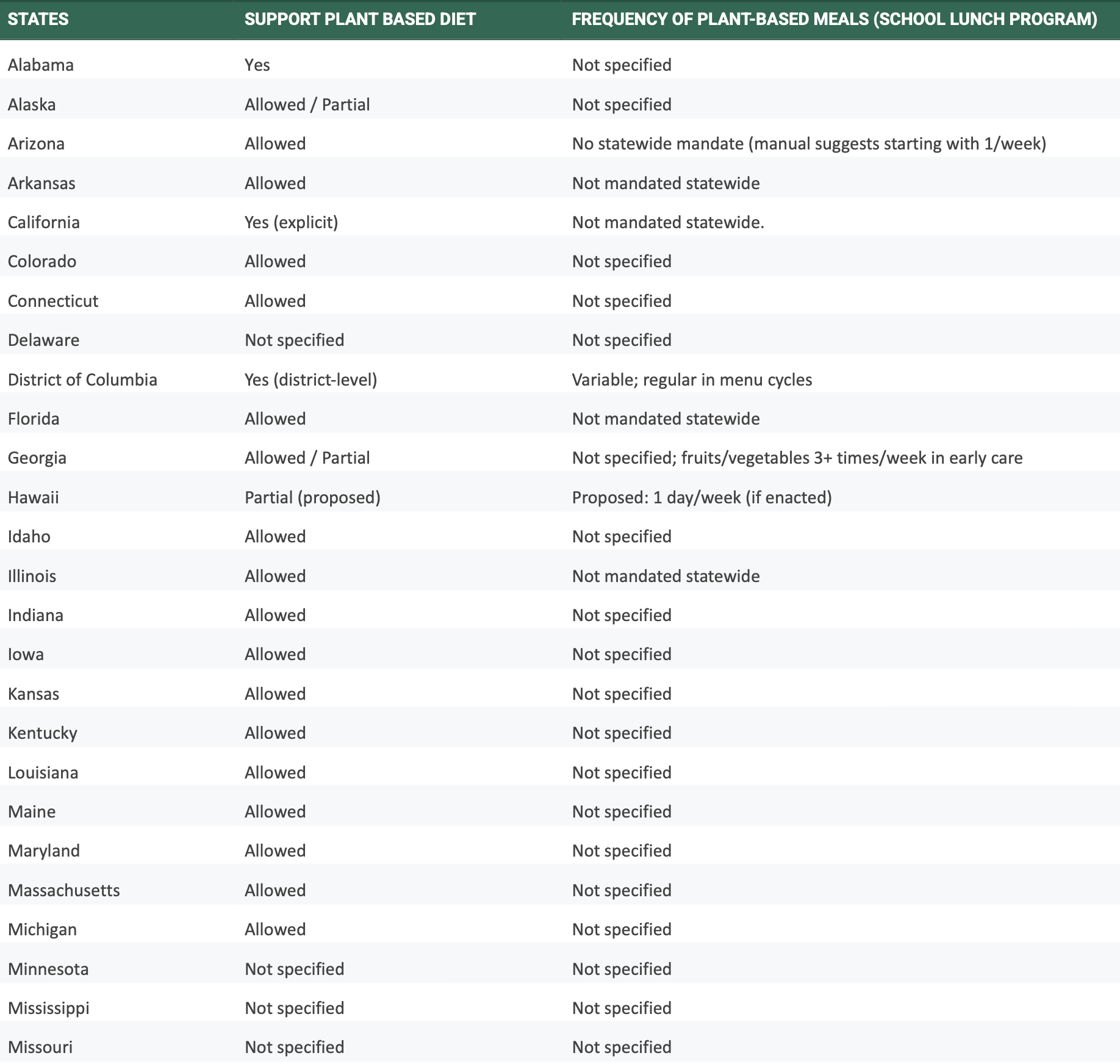
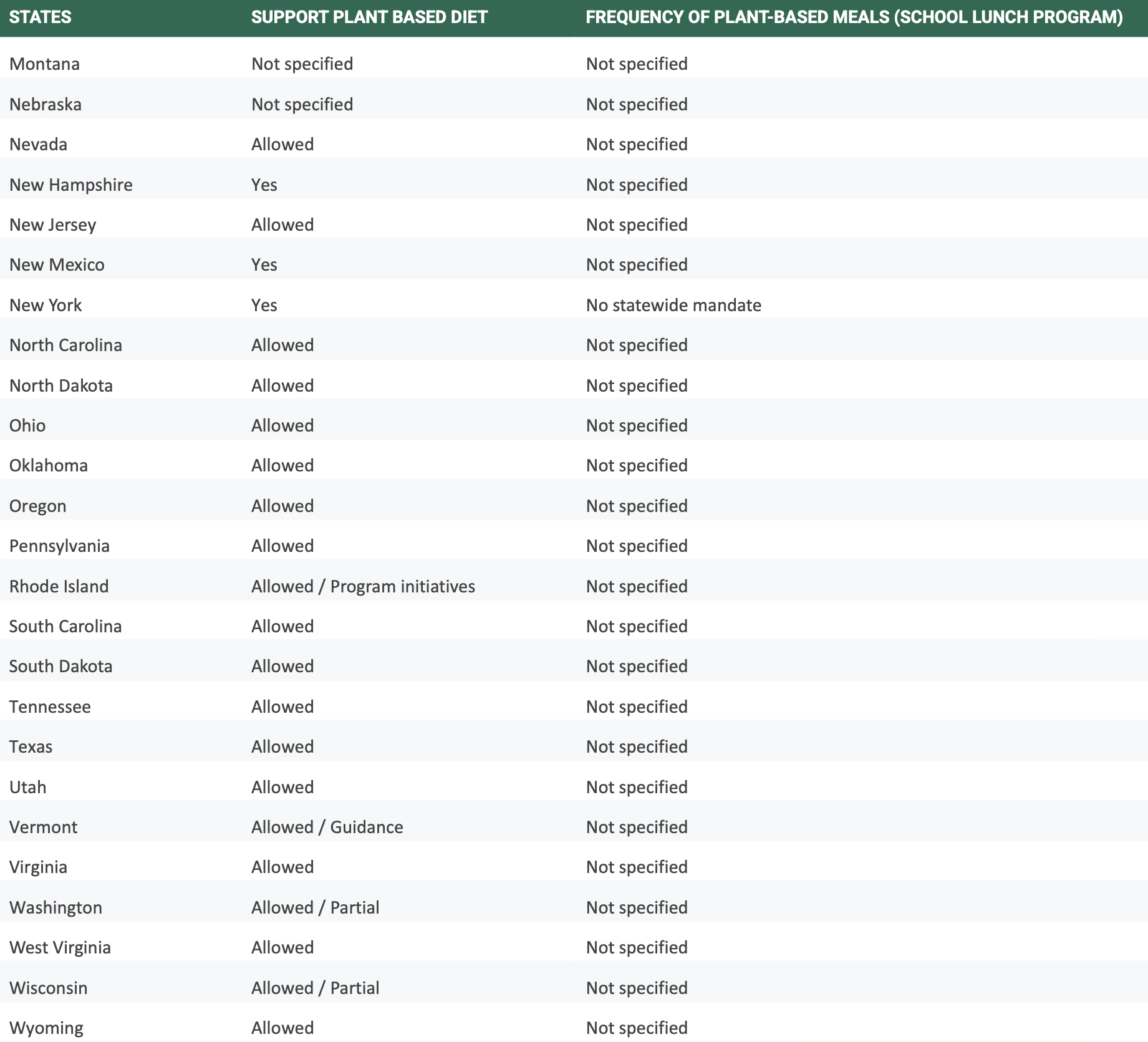
Methods: We conducted a narrative policy review of school lunch programs across all 50 U.S. states and the District of Columbia. Publicly available state and district policy documents, government reports, and educational resources were systematically reviewed to identify regulations and initiatives supporting plant-based or vegetarian meals. Two primary policy outcomes were coded: (1) Level of Official Support for plant-based lunch options (“Yes/Explicit,” “Allowed/Partial,” or “Not Specified”) and (2) Frequency of Plant-Based lunch offerings in the school lunch program (Refer to Table 1 for coding labels and definitions).
Results: As per our analysis, only 6 out of 51 jurisdictions had an explicit policy promoting vegetarian or plant-based meals—Alabama, California, the District of Columbia, New Hampshire, New Mexico, and New York—as part of their school lunch programs. A majority (38 jurisdictions) were classified as “Allowed/Partial,” indicating adherence to USDA guidelines that permit inclusion of plant-based foods but do not specifically promote or require them. Hawaii had a proposed policy marked as “Partial,” though implementation is pending. No state mandated the frequency of plant-based meals; however, the District of Columbia provides a suggested daily frequency.
Conclusion: Enhancing state-level policies and providing standardized guidance on the frequency of plant-based meals in school lunch programs could serve as an effective, population-level approach to mitigate pediatric cardio-metabolic risk and promote long-term cardiovascular health.
Modak, Vishakha
( Jacobi Medical Center
, Bronx
, New York
, United States
)
Karthikeyan, Aditya
( Jacobi Medical Center
, Bronx
, New York
, United States
)
Mangalesh, Sridhar
( Jacobi Medical Center
, Bronx
, New York
, United States
)
Kaushik, Sharanya
( Jacobi Medical Center
, Bronx
, New York
, United States
)
Shah, Priyansh
( Jacobi Medical Center
, Bronx
, New York
, United States
)
Gashi, Eleonora
( Jacobi Medical Center
, Bronx
, New York
, United States
)
Faillace, Robert
( Jacobi Medical Center
, Bronx
, New York
, United States
)