Gut microbiome correlates of CGM metrics and progression toward diabetes in adults without diabetes
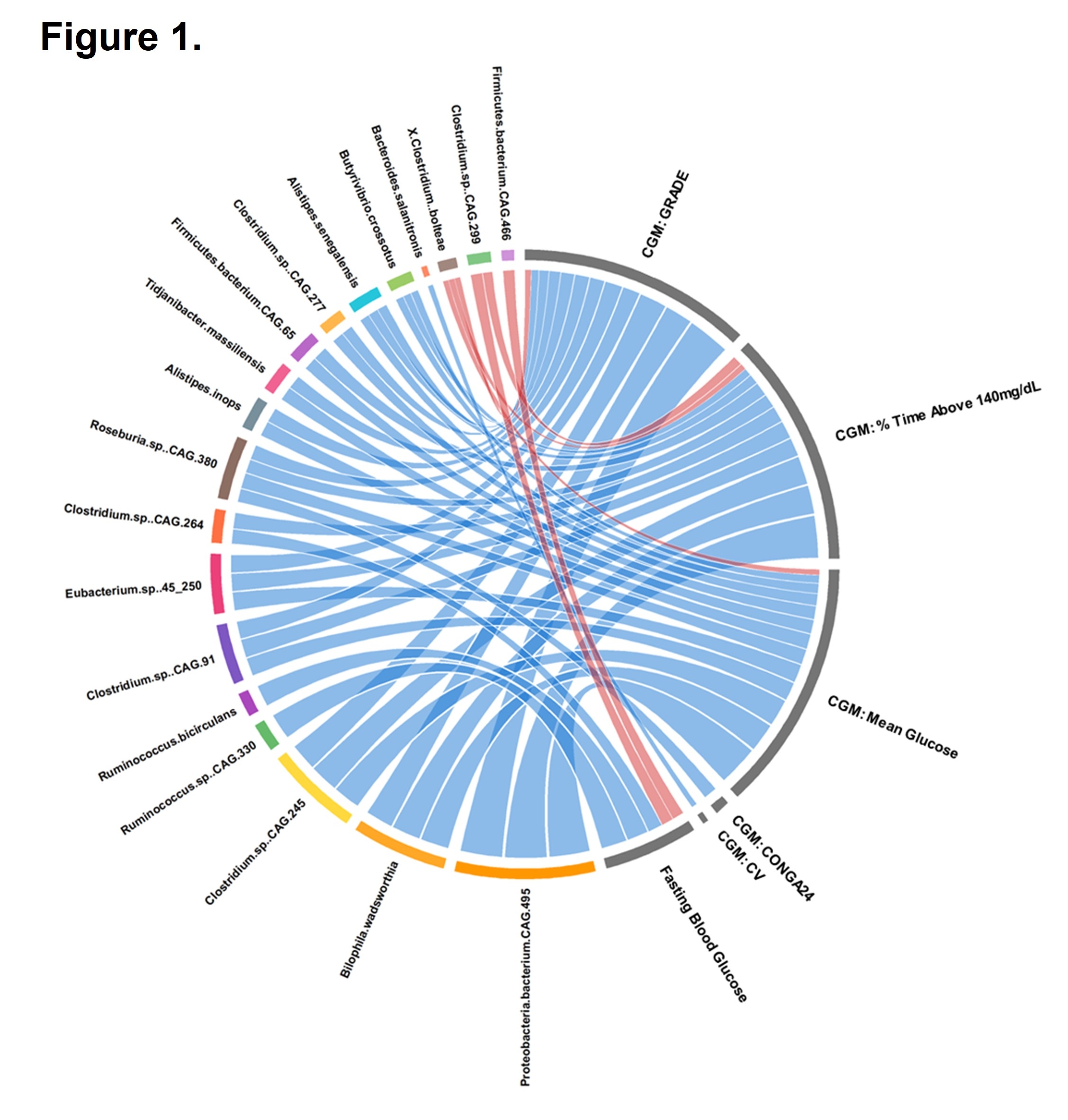
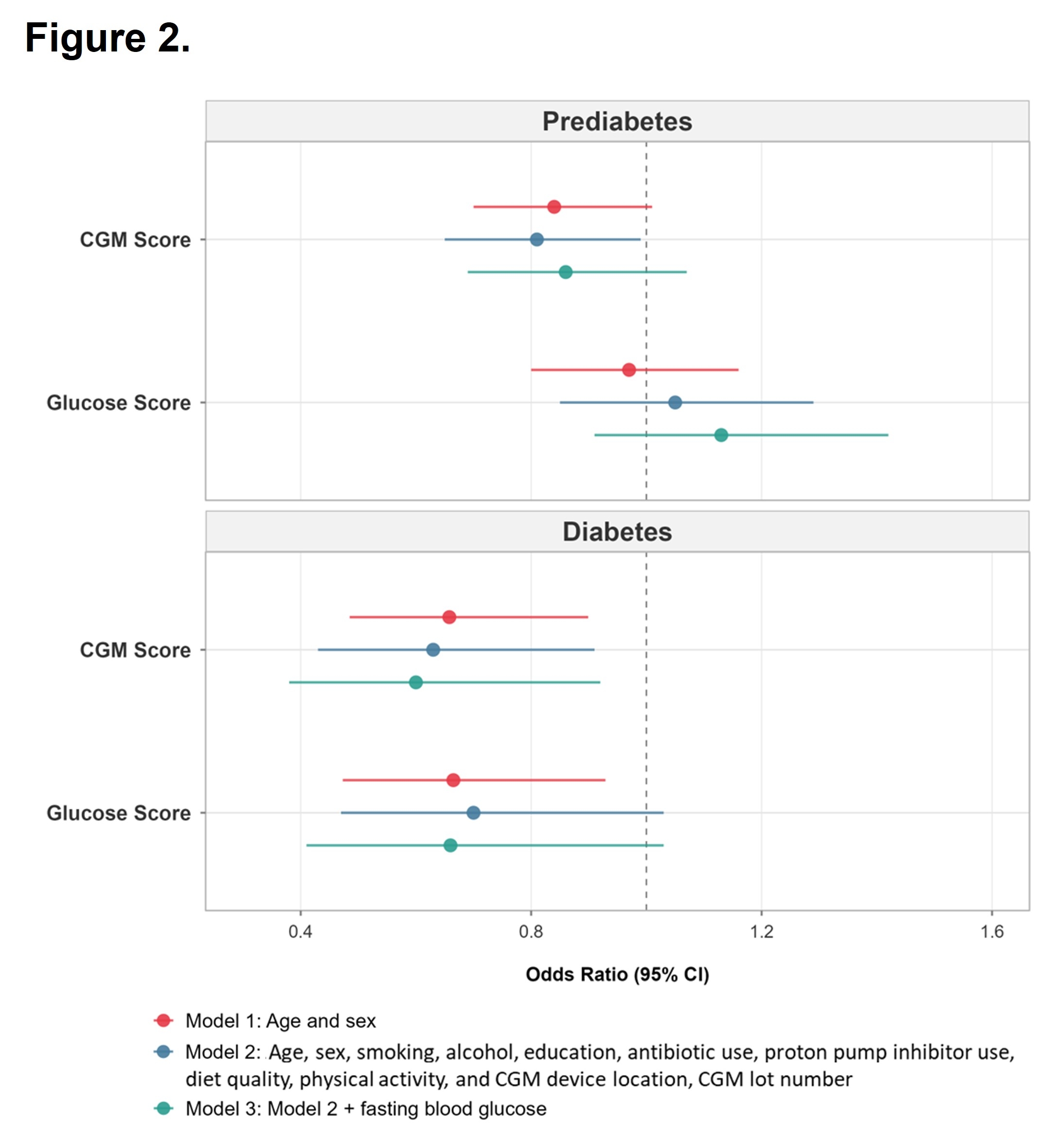
Abstract Body: Gut microbial composition has been linked to type 2 diabetes (T2D) and prediabetes. Continuous glucose monitoring (CGM) provides dynamic measures of glycemic regulation and may detect early dysglycemia. However, it is unclear how CGM metrics may relate to the gut microbiome among individuals without T2D. We included 790 participants from the Framingham Heart Study (FHS) Third Generation cohorts without T2D who underwent stool shotgun metagenomics at baseline (2016-2019) and had ≥3 days of Dexcom G6 Pro CGM data (2022-2025). We examined associations of gut microbial species with eight CGM metrics, fasting blood glucose (FG), and HbA1c using multivariable models (MaAslin 2, FDR q <0.05). We created separate microbial composite scores for CGM related species and FG/HbA1c related species, each summed and weighted by their respective beta coefficients. Among individuals without T2D at baseline (n=826), we examined the prospective association of each microbial score with T2D using multivariable logistic regression models. We repeated analysis among individuals without prediabetes at baseline (n=570) to assess prediabetes upon follow up. Multivariable logistic regression models were adjusted for age, sex, education, diet quality, medication use, and other lifestyle factors. FHS participants (mean age at baseline 55 y, 58% female) had an average age of 61 years at follow-up, FG of 94mg/dL, and 31% had prediabetes at baseline. We observed 44 associations of 19 unique microbial species with glycemic outcomes, including 35 negative and four positive associations with CGM metrics (% time above 140, continuous overall net glycemic action over 24 hours, coefficient of variation, mean glucose, and glycemic risk assessment diabetes equation), 5 species associations with FG, and no associations with HbA1c (Figure 1). Over a median follow up of 6.2 years, there were 36 new cases of T2D and 171 cases of prediabetes. In multivariable adjusted models, a CGM microbial score was associated with a 37% (OR 0.63, [95% CI 0.43, 0.91]) lower odds of T2D and a 19% (OR 0.81, [95% CI 0.65, 0.99]) lower odds of prediabetes (Figure 2). Results for T2D were similar with adjustment for FG but were attenuated for prediabetes. There were no significant associations of an FG microbial score with T2D or prediabetes in fully adjusted models. CGM related microbial features are associated with lower odds of T2D and may provide insight between microbial communities and progression of dysglycemia.
Walker, Maura
(
Boston University
, Boston , Massachusetts , United States )
Bakhshi, Bahar
(
Boston University School of Medicine
, Dorchester , Massachusetts , United States )
Prescott, Brenton
(
Boston University School of Medicine
, Dorchester , Massachusetts , United States )
Yao, Suheng
(
Boston University
, Boston , Massachusetts , United States )
Sultana, Naznin
(
Boston University School of Medicine
, Dorchester , Massachusetts , United States )
Moon, Jee-young
(
Albert Einstein College of Medicine
, Bronx , New York , United States )
Luo, Kai
(
Albert Einstein College of Medicine
, Bronx , New York , United States )
Cheng, Huimin
(
Boston University
, Boston , Massachusetts , United States )
Mckeown, Nicola
(
Boston University
, Boston , Massachusetts , United States )
Nayor, Matthew
(
Boston Unviersity Medical Center
, Boston , Massachusetts , United States )
Qi, Qibin
(
ALBERT EINSTEIN COLLEGE OF MEDICINE
, Bronx , New York , United States )
Dao, Maria Carlota
(
University of New Hampshire
, Durham , New Hampshire , United States )
Peters-samuelson, Brandilyn
(
Albert Einstein College of Medicine
, Bronx , New York , United States )
Spartano, Nicole
(
Boston University School of Medicine
, Dorchester , Massachusetts , United States )