Effects of a Dietary Approaches to Stop Hypertension Diet on Circulating and Fecal Lactate Levels in Type 2 Diabetes: Findings from the DASH4D Randomized Clinical Trial
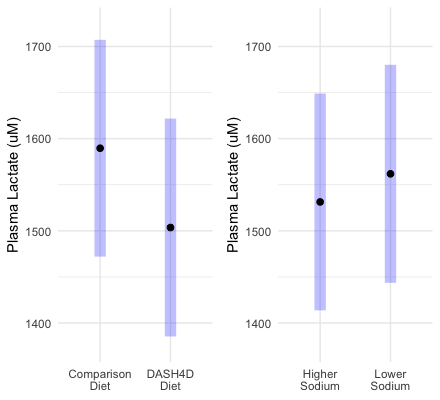
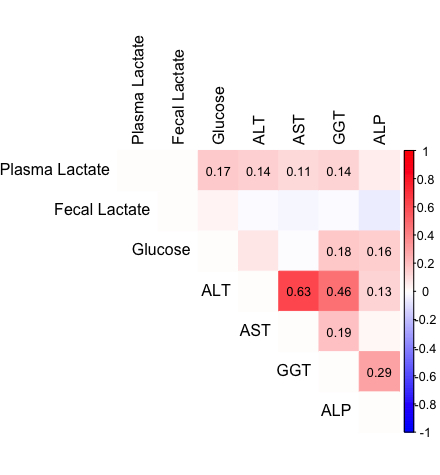
Abstract Body: Introduction: Lactate is a major mitochondrial fuel source, the main precursor for gluconeogenesis, and a multifunctional signaling molecule. Elevated circulating lactate is associated with increased type 2 diabetes (T2D) risk, and dietary carbohydrate changes can alter lactate in people without T2D. Whether the Dietary Approaches to Stop Hypertension (DASH) diet alters circulating lactate, and/or fecal lactate (reflecting gut microbial fiber fermentation), is not known. Further, whether these changes correlate with liver function, as the liver converts lactate to glucose via gluconeogenesis, is unknown. Hypotheses: A high-fiber DASH-style diet will lower plasma lactate and raise fecal lactate; reduced sodium intake will not affect either outcome. Plasma lactate will be positively correlated with glucose and liver enzymes. Methods: DASH4D is a randomized 4-period crossover feeding trial of a DASH-style diet modified for people with T2D (DASH4D diet) vs. typical U.S. (comparison) diet, each with a higher and lower sodium version, among 102 adults with T2D. Plasma and fecal samples were collected pre-randomization and at the end of each 5-week feeding period. Lactate was measured using gas chromatography-mass spectrometry (MS)/MS. We used linear mixed effects models to examine effects of diet and sodium content on end-of-period plasma and fecal lactate. We assessed within-individual correlations between lactate, glucose, and liver enzymes (alanine (ALT) and aspartate (AST) aminotransferases, gamma glutamyl transferase (GGT), and alkaline phosphatase (ALP)) using repeated-measures correlations analysis. Results: There were 97 participants (mean age 67 (sd: 8.9) years, 66% female, 89% Black) with plasma, and of those 83 with fecal, samples from both pre-randomization and ≥2 feeding periods. The DASH4D (vs. comparison) diet lowered plasma lactate by -86.0 µM (95%CI:-168.9, -3.2), while sodium content had no effect (Figure 1). Neither the DASH4D diet nor sodium content affected fecal lactate. Plasma, but not fecal, lactate was positively associated with glucose and liver enzymes ALT, AST, and GGT (Figure 2). Conclusions: The DASH4D diet lowered plasma, but not fecal, lactate in adults with T2D. These results suggest that dietary effects on plasma lactate are related to endogenous metabolism, not bacterial lactate production. Plasma lactate positively correlated with glucose and liver enzymes, further implicating changes in host metabolic processes with DASH4D diet.
Tilves, Curtis
(
University of Colorado
, Aurora , Colorado , United States )
Xiao, Shaoming
(
University of Colorado
, Aurora , Colorado , United States )
Juraschek, Stephen
(
BIDMC-Harvard Medical School
, Boston , Massachusetts , United States )
Zhao, Ni
(
Johns Hopkins University
, Baltimore , Maryland , United States )
Mitchell, Christine
(
Johns Hopkins University
, Baltimore , Maryland , United States )
Pilla, Scott
(
Johns Hopkins University
, Baltimore , Maryland , United States )
Yeh, Hsin-chieh
(
Johns Hopkins University
, Baltimore , Maryland , United States )
Appel, Lawrence
(
Johns Hopkins University
, Baltimore , Maryland , United States )
Mueller, Noel
(
University of Colorado
, Aurora , Colorado , United States )