Effects of the DASH for Diabetes diet on fecal and plasma metabolites in people with type 2 diabetes
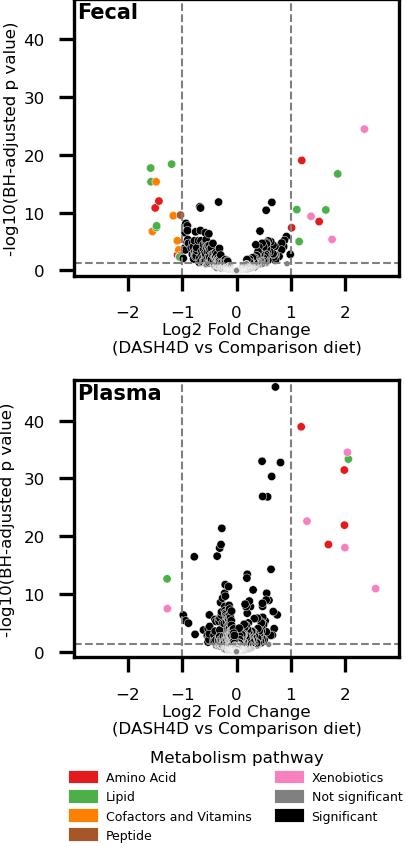
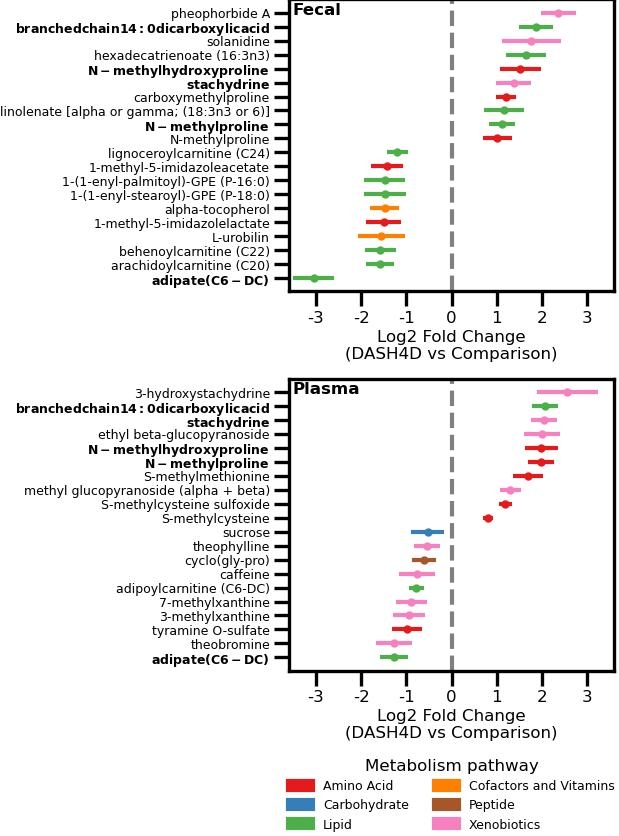
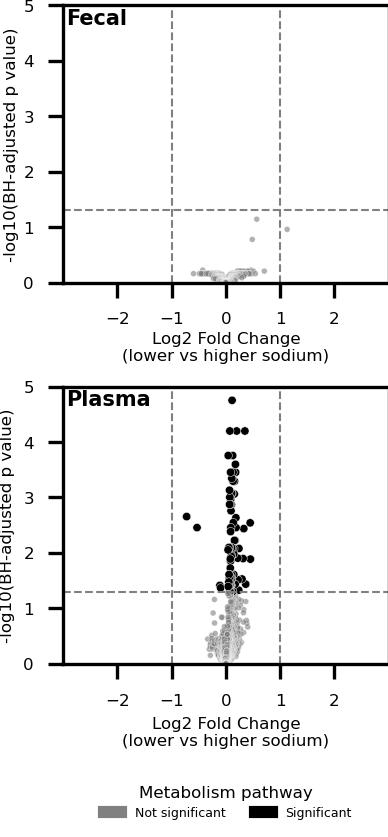
Abstract Body: Backgrounds: The Dietary Approaches to Stop Hypertension for Diabetes (DASH4D) diet, a DASH-style diet adapted for people with diabetes, improved glycemia in people with type 2 diabetes. Here we conducted a metabolome-wide analysis to examine the effects of the DASH4D diet on plasma and fecal metabolites in adults with type 2 diabetes. Methods: In a 4-period crossover feeding trial, we randomized 105 participants with type 2 diabetes to a random sequence of 4 diets: the DASH4D diet or a typical US comparison diet, each with a higher and lower sodium version, for 5 weeks each. Participants provided plasma and fecal specimens prior to randomization and at the end of each diet period. We measured metabolites using Metabolon’s UPLC-MS/MS. We included in the analysis participants who finished at least one DASH4D diet and one comparison diet. We used linear mixed effects models to assess associations of diet and sodium interventions with each metabolite. Statistical significance was defined using an FDR-adjusted p<0.05. Results: A total of 92 and 95 participants were included in the fecal and plasma metabolomic analyses, respectively. On average, participants were 66.5 years, 67.3% female, and 87.4% Black. A total of 206 of 739 (27.9%) fecal metabolites significantly differed between the DASH4D and comparison diets, with 28 having >2-fold effect sizes; 279 of 1160 (24.1%) plasma metabolites significantly differed between diets, with 11 having >2-fold effect sizes (Fig. 1). Of the top 20 most affected metabolites in fecal and plasma, 5 overlapped (Fig. 2). Of a priori interest, the metabolite imidazole propionate, which is microbially-produced and related to dysglycemia, was lower in the DASH4D vs comparison diet by 52.2% (95% CI: 29.0-67.9%) in feces and by 14.8% (3.4-24.9%) in plasma. In comparison, only 76 of 1160 (6.6%) plasma metabolites and no fecal metabolites significantly differed between lower vs higher sodium diets (Fig. 3). Conclusions: In adults with type 2 diabetes, the DASH4D diet affected a high proportion of metabolites measured in plasma and in feces. Several of the metabolites affected by diet, including imidazole propionate, changed in similar direction in fecal and plasma samples, suggesting the effects derive in the gut. Dietary sodium, on the other hand, affected only plasma metabolites, and the effects were smaller in magnitude. These findings may help to elucidate diet-disease pathways and identify biomarkers of healthful dietary patterns.
Xiao, Shaoming
(
University of Colorado
, Aurora , Colorado , United States )
Tilves, Curtis
(
University of Colorado
, Aurora , Colorado , United States )
Zhao, Ni
(
Johns Hopkins University
, Baltimore , Maryland , United States )
Mitchell, Christine
(
Johns Hopkins University
, Baltimore , Maryland , United States )
Casey, Rebholz
(
Johns Hopkins University
, Baltimore , Maryland , United States )
Appel, Lawrence
(
Johns Hopkins University
, Baltimore , Maryland , United States )
Pilla, Scott
(
Johns Hopkins University
, Baltimore , Maryland , United States )
Yeh, Hsin-chieh
(
Johns Hopkins University
, Baltimore , Maryland , United States )
Mueller, Noel
(
University of Colorado
, Aurora , Colorado , United States )