Elemental Determinants of Cardiovascular Health: A Comprehensive Systematic Reviews and Meta-analyses of Observational Studies
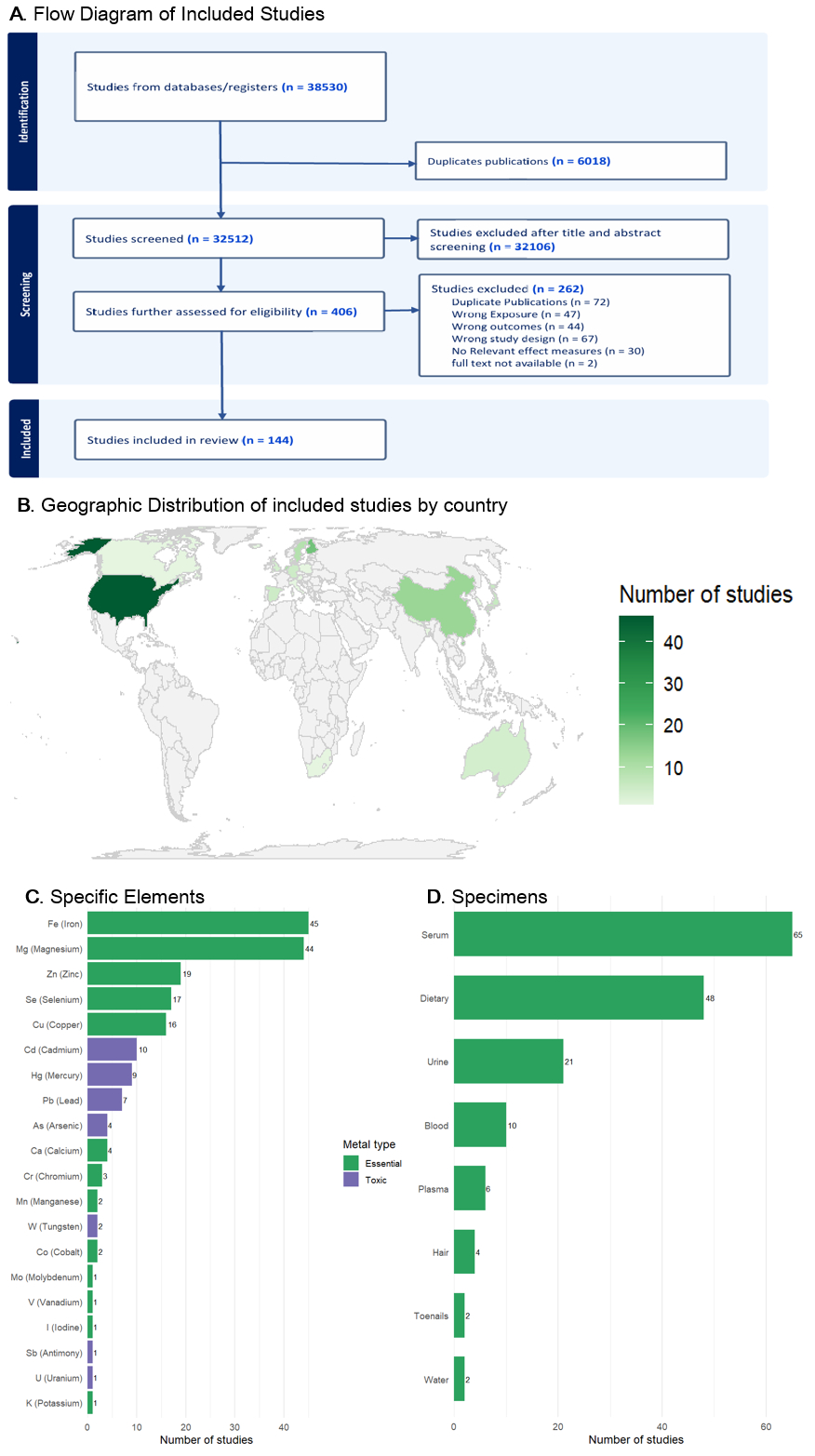
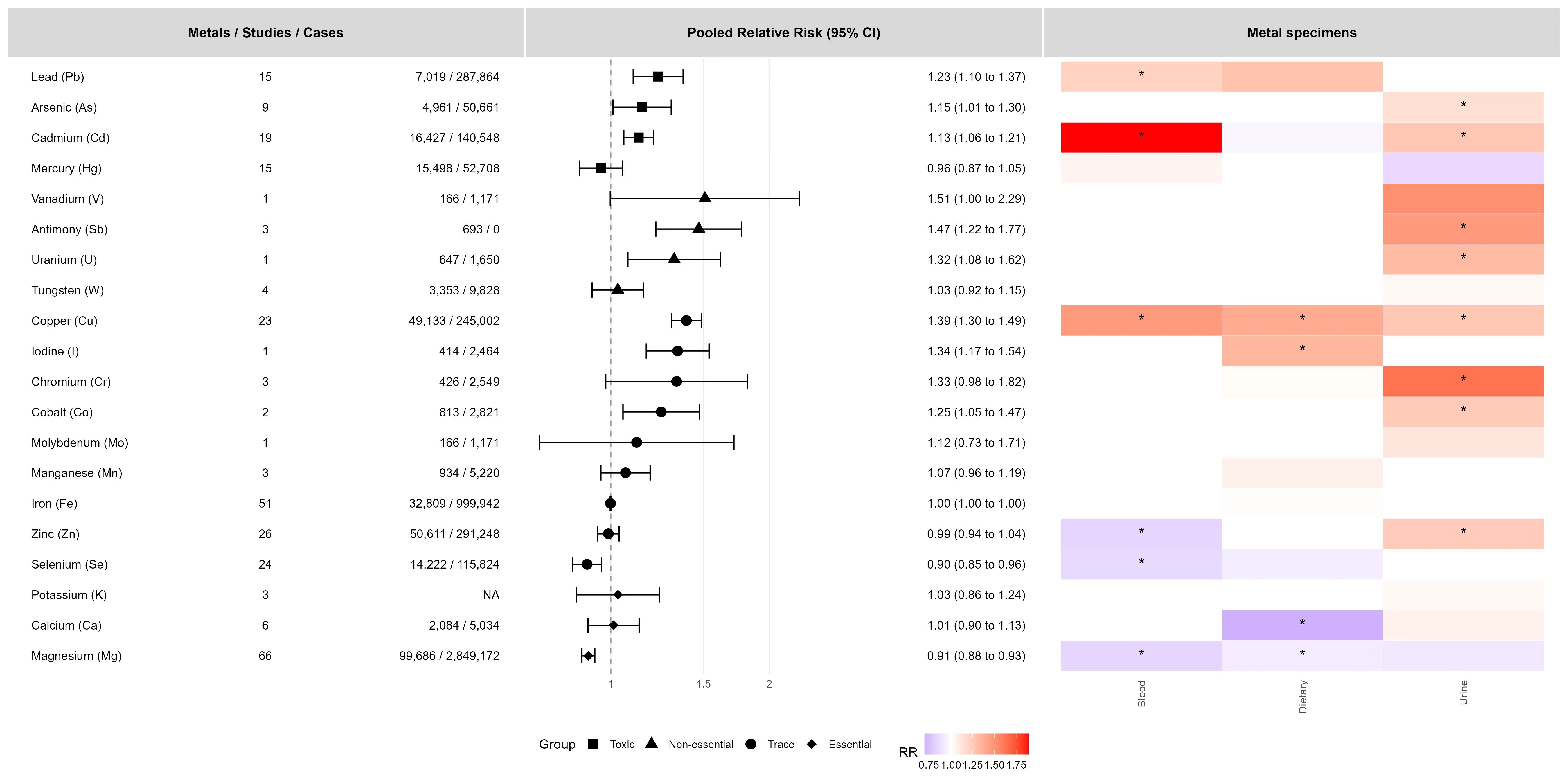
Abstract Body: Introduction The biological balance of essential and harmful elements may represent a unifying pathway connecting environmental exposures, nutritional status, and cardiovascular disease (CVD). However, evidence across different elements remains fragmented. Yet, no comprehensive synthesis has evaluated how these elements collectively influence CVD risk across global populations. Hypothesis We hypothesized that systematic evidence synthesis would clarify which elements are consistently associated with higher or lower CVD risk. Methods We conducted a systematic review and meta-analysis of prospective cohort and case-control studies reporting associations between exposure to 26 elements and incident CVD, coronary heart disease (CHD), or stroke. PubMed, Embase, Cochrane Library, and Web of Science were searched through December 2024. Fix-effects models pooled relative risks (RRs) comparing the highest versus lowest exposure categories. Subgroup analyses were performed by biological specimen and sex. Results Of 20 elements been mapped among 2,443,638 participants across 144 studies included, we observed statistically and clinically significant associations between exposure to several elements and cardiovascular disease (CVD) risk. The pooled relative risk (RR) estimates showed that higher exposure to potentially harmful elements was associated with greater cardiovascular disease (CVD) risk: lead (Pb) 1.23 (95% CI, 1.10–1.37), arsenic (As) 1.15 (1.01–1.30), cadmium (Cd) 1.13 (1.06–1.21), and copper (Cu) 1.39 (1.30–1.49). In contrast, higher levels of beneficial essential elements were linked to lower CVD risk: magnesium (Mg) 0.91 (0.88–0.93), selenium (Se) 0.90 (0.85–0.96), and zinc (Zn) 0.99 (0.94–1.04), suggesting a modest protective effect. Conclusion In conclusion, this comprehensive synthesis demonstrates a consistent pattern of associations across the elemental spectrum, identifying metals such as lead, arsenic, cadmium, and copper as linked to higher cardiovascular risk, and essential elements such as magnesium and selenium as associated with lower risk. These findings integrate fragmented evidence into a coherent framework, positioning elemental balance as a fundamental determinant of cardiovascular health.
Tu, Yanxin
(
University of California, Irvine
, Irvine , California , United States )
Yang, Bo
(
University of California, Irvine
, Irvine , California , United States )
Liu, Simin
(
University of California, Irvine
, Irvine , California , United States )