Postpartum Proteomic Networks Are Predictive of Future Cardiovascular Disease Risk in Women
Abstract Body: Introduction Cardiovascular disease (CVD) is the leading cause of death for US women. However, female-specific risk factors, especially pregnancy-related factors, are not included in CVD risk assessment for women. Whether alterations in biological pathways after delivery are associated with future CVD is unknown. In this study, we aim to identify postpartum proteomic networks associated with incident CVD.
Methods This case-control study is nested in the Boston Birth Cohort, a predominantly urban, low-income, and multiethnic birth cohort in the US. We included 31 women with incident CVD and 42 controls (up to 21 yrs of follow-up; 74% Black). Maternal postpartum (24-72 hrs after delivery) plasma proteomic profiling was performed using the mass spectrometry-based Seer Proteograph platform; 5,333 proteins were available after quality controls. CVD cases were identified based on International Classification of Diseases codes derived from longitudinal electronic health records, including congestive heart failure (CHF), ischemic heart disease (IHD), and stroke. We defined CVD as a composite of CHF, IHD and stroke. Proteomic networks were identified using WGCNA (Weighted Gene Co-expression Network Analysis), and their associations with incident CVD were examined using Cox proportional-hazards models.
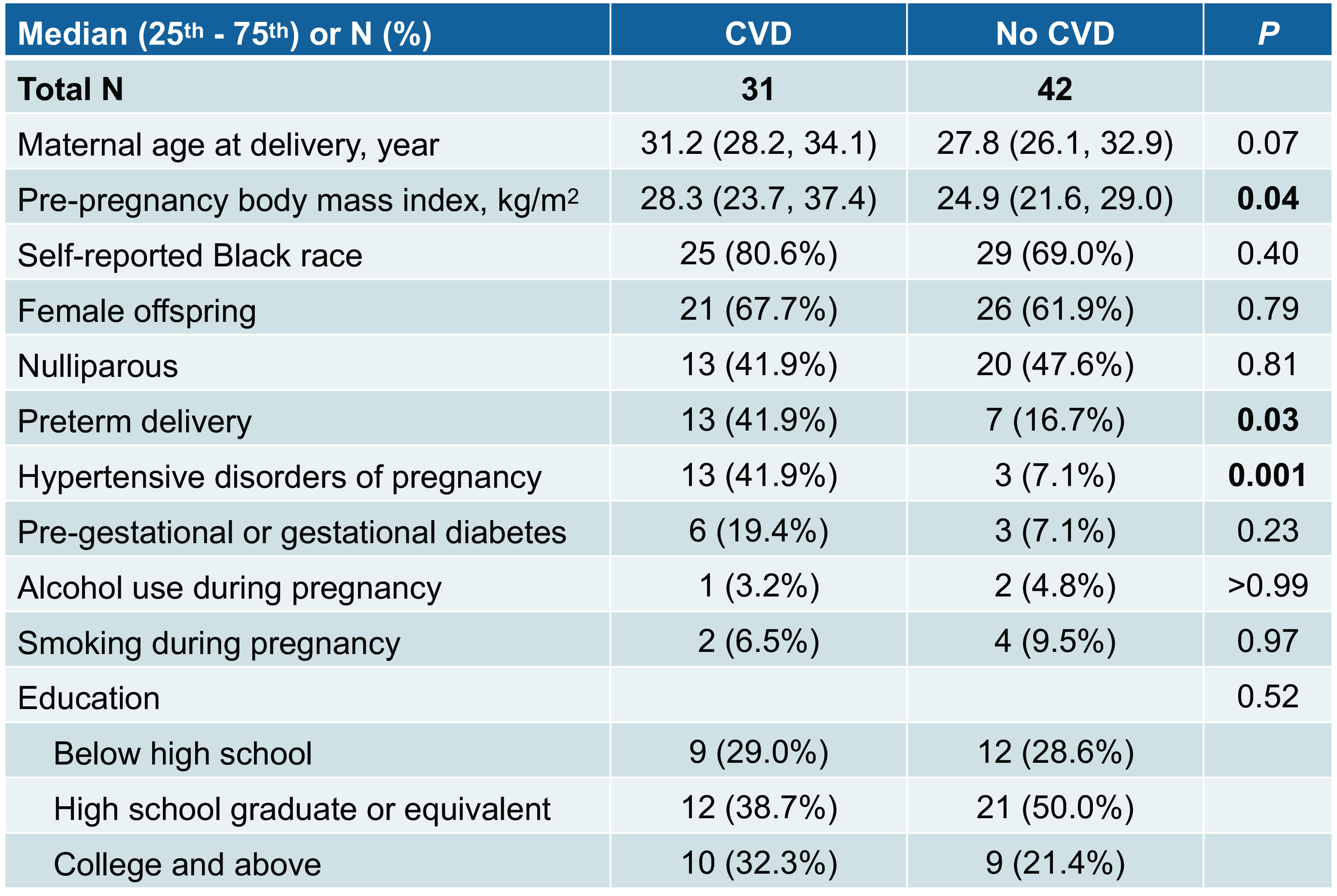
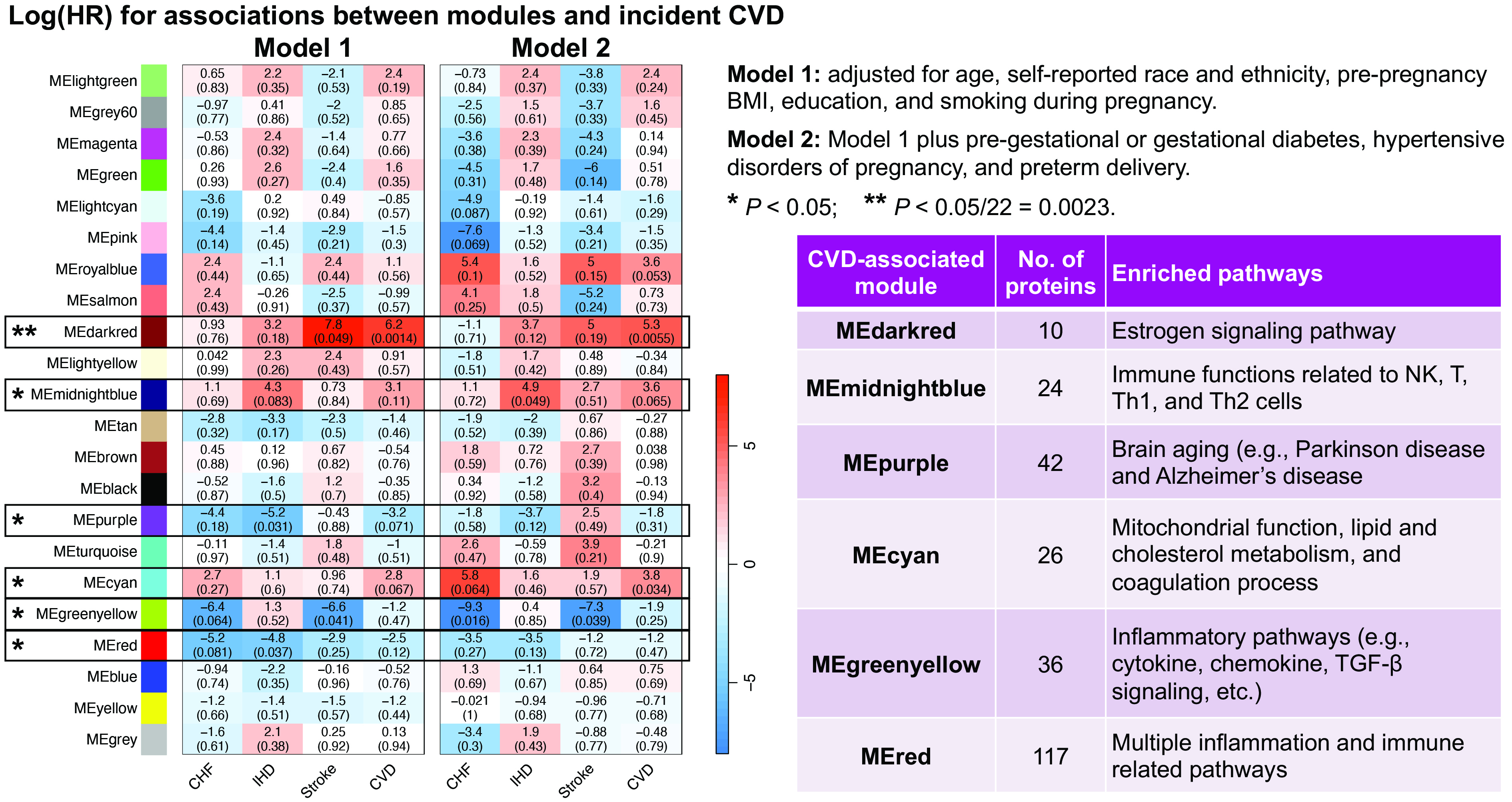
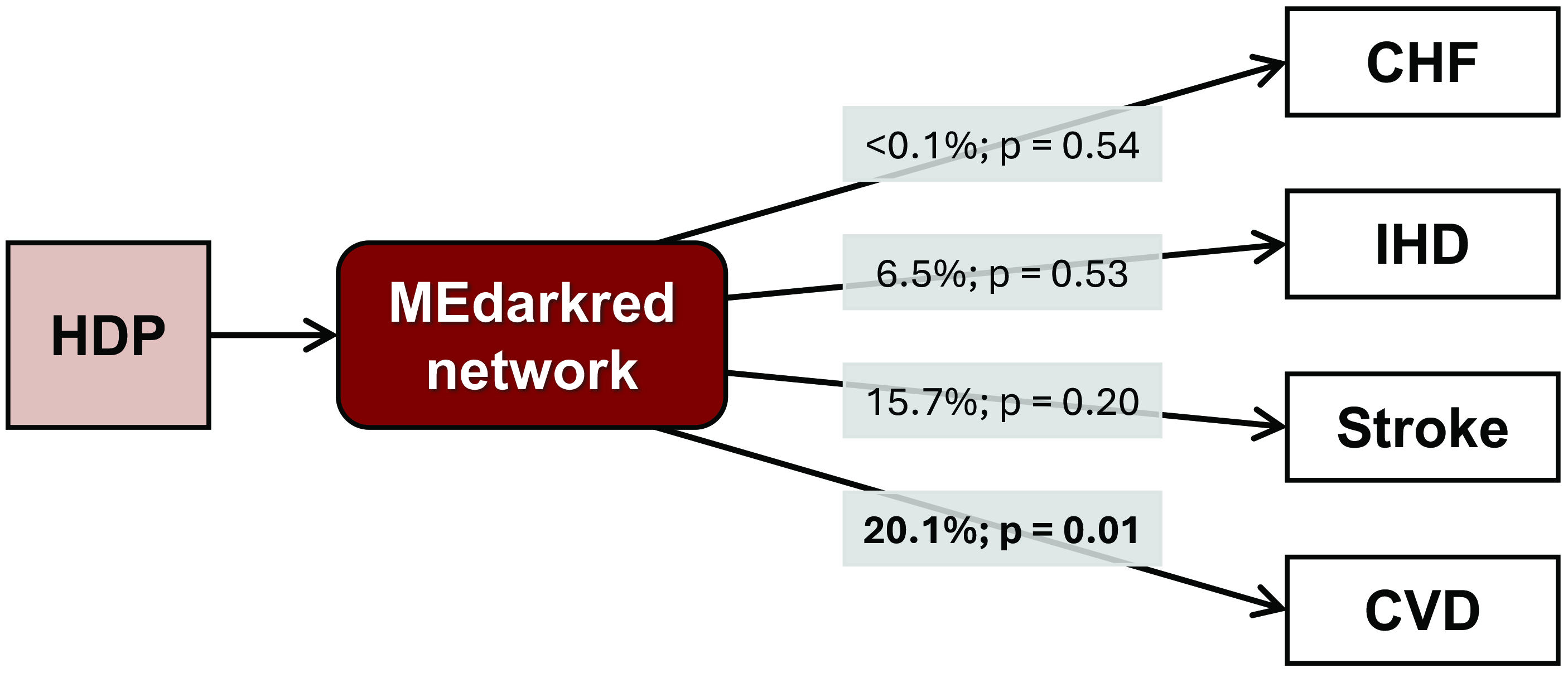
Results Women developed CVD had higher pre-pregnancy body mass index and higher prevalence of preterm delivery and hypertensive disorders of pregnancy (HDP). WGCNA identified 22 proteomic network modules; 6 modules were associated with at least one CVD outcomes (p<0.05) in the fully adjusted model, and these modules consist of proteins involved in estrogen signaling, brain aging, lipid metabolism, coagulation, inflammation, and immune function. The observed associations slightly attenuated after additionally adjusting for adverse pregnancy outcomes for 3 modules, but not for others. Notably, for one module consisting of 10 proteins (mostly keratins that are highly expressed in skin, arteries, and female reproductive organs), the association with CVD remained after Bonferroni correction for 22 modules (p<0.0023), and 8 constituting proteins (6 are keratins) were associated with CVD. This module mediates 20% of the association between HDP and incident CVD.
Conclusions Network-based analysis identified postpartum plasma proteomic modules associated with incident CVD in women and suggested a mechanistic link between HDP and future CVD risk. Our findings need to be validated.
Hu, Jie
(
Massachusetts General Hospital
, Boston , Massachusetts , United States )
Hong, Xiumei
(
Johns Hopkins University Bloomberg School of Public Health
, Baltimore , Maryland , United States )
Wang, Guoying
(
Johns Hopkins University Bloomberg School of Public Health
, Baltimore , Maryland , United States )
Saxena, Richa
(
Massachusetts General Hospital
, Boston , Massachusetts , United States )
Liang, Liming
(
HARVARD SCHOOL OF PUBLIC HEALTH
, Boston , Massachusetts , United States )
Wang, Xiaobin
(
Johns Hopkins University Bloomberg School of Public Health
, Baltimore , Maryland , United States )
Hu, Frank
(
HARVARD SCHOOL OF PUBLIC HEALTH
, Boston , Massachusetts , United States )
Hu Jie, Wang Xiaobin, Liang Liming, Hu Frank, Saxena Richa, Gray Kathryn, Li Jun, Huang Tianyi, Tobias Deirdre, Zhang Cuilin, Rexrode Kathryn, Sun Qi, Wang Guoying
4428723_File000000.jpg
4428723_File000001.jpg
4428723_File000002.jpg
You have to be authorized to contact abstract author. Please, Login