Disparities in Knowledge of Clinical Trials by Disease Status: A Health Information National Trends Survey (HINTS) Study
Abstract Body: Background While clinical trials (CTs) are crucial for advancing medical care, public knowledge about CTs remains limited. Literature suggests that individuals with cancer may be more engaged with experimental treatments than those with other chronic conditions. However, little is known about whether people with cardiovascular disease (CVD) or cancer exhibit comparable levels of CT knowledge, or if disparities exist by age, gender, race, income or education
Objective We examine how CT knowledge varies between individuals with cancer and CVD and identify key sociodemographic correlates of CT knowledge within the CVD population
Methods HINTS 5, Cycle 4, is a nationally representative survey of U.S. adults aged ≥18 years. Participants self-reported their cancer history, CVD status, and knowledge of CTs (dichotomized as any vs. none). We used logistic regression to assess associations between disease status (exposure) and CT knowledge (outcome) adjusting for sociodemographic and health-related factors. To identify predictors in the CVD group, we screened sociodemographic variables in univariable models, retaining those with P<0.25 for inclusion in a multivariable model. Analyses applied sample weights
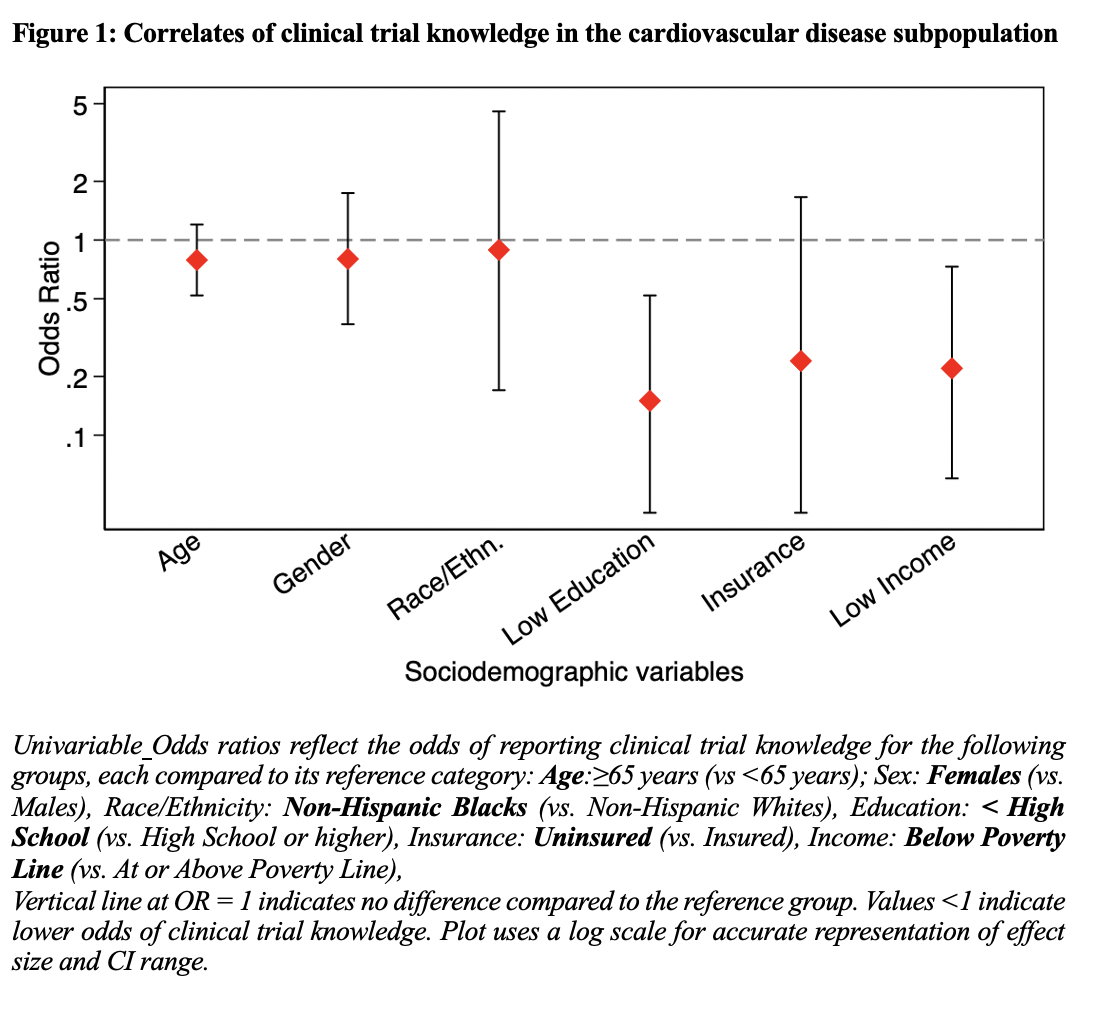
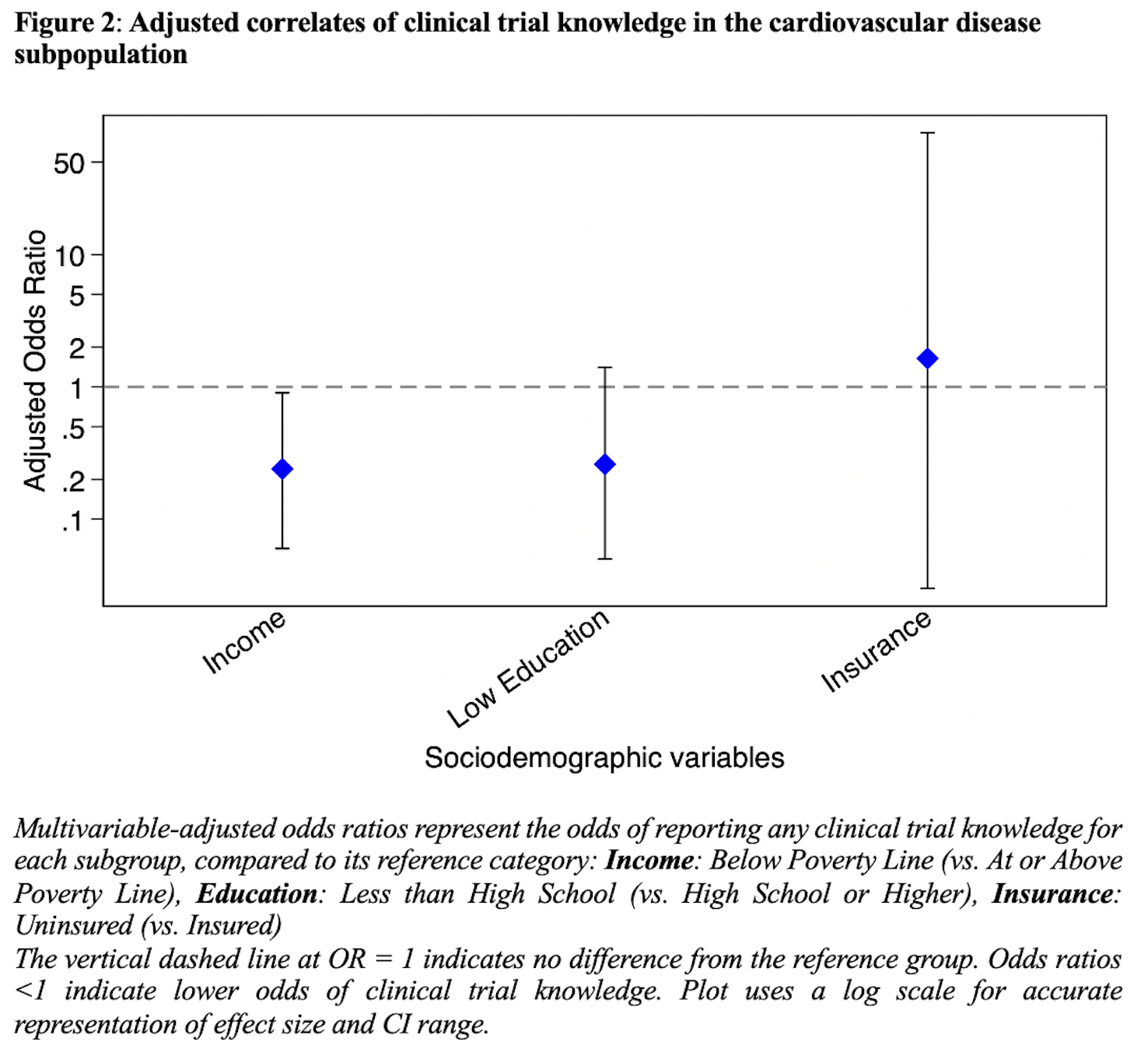
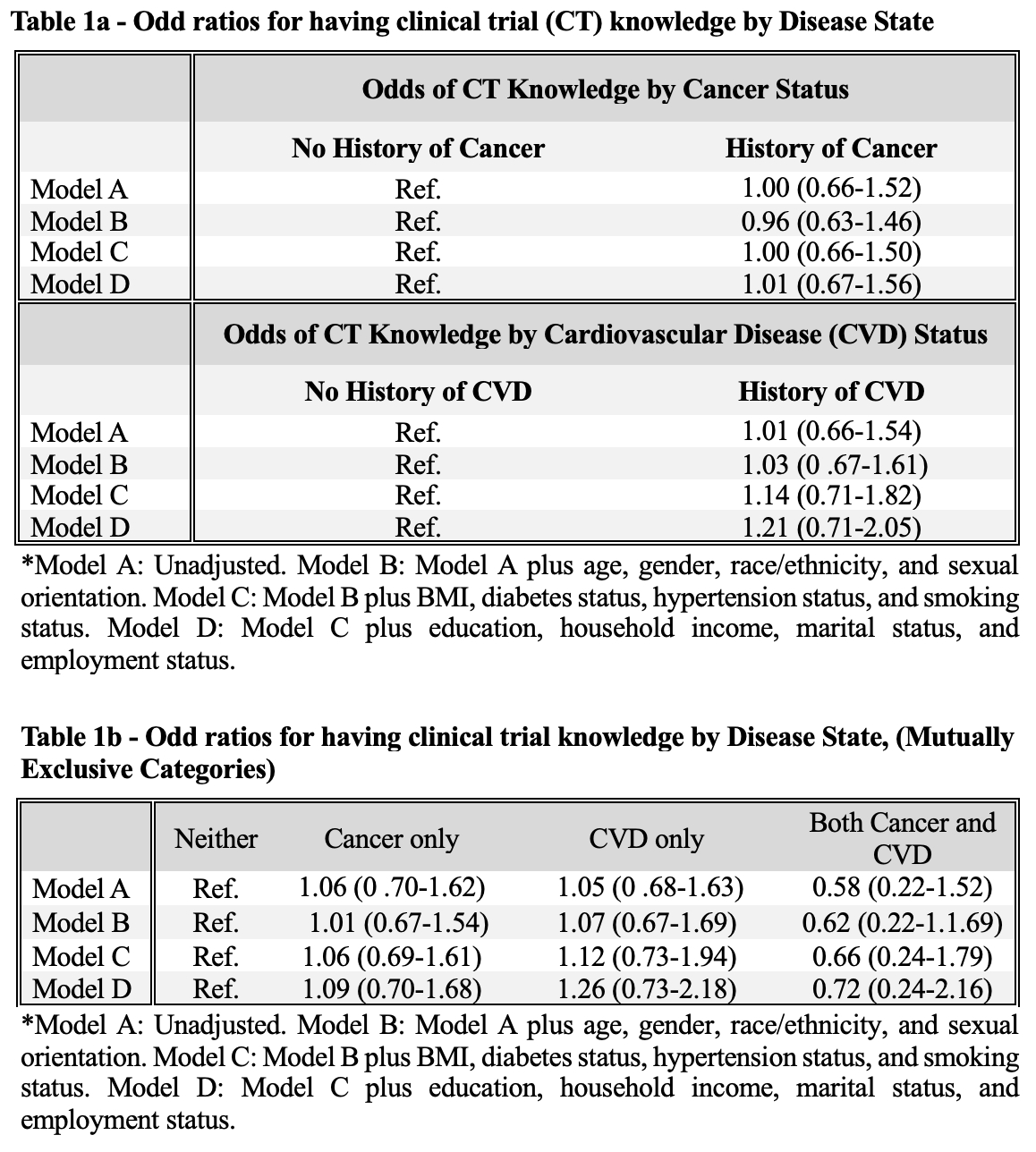
Results Among a weighted sample of ~2.5 million adults (mean [SD] age, 57 [17.0] years; 50% women), 6% and 8% reported history of cancer or CVD respectively. CT knowledge was 7% in CVD and 5% in cancer group; 35% of CVD group were below poverty line. In fully adjusted models, neither cancer [OR 1.01 (95% CI 0.67-1.56)] nor CVD [OR 1.21 (95% CI 0.71-2.05)] was significantly associated with CT knowledge (Table1a). In mutually exclusive disease models, neither cancer-only [OR 1.09 (95% CI 0.70-1.68)] nor CVD-only [OR 1.26 (95% CI 0.73-2.18)] status was associated with greater CT knowledge than adults without chronic conditions (Table1b). Among those with CVD, participants with less than a high school education [OR 0.15 (95% CI 0.04-0.52)] and those below the federal poverty level [OR 0.23 (95% CI 0.06-0.73)] had significantly lower odds of CT knowledge in univariable analysis (Fig1). However, after adjustment, only income was associated with CT knowledge [OR 0.24 (95% CI 0.06-0.98)] (Fig2)
Conclusion Most adults with CVD and cancer lacked CT knowledge, underscoring need for broader education. While income was a key correlate, targeted efforts to improve CT knowledge may particularly benefit vulnerable patients and expand access to innovative therapies improving CVD outcomes
Hussain, Zaib
(
Johns Hopkins University
, Baltimore , Maryland , United States )
Plante, Timothy
(
University of Vermont
, Colchester , Vermont , United States )
Ngige, Azuka
(
Johns Hopkins Medicine
, Clarksville , Maryland , United States )
Milller, Hailey
(
Johns Hopkins University
, MIDDLE RIVER , Maryland , United States )
Chepkorir, Joyline
(
Johns Hopkins University
, MIDDLE RIVER , Maryland , United States )
Juraschek, Stephen
(
BIDMC-Harvard Medical School
, Boston , Massachusetts , United States )
Martin, Seth
(
Johns Hopkins School of Medicine
, Baltimore , Maryland , United States )
Hays, Allison
(
Johns Hopkins
, Clarksville , Maryland , United States )
Michos, Erin
(
Johns Hopkins Medicine
, Clarksville , Maryland , United States )