Sex Differences in Cardiovascular Health Among Syrian Refugees at Zaatari Camp: A Cross-Sectional Study Using the AHA Life's Essential 8
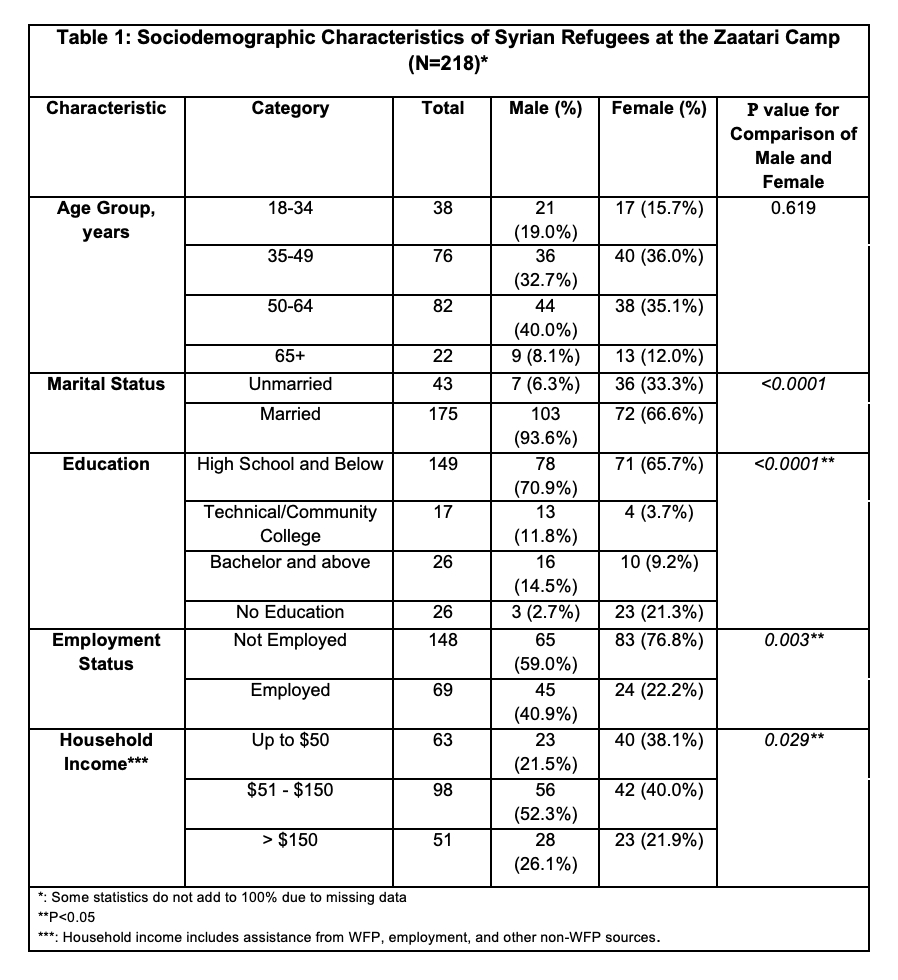
Abstract Body: Background: Cardiovascular disease (CVD) is a leading cause of morbidity and mortality globally. The Syrian refugee crisis has exacerbated CVD risk due to socioeconomic, biological, and environmental factors. This study aims to assess cardiovascular health (CVH) using the American Heart Association's Life's Essential 8 (LE8) metric among Syrian refugees residing in the Zaatari Camp in Jordan. Methods: A cross-sectional study was conducted at the King Salman Humanitarian Aid and Relief Primary Health Center within the Zaatari refugee camp. Participants included adult Syrian refugees evaluated for their CVH through the LE8 metrics: diet, physical activity, nicotine exposure, sleep health, body weight, blood glucose, blood pressure, and lipid levels. Data was collected in January 2024 using point-of-care testing devices and structured questionnaires. Descriptive and chi-square analyses were used. The total CVH score was derived by averaging eight health metrics, resulting in a composite score from 0 to 100. Scores of 80+ indicate high CVH, 50-79 indicate moderate CVH, and <50 indicate low CVH. Results: Syrian refugee (N=218) participants included males (50.6%) with a mean age of 48 years (+13.5). Most had a high school education or below (68.3%) and a high unemployment rate (68.2%). Almost 46% of individuals earned a household income of $51 - $150 monthly. More than 50% had low diet diversity, 61.8% were classified as hypertensive, and 49% were obese. Sex-stratified analysis showed that males had higher scores in BMI (24.7%) and physical activity (70.3%) compared to females (p<0.0001, p=0.034, respectively). Females had higher scores in sleep (55.4%) and nicotine exposure (84.1%) compared to males (p=0.001, p<0.0001, respectively). The total LE8 score for the participants was 60.6 (±15.8). Conclusion: Although the refugees demonstrated a moderate level of CVH, these findings suggest that without intervention, their CVH is likely to worsen due to high rates of hypertension, obesity, and poor dietary habits. Furthermore, implementing health assessment tools in refugee camps can aid clinicians in the early identification and management of CVD risk factors.
Alharthi, Abeer
(
Johns Hopkins University
, Baltimore , Maryland , United States )
Ogungbe, Bunmi
(
Johns Hopkins University
, Baltimore , Maryland , United States )
Al-rousan, Tala
(
University of California San Diego
, La Jolla , California , United States )
Dennison Himmelfarb, Cheryl
(
JOHNS HOPKINS UNIV
, Baltimore , Maryland , United States )
Commodore-mensah, Yvonne
(
JOHNS HOPKINS SCHOOL OF NURSIN
, Baltimore , Maryland , United States )
Author Disclosures:
Abeer Alharthi:DO NOT have relevant financial relationships
| Bunmi Ogungbe:DO NOT have relevant financial relationships
| Tala Al-Rousan:DO NOT have relevant financial relationships
| Cheryl Dennison Himmelfarb:No Answer
| Yvonne Commodore-Mensah:DO NOT have relevant financial relationships