Human 3D Engineered Heart Tissues Reveal Hypercontractility, Calcium Sensitivity, and Fibrotic Remodeling in MYBPC3-Driven HCM
Abstract Body: Mutations in MYBPC3, encoding cardiac myosin-binding protein C, are the most common genetic cause of hypertrophic cardiomyopathy (HCM), a disease characterized by hypercontractility, diastolic dysfunction, and progressive fibrotic remodeling. Disease-modifying treatments for MYBPC3-driven HCM remain limited, in part due to the lack of predictive human-relevant models that capture these complex functional phenotypes. Here, we describe a 3D engineered heart tissue (EHT) model of HCM using a commercially available human iPSC-derived MYBPC3 exon 6 mutant (MYBPC3e6) and its isogenic corrected control.
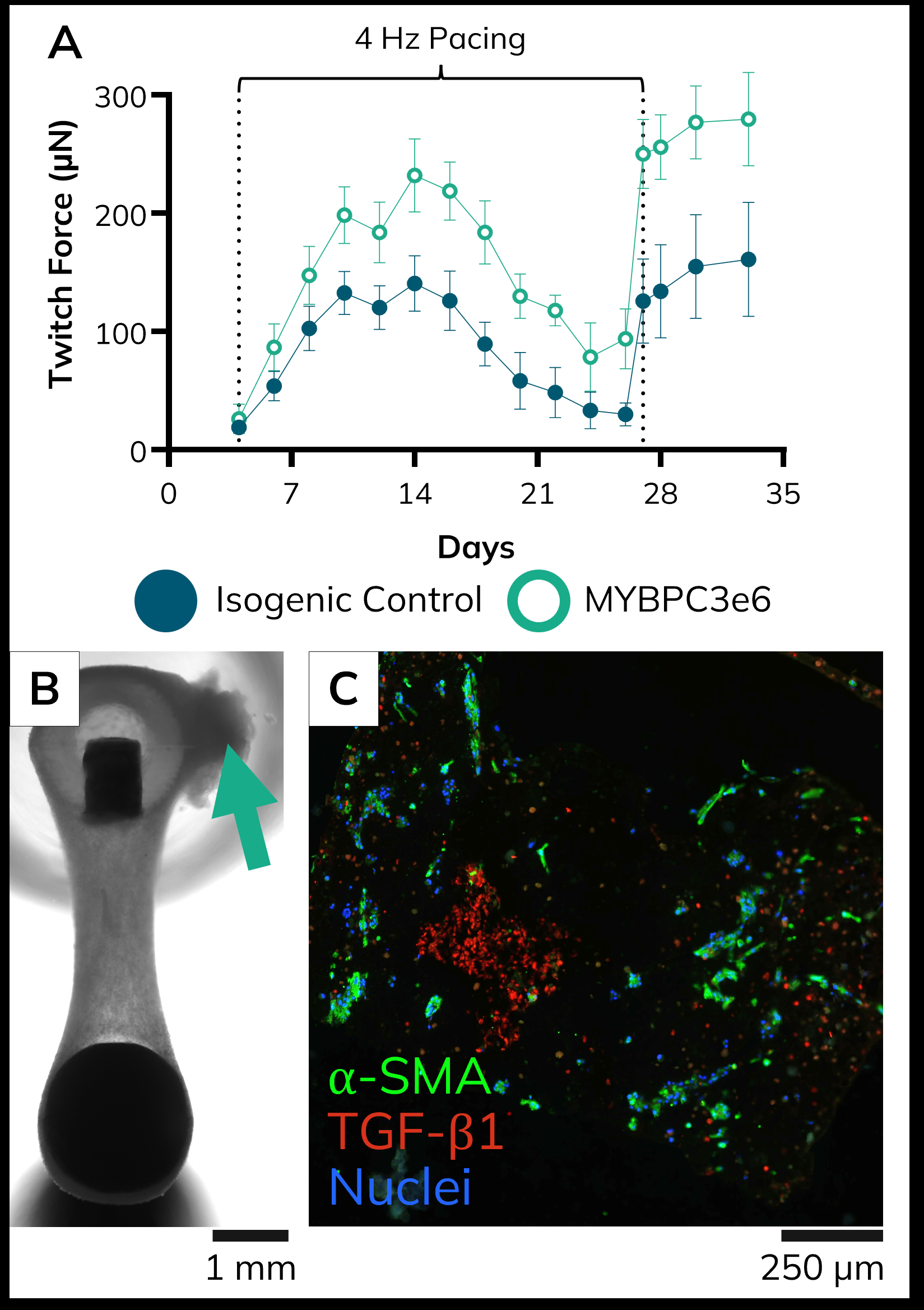
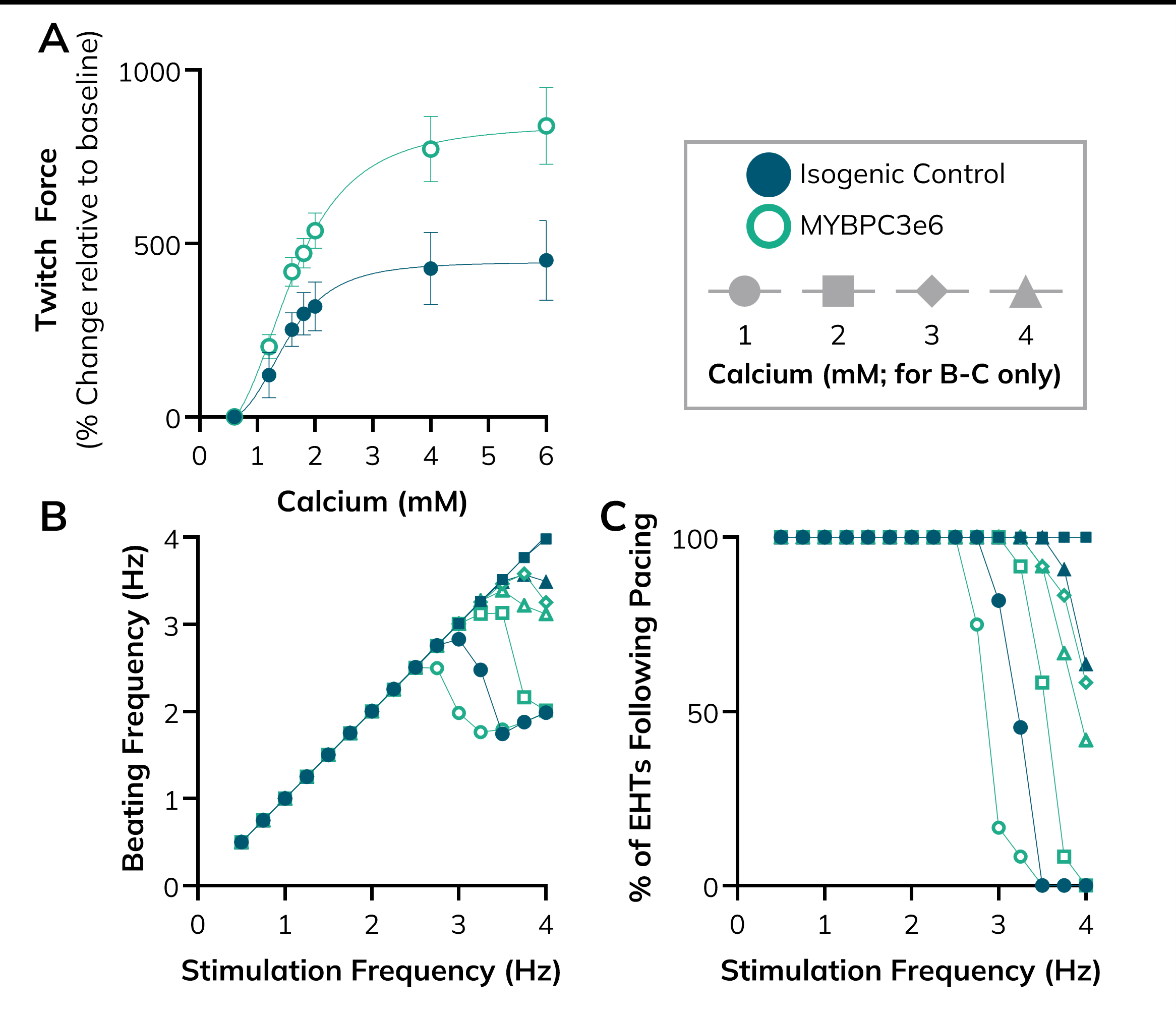
EHTs generated from MYBPC3e6 cardiomyocytes exhibited robust disease-relevant phenotypes when assessed using contractility assessments on the Mantarray platform. Compared with isogenic controls, MYBPC3e6 EHTs demonstrated a 73% increase in twitch force (p<0.001), consistent with a hypercontractile phenotype. Approximately 20% of tissues developed localized fibrotic lesions that were hypercellular and stained positive for α-smooth muscle actin and transforming growth factor-β1, indicating active profibrotic remodeling. Functional interrogation revealed enhanced myofilament calcium sensitivity, as MYBPC3e6 EHTs exhibited an 85% greater inotropic increase in twitch force across extracellular calcium concentrations from 0.5 to 6 mM (p<0.01). In addition, MYBPC3e6 EHTs showed impaired pacing fidelity at higher stimulation frequencies across calcium conditions, reflecting reduced chronotropic reserve observed clinically in HCM patients.
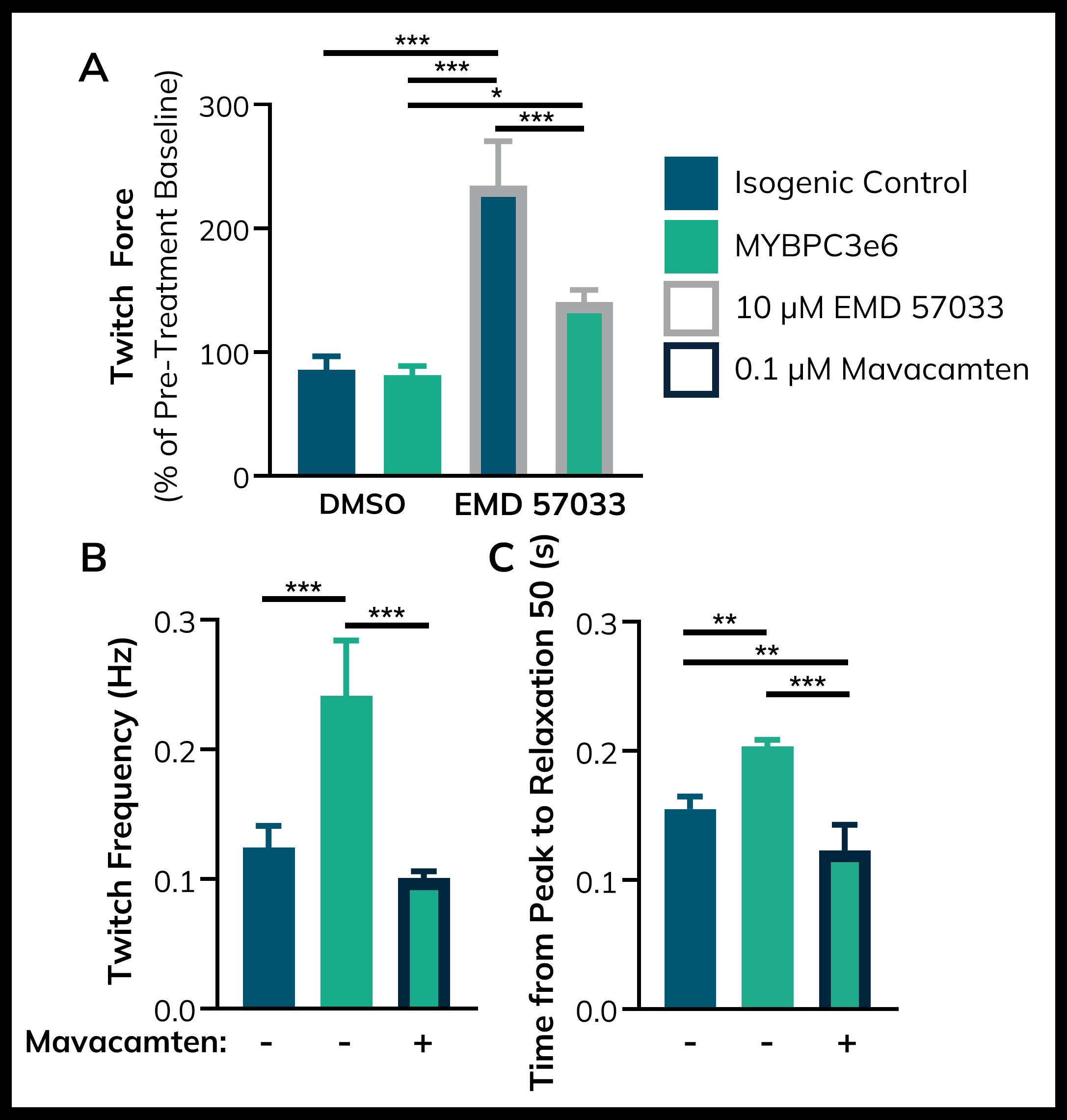
This model further demonstrates utility for pharmacological screening through disease-appropriate drug responses. MYBPC3e6 EHTs displayed a blunted response to the calcium sensitizer EMD 57033, consistent with baseline calcium hypersensitivity, while treatment with the myosin inhibitor mavacamten normalized spontaneous beating rates and improved relaxation kinetics.
Together, these findings establish MYBPC3e6 EHTs as a physiologically relevant and scalable in vitro human model of genetic HCM. This platform enables integrated assessment of contractility, calcium handling, fibrosis, and therapeutic response, supporting its application in mechanistic studies and preclinical drug discovery for cardiomyopathies relevant to neuromuscular and cardiac disease communities.
Leahy, Thomas
(
Curi Bio
, Seattle , Washington , United States )
Arefin, Ayesha
(
Curi Bio
, Seattle , Washington , United States )
Kabi, Neda
(
Curi Bio
, Seattle , Washington , United States )
Sullivan, Ellie
(
Curi Bio
, Seattle , Washington , United States )
Luttrell, Shawn
(
Curi Bio
, Seattle , Washington , United States )
Estrella, Nelsa
(
Curi Bio
, Seattle , Washington , United States )
Worthen, Christal
(
Curi Bio
, Seattle , Washington , United States )
Luerman, Greg
(
Curi Bio
, Seattle , Washington , United States )
Geisse, Nicholas
(
Curi Bio
, Seattle , Washington , United States )