Logo

American Heart Association

  15
  0


Final ID: Mon179

Modeling Cooperative Cross-Bridge Dynamics in Beating Heart

Abstract Body: Background. Cross-bridge (CB) cycling follows a very complex process involving both thick and thin filament interactions for each heartbeat. Despite extensive experimental investigations, the integrated regulatory mechanisms governing these interactions remain incompletely understood.

Hypothesis.
We hypothesized that a unified thick–thin filaments cross-bridge (UTFCB) model could accurately reproduce experimentally observed contractile behavior.

Method.
We developed UTFCB model with MATLAB/Simulink simulation based on established biophysical principles and prior experimental findings. First-order differential equations with rate accelerators to capture dynamic cooperative effects modeled state transitions. Model was validated using simultaneously measured intracellular calcium and force data from intact ex vivo papillary muscle preparations.

Results.
Calcium binding to troponin C transitions tropomyosin (Tm) from the blocked to the off state, exposing the actin filament. This allows myosin in the M.ADP.Pi state to weakly bind to actin. Transition to the strongly bound (CB-Strong) state further displaces Tm into the open state, exposing additional actin binding sites and promoting cooperative recruitment of more myosin heads. CB progresses to the rigor state following the release of ADP. Binding of ATP to rigor CB triggers its detachment from actin, resetting the myosin head into the resting M-ATP conformation. ATP is then hydrolyzed to regenerate the M.ADP.Pi state, priming the myosin for another cycle. If calcium is removed before myosin can rebind to actin, Tm transitions back to the blocked state to complete relaxation. Key regulatory features include: calcium initiates, cooperative enhancement of Tm-Open by strongly bound CB states, rate constants need to change with increasing heart rate, and CB cooperatively detaches followed by transition of myosin into the resting state independently of the thin filament status.

Conclusion.
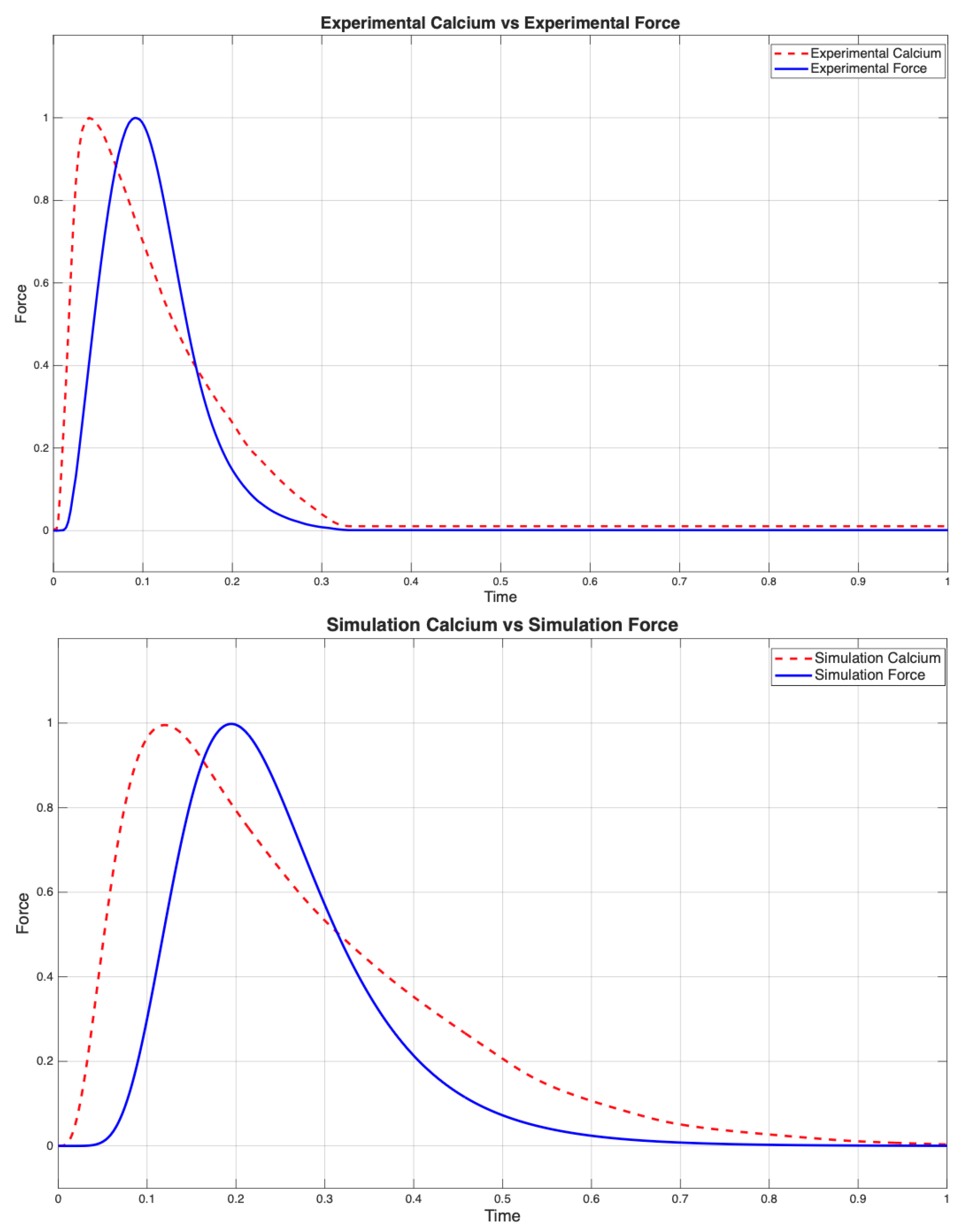
UTFCB simulation successfully reproduced experimentally observed calcium–force relationships of intact cardiac muscle, supporting its validity. This integrative model provides new mechanistic insight into cooperative regulation of cross-bridge cycling and offers a valuable platform for investigating alterations in cardiac contractility.
  • Stahr, Nicholas  ( Texas A&M University , College Station , Texas , United States )
  • Hale, Joshua  ( University of Arizona , Tucson , Arizona , United States )
  • Sadayappan, Sakthivel  ( University of Arizona , Tucson , Arizona , United States )
  • Tong, Carl  ( University of Arizona , Tucson , Arizona , United States )
  • Author Disclosures:
Meeting Info:

Basic Cardiovascular Sciences 2026

2026

Boston, Massachusetts

Session Info:

Poster Session 1

Monday, 07/13/2026 , 04:30PM - 07:00PM

Poster Session and Reception

More abstracts from these authors:
Dynamic Calcium-Pressure Coupling of in vivo Heart

Hale Joshua, Sadayappan Sakthivel, Tong Carl

Emerging Models and Therapeutic Strategies of HCM

Sadayappan Sakthivel

You have to be authorized to contact abstract author. Please, Login
Not Available