Atrial fibrillation promotes the development of cardiac endothelial dysfunction in a clinically relevant large animal model
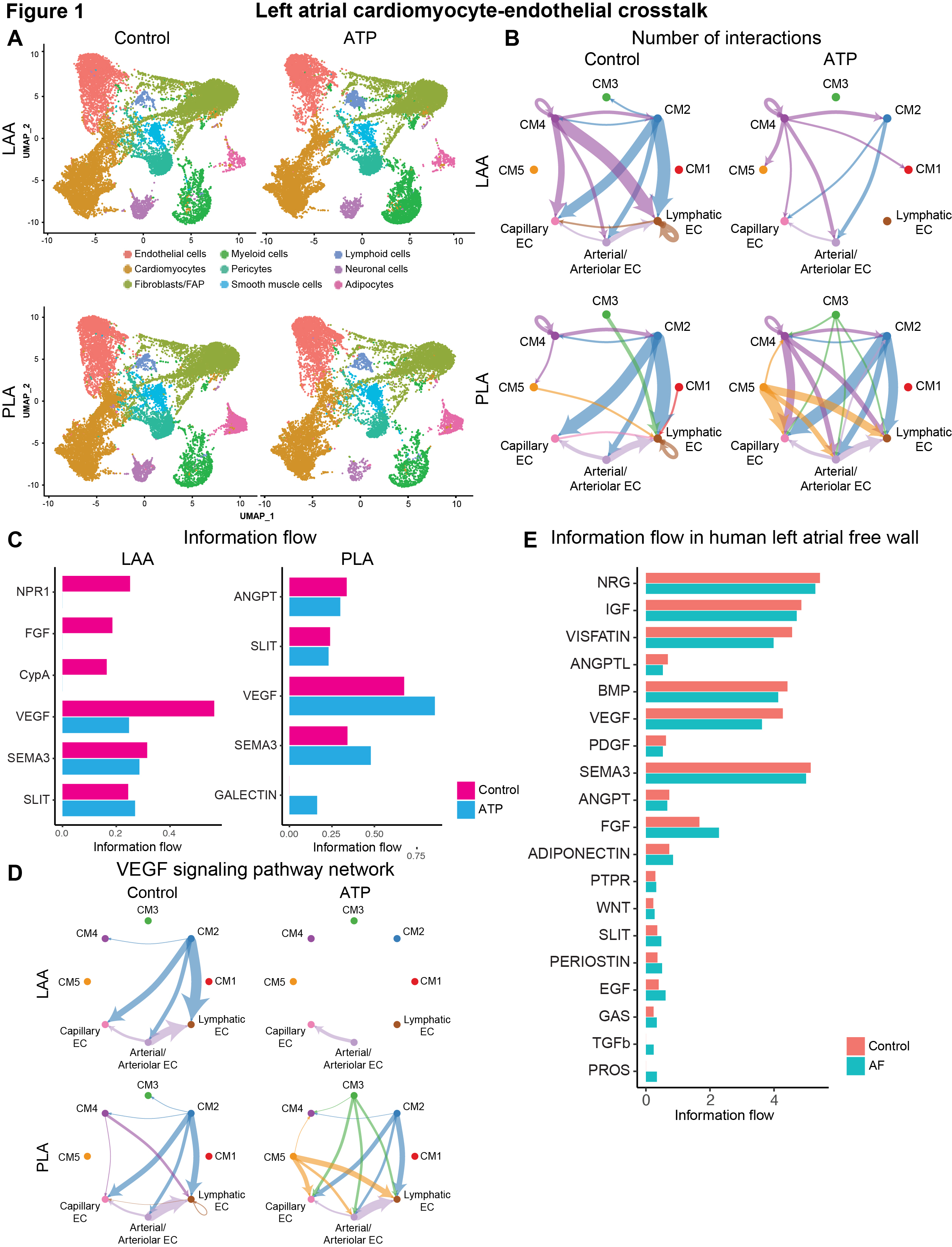
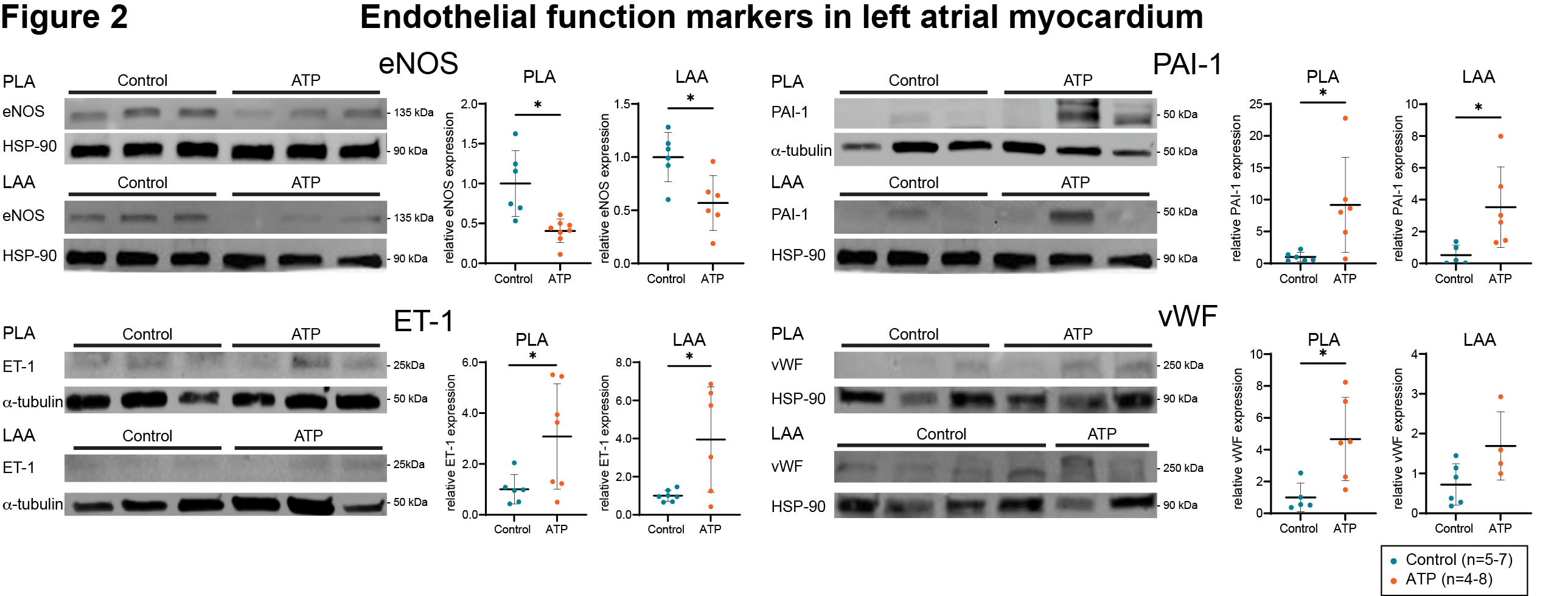
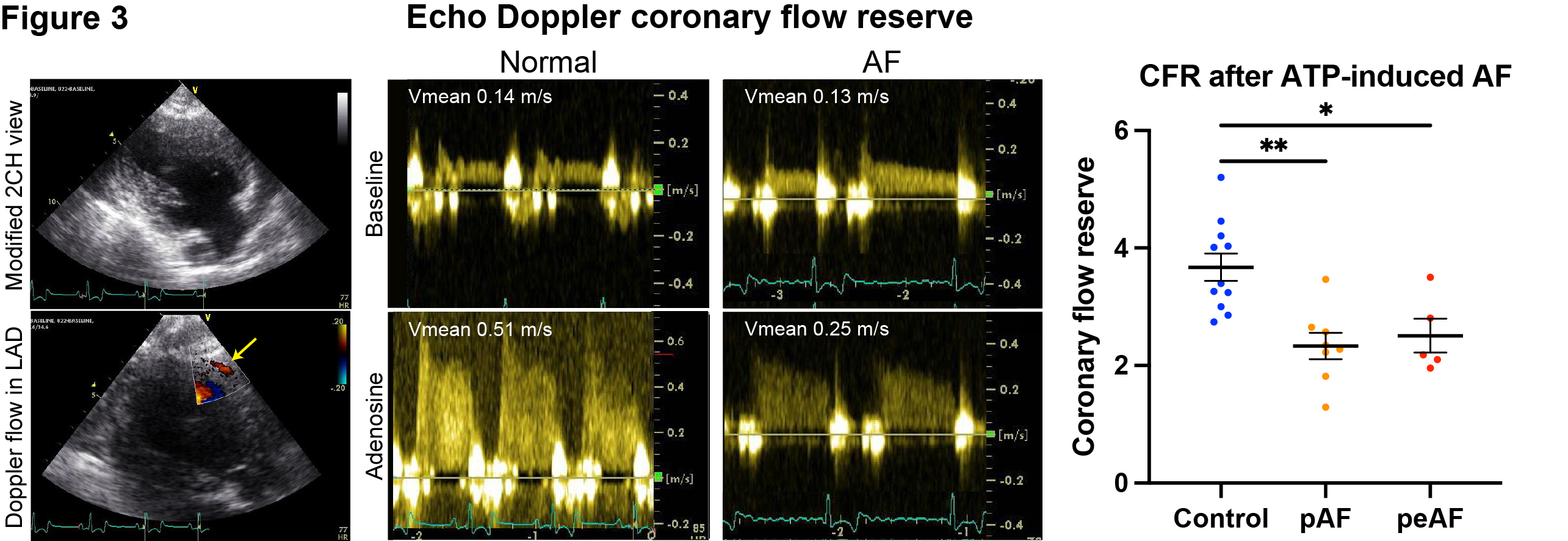
Abstract Body: Background AF is a major cause of stroke and heart failure. In patients, AF is often accompanied by endothelial dysfunction, a systemic disease characterized by vasoconstriction, thrombogenicity, and leukocyte and platelet adhesion, and known to cause heart failure. However, the directionality of the relationship between AF and endothelial dysfunction is not established. Aims To determine if persistent AF induced by atrial tachypacing (ATP) promotes endothelial dysfunction in a canine model. Methods In a canine model, AF was induced by ATP for 7 weeks when atrial tissue was collected and cryopreserved. Left atrial appendage (LAA) and posterior left atrial (PLA) tissue were used for snRNAseq, immunoblot and qPCR for markers of endothelial dysfunction (e.g. ET-1/EDN1, eNOS/NOS3, SELE, PAI-1/SERPINE, vWF). Coronary flow reserve (CFR) was assessed by Echo-doppler of a LAD branch at baseline and after maximal vasodilation (adenosine 560 mg/kg/min iv). A publicly-available snRNAseq dataset of the left atrial free wall (LAFW) of patients with AF and controls was used to validate findings. Results The LAA and PLA of control (n=2) and AF animals (n=2) showed comparable cell populations including endothelial cells (EC) and cardiomyocytes (CM) by snRNAseq (Fig. 1A). Receptor-ligand gene expression analysis showed informational flow from CM to EC markedly decreased in the AF LAA while it increased by almost 50% in the AF PLA, particularly from CM subtypes 3- 5 (Fig. 1B). VEGF and SEMA3 signaling pathways were differentially regulated, being increased in the AF PLA but decreased in the AF LAA (Fig. 1C-D). In human AF LAFW, adjacent to the LAA, VEGF and SEMA3 signaling pathways were significantly decreased (Fig. 1E). By immunoblot, expression of the vasoprotective protein eNOS decreased 2-fold with ATP (Fig. 2), while gene and protein expression of pro-inflammatory and pro-thrombotic mediators increased with ATP (qPCR: EDN1 control 1.0±0.1 Vs ATP 2.6±0.8, p<0.01; SELE control 1.0±0.4 Vs ATP 3.7±1.1, p<0.05; SERPINE1 control 1.0±0.2 Vs ATP 3.4±1.5, p<0.05). These data are consistent with atrial endothelial dysfunction. CFR was reduced in AF animals compared to control, even before development of persistent AF (Fig. 3, p<0.05). Conclusion AF induced by ATP promotes cardiac endothelial dysfunction. The dysregulation of VEGF and SEMA3 signaling pathways likely contributes to pathology and may offer novel therapeutic approaches to prevent AF-related thromboembolism and heart failure.
Bhatnagar, Ashita
(
Northwestern University
, Chicago , Illinois , United States )
Lee, Gahyun
(
Northwestern University
, Chicago , Illinois , United States )
Glinton, Kristofor
(
Northwestern University
, Chicago , Illinois , United States )
Mikhailov, Aleksei
(
University of Chicago
, Chicago , Illinois , United States )
Burrell, Amy
(
Northwestern University
, Chicago , Illinois , United States )
Mcluckie, Alicia
(
Northwestern University
, Chicago , Illinois , United States )
Ryan, Juliet
(
Northwestern University
, Chicago , Illinois , United States )
Zhang, Wenwei
(
University of Chicago
, Chicago , Illinois , United States )
Knight, Bradley
(
Northwestern University
, Chicago , Illinois , United States )
Shah, Sanjiv
(
Northwestern University
, Chicago , Illinois , United States )
Mcnally, Elizabeth
(
Northwestern University
, Chicago , Illinois , United States )
Arora, Rishi
(
University of Chicago
, Chicago , Illinois , United States )
Pfenniger, Anna
(
Northwestern University
, Chicago , Illinois , United States )