SHR-1918, an Angiopoietin-Like 3 Antibody, in Patients With Suboptimally Controlled Hyperlipidemia
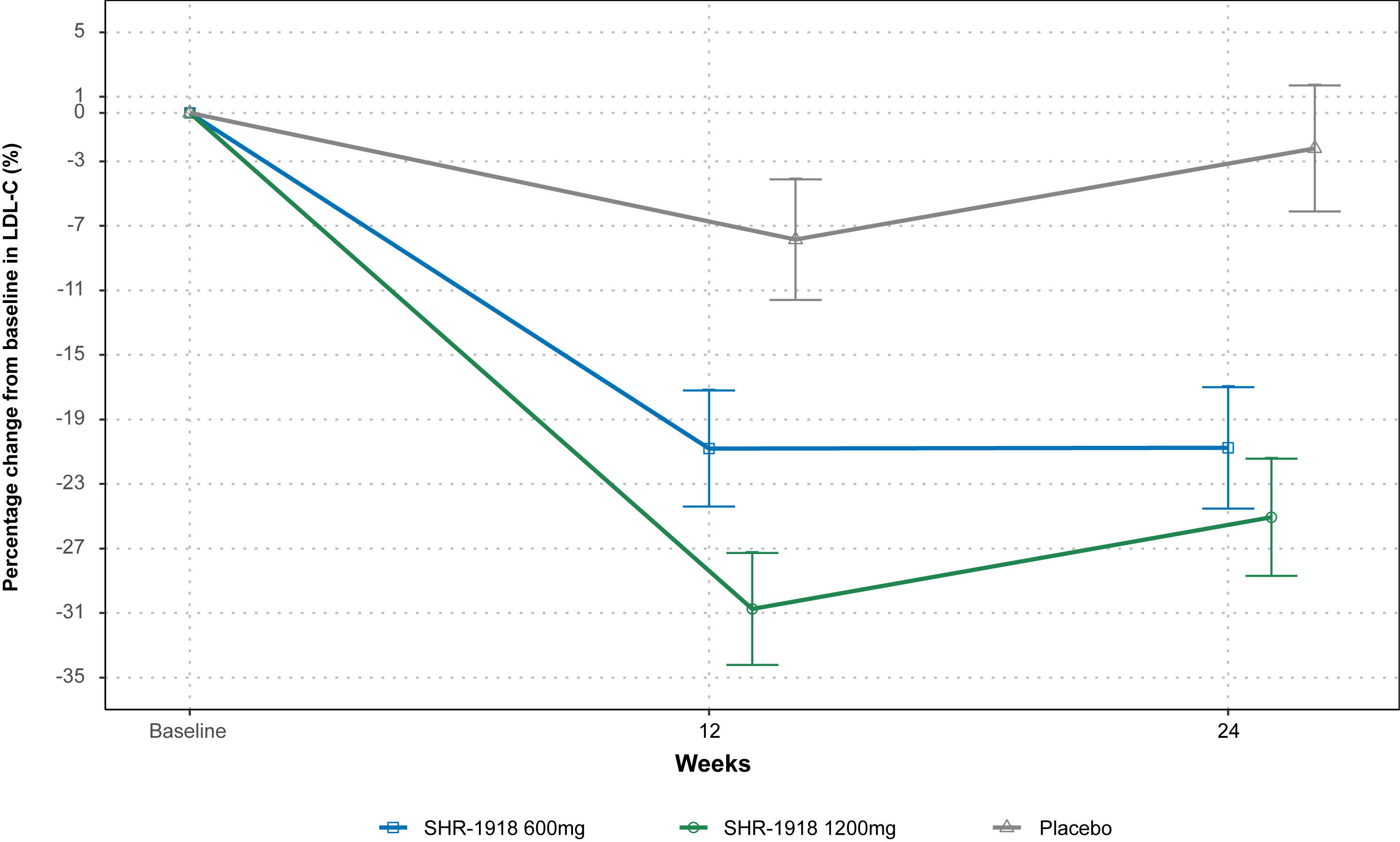
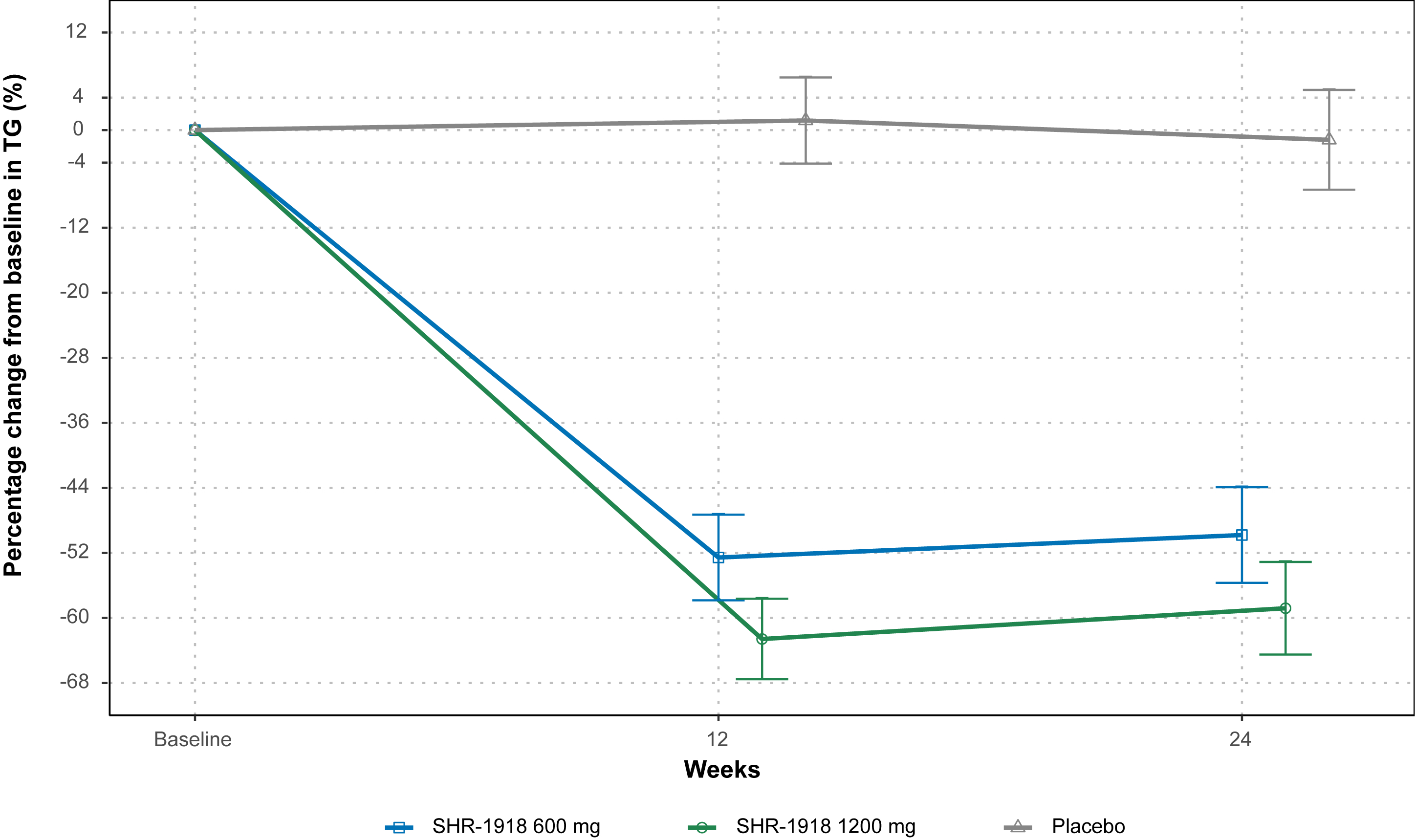
Abstract Body (Do not enter title and authors here): Introduction Low-density lipoprotein cholesterol (LDL-C) and triglyceride (TG) are established risk factors for atherosclerotic cardiovascular diseases. SHR-1918 is a long-acting angiopoietin-like 3 (ANGPTL3) monoclonal antibody designed to lower LDL-C and TG levels through the regulation of ANGPTL3. This study assessed the efficacy and safety of SHR-1918 subcutaneous injection in patients with suboptimally controlled hyperlipidemia. Methods In this randomized, double-blind, placebo-controlled phase 2 trial, hyperlipidemic patients who did not achieve LDL-C targets after 4-8 weeks of statin run-in were randomized (2:1) to receive subcutaneous SHR-1918 (600 mg or 1200 mg Q12W) or placebo for 24 weeks, followed by 8 weeks of safety observation. Background lipid-lowering therapies remained stable during the treatment period. The primary and key secondary endpoints were percentage change in LDL-C and TG from baseline to Week 24. Results 44 patients were randomized and treated (SHR-1918 600 mg, n=14; SHR-1918 1200 mg, n=16; placebo, n=14). Baseline LDL-C and TG were generally balanced. At Week 24, the least squares mean percentage change in LDL-C was -20.8%, -25.1%, and -2.2% in the SHR-1918 600 mg, SHR-1918 1200 mg, and placebo groups, respectively (Figure 1). The between group difference (SHR-1918 vs placebo) was -18.6% (95% CI, -29.5 to -7.6; P=0.0015) for 600 mg and -22.9% (95% CI, -33.7 to -12.1%; P=0.0001) for 1200 mg. TG decreased by 49.8% and 58.8% with SHR-1918 600 mg and 1200 mg, compared to 1.2% with placebo (Figure 2). The between-group difference in TG change from baseline was -48.6% (95% CI, -65.8 to -31.4; P<0.0001) for 600 mg and -57.6% (95% CI, -74.6 to -40.6; P<0.0001) for 1200 mg. Significant reductions were also observed in non-high-density lipoprotein cholesterol, total cholesterol, and other lipids after 24 weeks of SHR-1918 treatment. Treatment-emergent adverse events (TEAEs) were reported by 22 (73.3%) SHR-1918-treated patients and 11 (78.6%) placebo-treated patients, all of which were mild or moderate in severity. 8 (26.7%) patients had SHR-1918-related TEAEs. There were no TEAEs leading to treatment discontinuation or death during the study. Conclusion SHR-1918 further reduced LDL-C and TG levels in hyperlipidemic patients on standard lipid-lowering therapies, providing a novel and safe treatment option for hyperlipidemia.