Logo

American Heart Association

  14
  0


Final ID:

The Foot-PAD Trial: A Double-Blind, Randomized Placebo-Controlled Trial to determine the effect of a 12-Week Program of Footplate Neuromuscular Electrical Stimulation on Walking Capacity in Patients with Peripheral Artery Disease

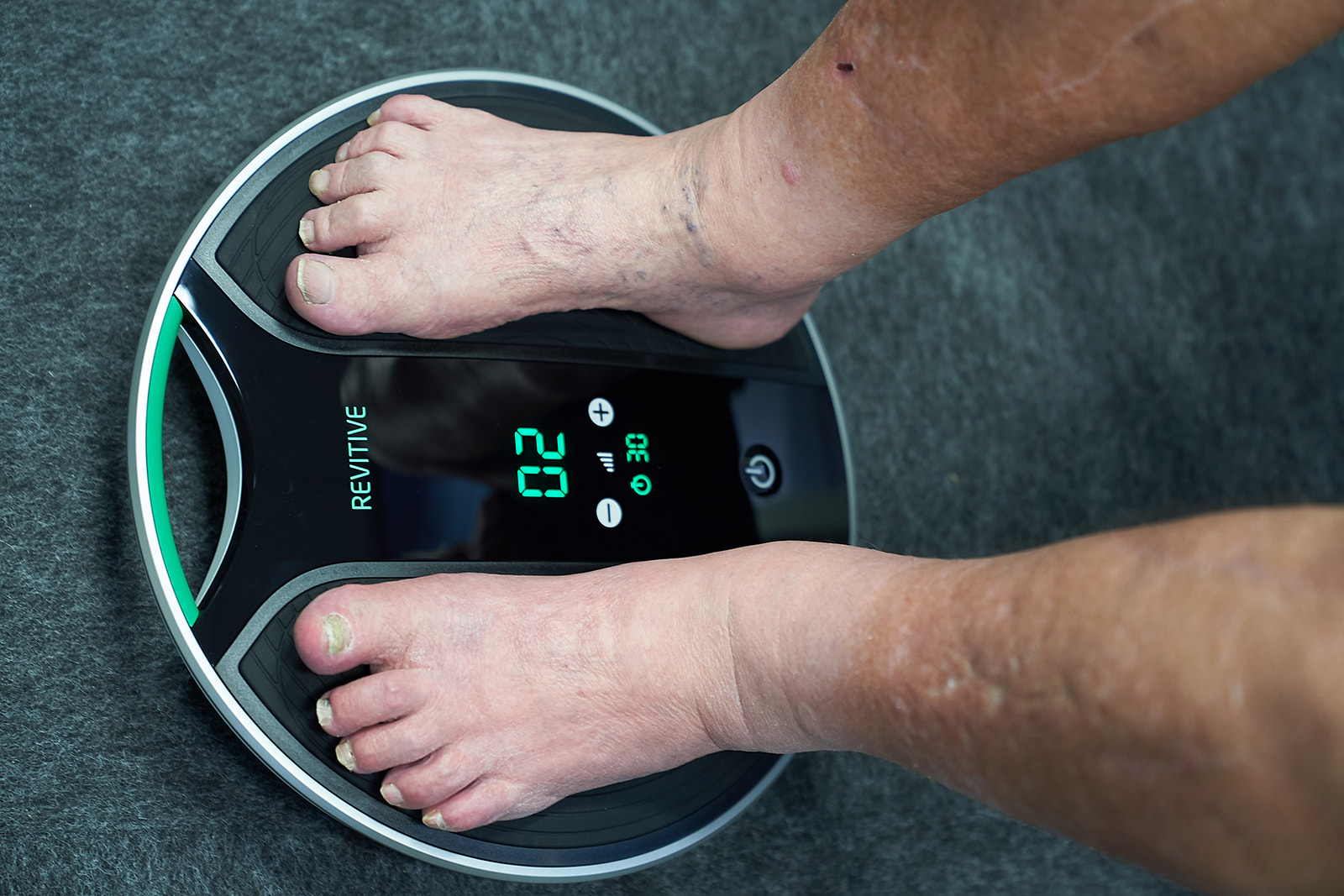
Abstract Body (Do not enter title and authors here): Background: Patients with peripheral artery disease (PAD) experience leg muscle pain that limits walking and the ability to adhere to exercise therapy. Neuromuscular electrical stimulation (NMES) induces exercise-like muscle contractions and can be performed without pain. Hypothesis and Purpose: We hypothesised that a 12-week program of NMES would improve walking capacity compared with placebo-control in patients with PAD.
Study Design and Methods: Single-centre, parallel-group, double-blinded, randomized placebo-controlled trial. Participants were randomized to a 12-week program of NMES or sham placebo-control (CON). This was followed by a 6-week off-intervention follow-up. Outcomes were assessed at baseline (week 0), midway (week 6) and at the end of the intervention period (week 12), and again at the end of the follow-up phase (week 18). Sample Size: 180 patients (n=90 per group) from public hospital, private hospital and community clinic recruitment sites. Population Studied: Adults (mean age: 72 ± 9 y; ABI: 0.69 ± 0.20) with a diagnosis of PAD who experience leg pain when walking (intermittent claudication). Interventions: Participants used a footplate-NMES device (Revitive Medic Coach) for 2x30 min periods each day to deliver stimulation sufficient to induce contraction of the leg muscles. Control participants used a sham device that delivers a low intensity stimulation that does not induce muscle contraction. Primary End Point: Maximum distance during the six-minute walk test (6MWT) at week 12. Secondary End Points: Pain-free distance during the 6MWT, maximum and pain-free walking time during a graded treadmill test, self-reported walking impairment questionnaire (WIQ), disease-specific QOL assessed using the intermittent claudication questionnaire (ICQ), and accelerometer derived physical activity levels. Power Calculation: At an alpha-level of 0.05 and a power of 0.80 the trial was powered to detect a 30 m change (effect size 0.33) in 6MWT distance in the NMES group compared with CON.
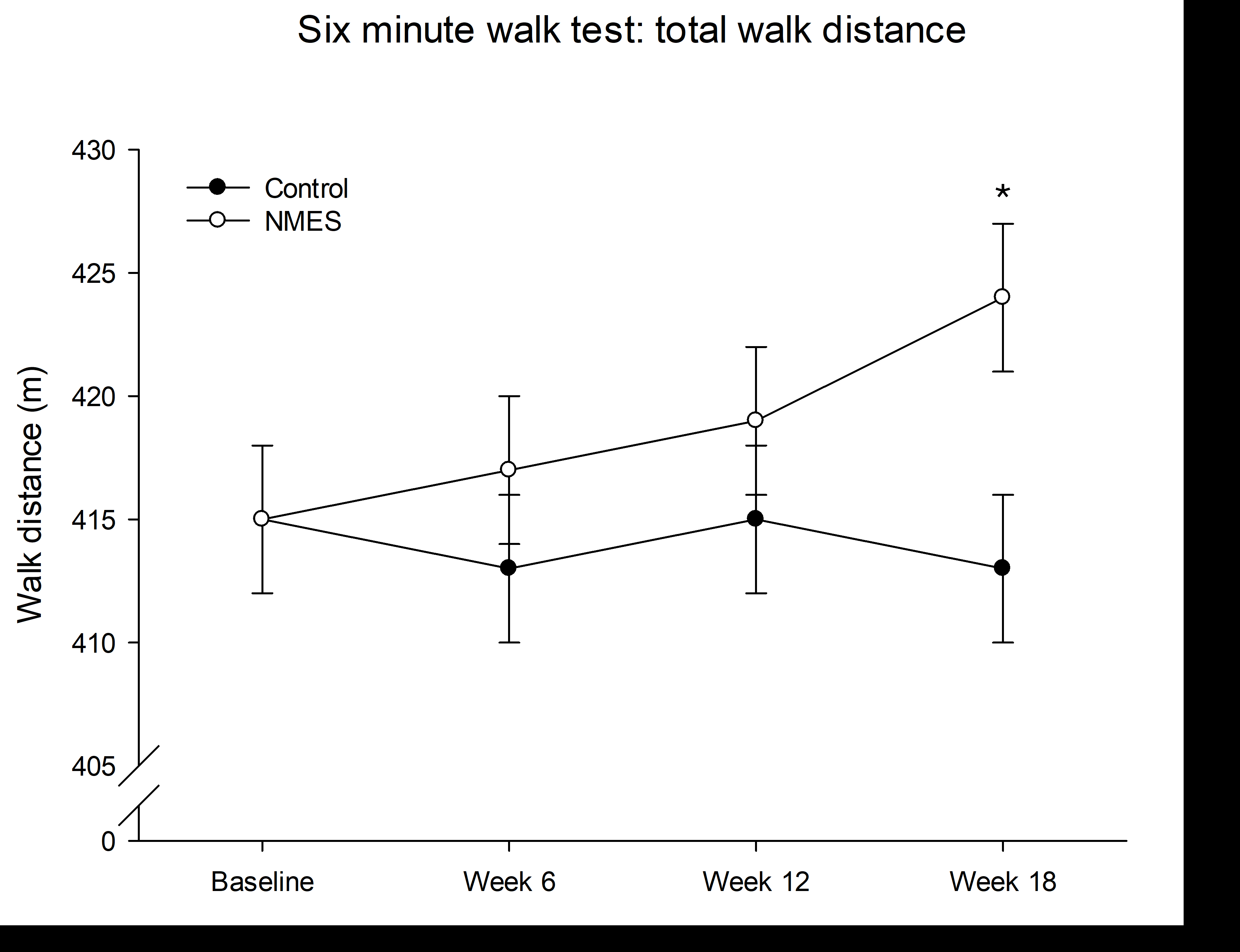
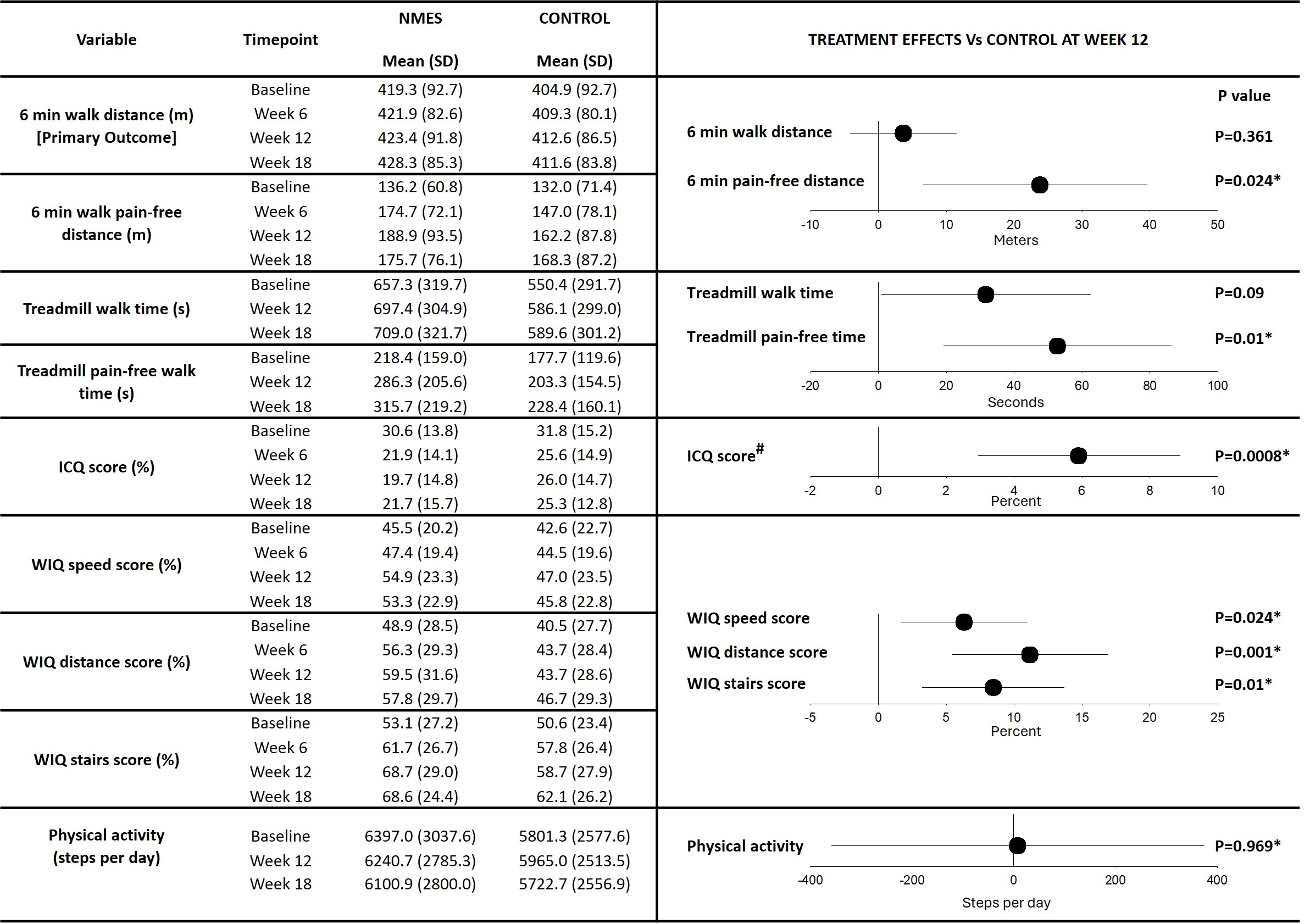
Outcomes: There was no difference in 6MWT distance between groups at week 12 (marginal mean difference (MMD): 3.68 m; 95% CI: -4.21 to 11.56; P = 0.361). At week 18, six weeks after the intervention ceased, 6MWT distance was greater in the NMES group compared with CON (MMD: 10.77 m; 95% CI: 2.82 to 18.72; P = 0.008). Pain-free 6MWT distance increased and was greater in the NMES group compared with CON at week 12 (MMD: 23.08 m; 95% CI: 6.55 to 39.61; P = 0.024).
  • Askew, Christopher  ( University of the Sunshine Coast , Sippy Downs , Queensland , Australia )
  • Mcdermott, Mary  ( Northwestern University , Chicago , Illinois , United States )
  • Golledge, Jonathan  ( James Cook University , Townsville , Queensland , Australia )
  • Group, Footpad Trial  ( University of the Sunshine Coast , Sippy Downs , Queensland , Australia )
  • Windsor, Mark  ( University of the Sunshine Coast , Sippy Downs , Queensland , Australia )
  • Feka, Krist  ( University of the Sunshine Coast , Sippy Downs , Queensland , Australia )
  • Walker, Meegan  ( University of the Sunshine Coast , Sippy Downs , Queensland , Australia )
  • Schaumberg, Mia  ( University of the Sunshine Coast , Sippy Downs , Queensland , Australia )
  • Russell, Fraser  ( University of the Sunshine Coast , Sippy Downs , Queensland , Australia )
  • Neal, Bruce  ( The George Institute for Global Health, University of New South Wales , Sydney , New South Wales , Australia )
  • Esterman, Adrian  ( University of South Australia , Adelaide , South Australia , Australia )
  • Litewka, Lucas  ( University of the Sunshine Coast , Sippy Downs , Queensland , Australia )
  • Author Disclosures:
    Christopher Askew: DO have relevant financial relationships ; Research Funding (PI or named investigator):Actegy:Past (completed) | Mary McDermott: DO have relevant financial relationships ; Researcher:Mars:Active (exists now) ; Independent Contractor:Eli Lilly:Active (exists now) ; Researcher:ACI Medical:Active (exists now) | Jonathan Golledge: DO have relevant financial relationships ; Employee:Townsville Hospital and James Cook University:Active (exists now) ; Research Funding (PI or named investigator):NHMRC, MRFF, Heart Foundation, Townsville Hospital:Active (exists now) ; Speaker:Novartis:Past (completed) | FootPAD Trial Group: DO NOT have relevant financial relationships | Mark Windsor: DO NOT have relevant financial relationships | Krist Feka: DO NOT have relevant financial relationships | Meegan Walker: DO NOT have relevant financial relationships | Mia Schaumberg: No Answer | Fraser Russell: No Answer | Bruce Neal: DO NOT have relevant financial relationships | Adrian Esterman: No Answer | Lucas Litewka: No Answer
Meeting Info:

Scientific Sessions 2025

2025

New Orleans, Louisiana

Session Info:

Arteries and Veins in Trouble: VTE and PAD

Saturday, 11/08/2025 , 09:45AM - 11:00AM

Featured Science

More abstracts on this topic:
Arterial Duplex Ultrasound Impacts Endovascular Outcomes: Unintended Consequences of Patient Harm From the 2023 and 2025 Amputation Reduction and Compassion Act

Choe Sonya, Mourkus Avrodet, Adeyemo Damola, Wear Kaitlin, Ondieki Lindsey, Novak Daniel, Stuk Stephen, Kendrick Edwin

Characterizing Exercise-Induced Myocardial Perfusion Response in Hypertrophic Cardiomyopathy and Heart Failure with Preserved Ejection Fraction

Schulz Alexander, Nezafat Reza, Wallace Tess, Ghanbari Fahime, Rodriguez Jennifer, Chow Kelvin, Kellman Peter, Rowin Ethan, Maron Martin, Manning Warren

More abstracts from these authors:
You have to be authorized to contact abstract author. Please, Login
Not Available