
Beyond the Biopsy: Serial Cardiac MRI Reveals Diagnostic and Prognostic Value in Postpartum Eosinophilic Myocarditis
Abstract Body (Do not enter title and authors here): Description of Case
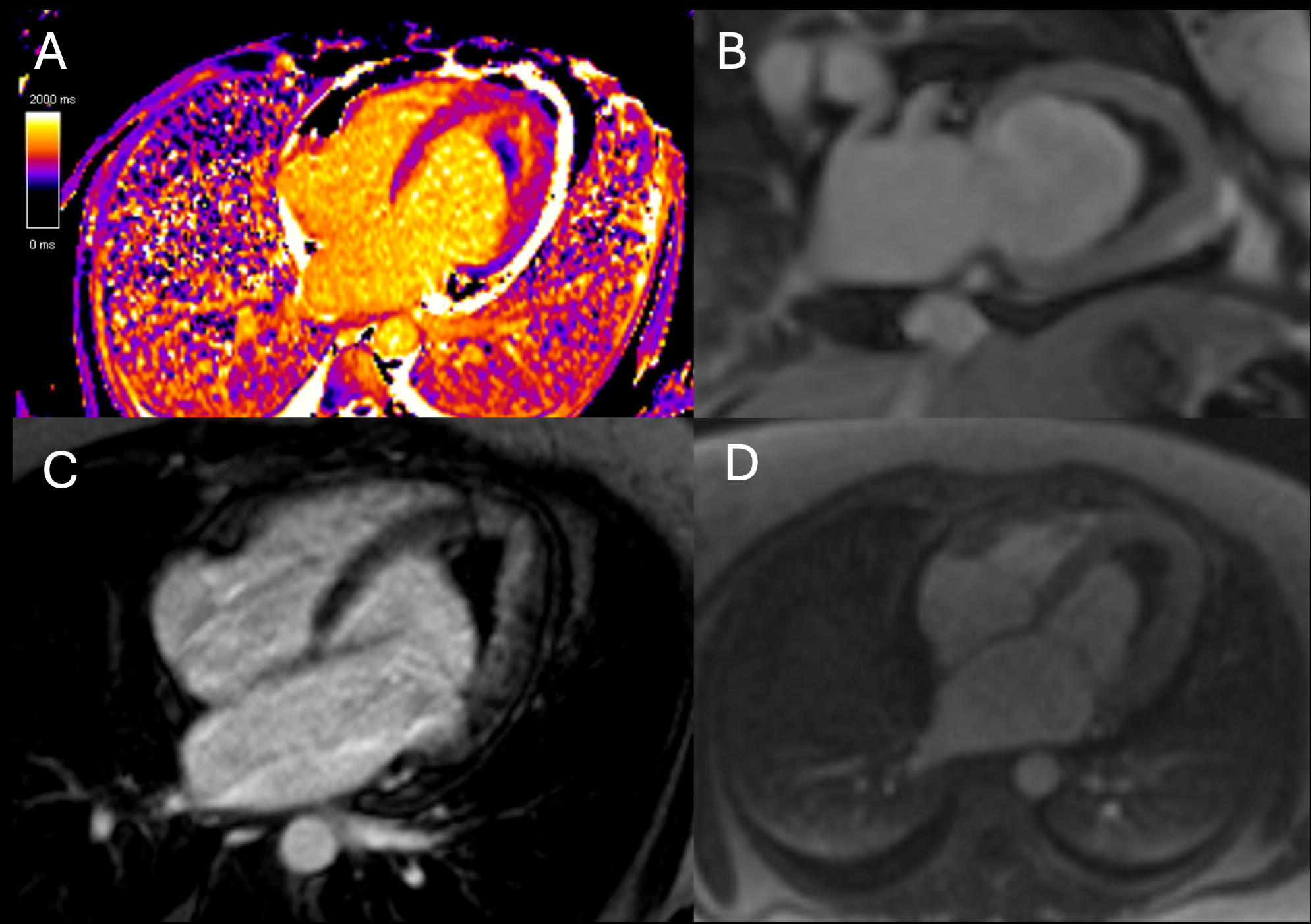
A 37-year-old woman with hypertension, polycystic ovarian syndrome, and a family history of eosinophilic esophagitis presented 8 weeks postpartum with progressive dyspnea and hypoxia. Laboratory testing showed mild eosinophilia and elevated BNP with a normal troponin. Transthoracic echocardiography revealed preserved ejection fraction and apical thickening. Cardiac MRI (1.5T) demonstrated reduced LVEF (43%), mid-to-apical akinesis, and a large laminar apical thrombus (18 × 51 mm). Native T1 and extracellular volume were elevated. First-pass perfusion showed an apical perfusion defect surrounded by hyperenhancing myocardium, consistent with the “double V sign.” Late gadolinium enhancement demonstrated mid-wall fibrosis in the basal anteroseptum. Endomyocardial biopsy revealed only mild myocyte hypertrophy without eosinophilic infiltration.
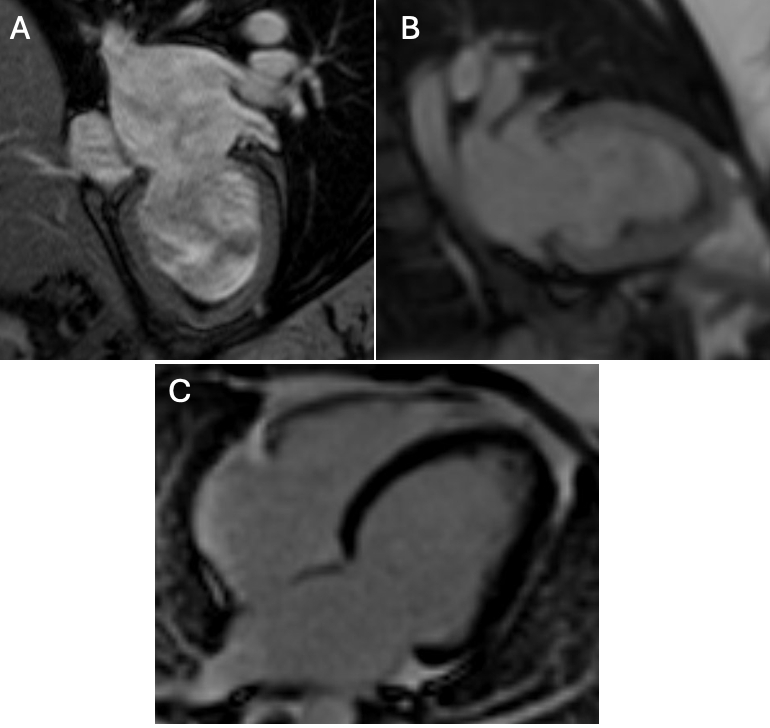
Discussion Eosinophilic myocarditis is an uncommon inflammatory cardiomyopathy that often mimics other etiologies of heart failure and may evade histologic confirmation due to patchy myocardial involvement. In this case, the clinical context and distinct cardiac MRI findings supported the diagnosis despite a non-diagnostic biopsy. Given the imaging and laboratory findings, high-dose corticosteroids and anticoagulation were initiated empirically. At three months, repeat imaging showed improved LVEF (57%), resolution of wall motion abnormalities, and thrombus shrinkage to 7 mm. By ten months, MRI demonstrated normalized systolic function (LVEF 60%), near-complete resolution of the thrombus (10 × 6 mm, tethered in the chordae), and no residual late enhancement. T1 and extracellular volume remained mildly elevated. This case illustrates the diagnostic and longitudinal value of cardiac MRI in eosinophilic myocarditis, particularly when biopsy is inconclusive, and highlights the utility of serial imaging in guiding and monitoring therapy.
Berzingi, Seher
( West Virginia University
, Morgantown
, West Virginia
, United States
)
Hendricks, Emily
( West Virginia University
, Morgantown
, West Virginia
, United States
)
Haider, Mobeen
( West Virginia University
, Morgantown
, West Virginia
, United States
)
Muthukumar, Lakshmi
( West Virginia University
, Morgantown
, West Virginia
, United States
)
Author Disclosures:
Seher Berzingi:DO NOT have relevant financial relationships
| Emily Hendricks:DO NOT have relevant financial relationships
| Mobeen Haider:DO NOT have relevant financial relationships
| Lakshmi Muthukumar:No Answer