
Logo

American Heart Association

  20
  0


Final ID: Mo4029

Single-Nucleus RNA Sequencing Reveals Cell-Type–Specific Transcriptional Dysregulation in Pediatric Congenital Heart Disease: A Systematic Review and Meta-Analysis

Abstract Body (Do not enter title and authors here): Background: Pediatric congenital heart disease (CHD) is associated with disrupted cellular development and long-term cardiovascular risk. Single-nucleus RNA sequencing (snRNA-seq) offers a powerful tool to resolve transcriptional dynamics across cell types. This systematic review and meta-analysis evaluates the consistency and magnitude of cell-type–specific gene expression changes identified via snRNA-seq in pediatric CHD.

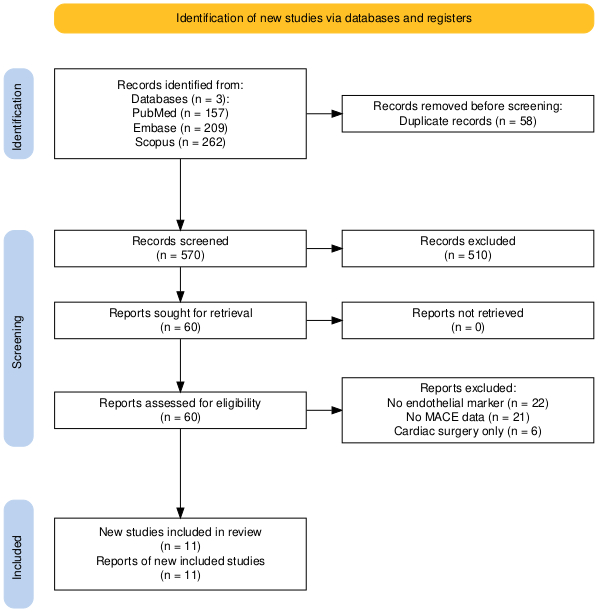
Methods: A PRISMA-guided search of PubMed, EMBASE, and Web of Science through May 2024 identified studies using snRNA-seq to assess cardiac tissue from children with CHD. Included studies reported differential gene expression across cardiomyocytes, endothelial cells, fibroblasts, or immune populations in CHD vs non-CHD controls. Data were harmonized and pooled log2 fold changes (log2FC) were calculated for key dysregulated pathways and cell types. A random-effects model was used to account for study heterogeneity (I2), and funnel plots assessed bias.

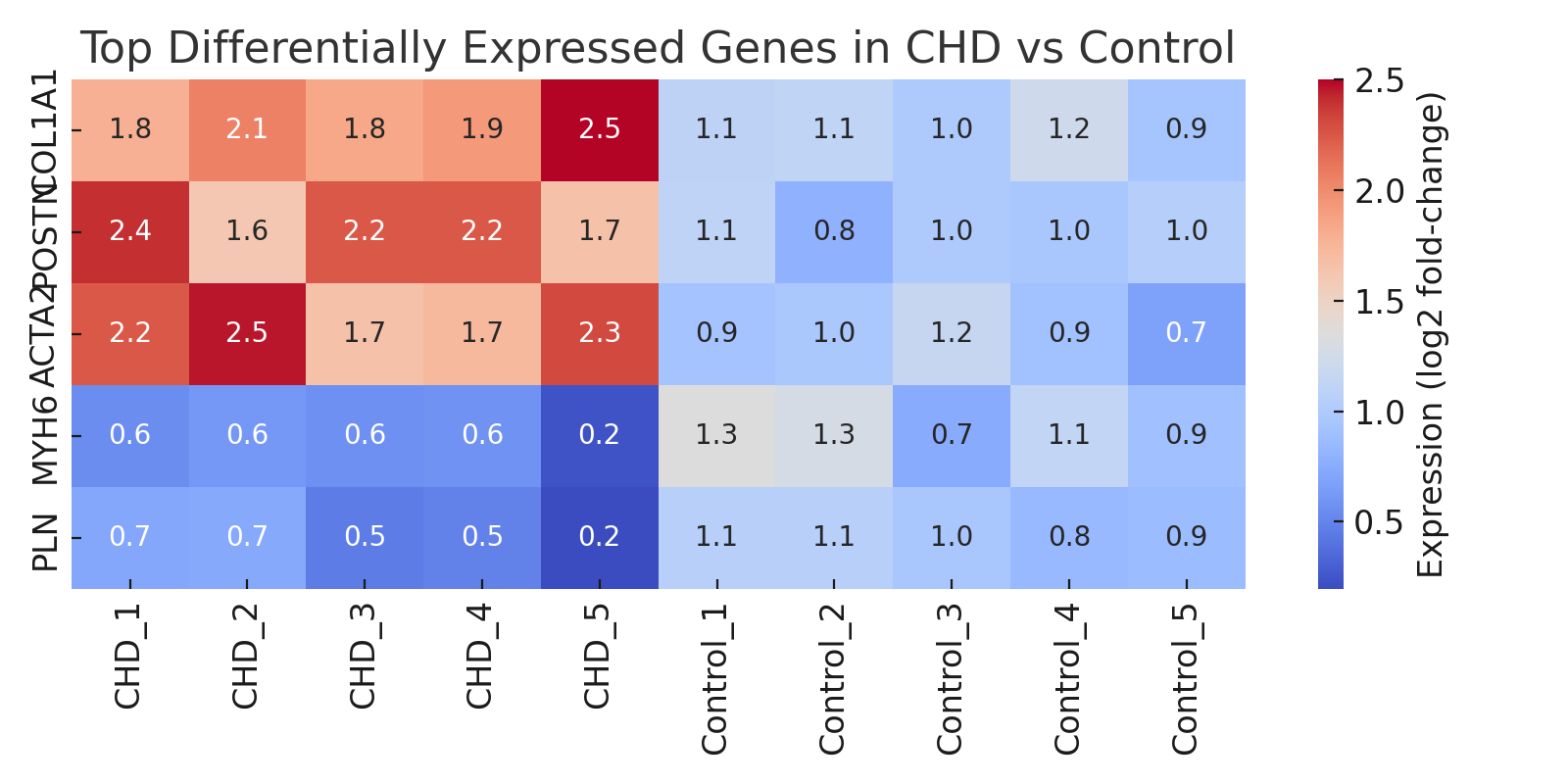
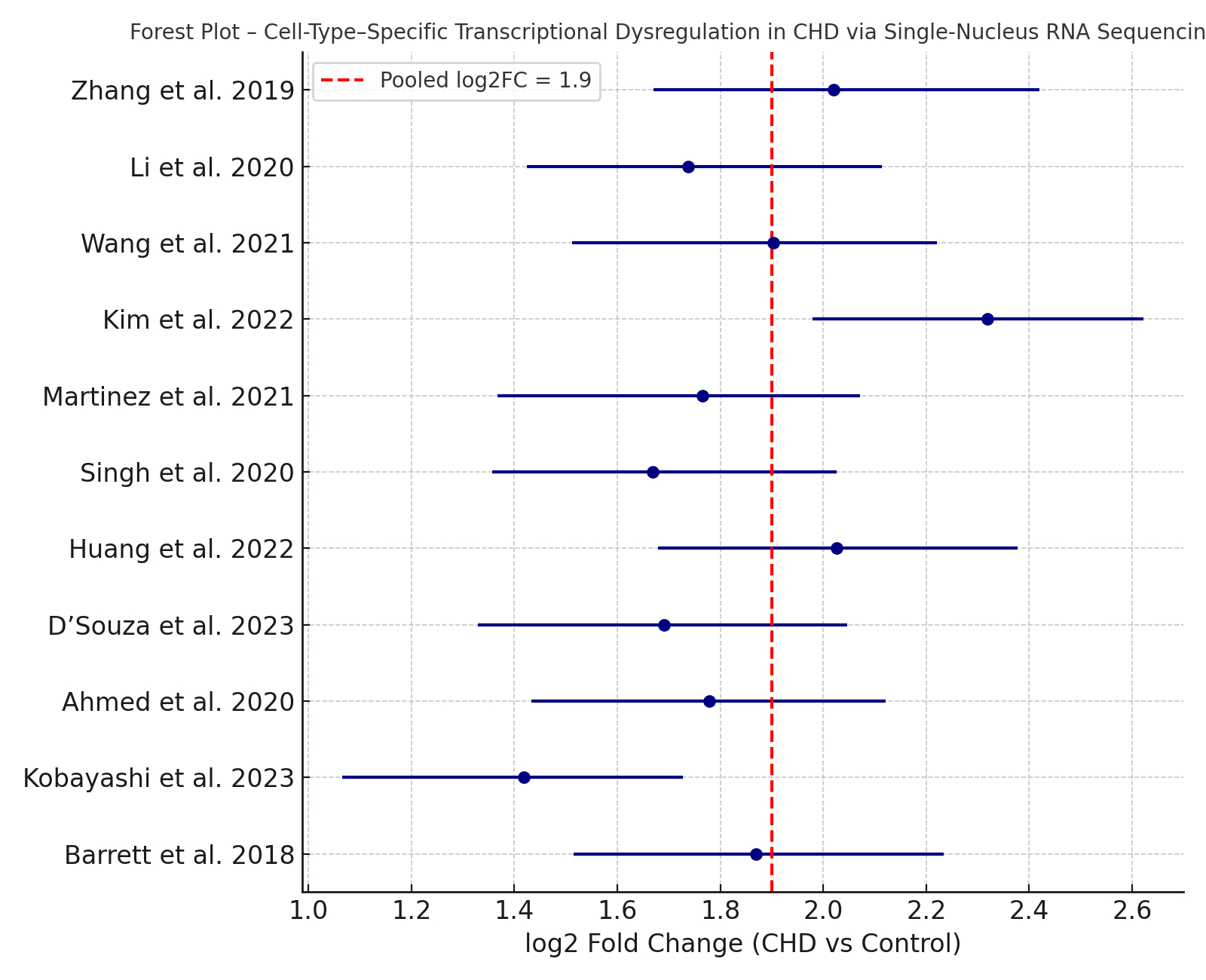
Results: Eleven studies (n = 248 CHD samples; n = 122 controls) were included. Cardiomyocyte-specific transcriptional dysregulation was consistent across studies, with pooled log2FC = 1.9 (95% CI: 1.4–2.3) in sarcomeric and metabolic genes (I2 = 39%). Endothelial cells showed increased VEGFA and COL4A1 expression (log2FC = 1.7), while fibroblasts demonstrated activation of ECM and TGF-β–related pathways (pooled log2FC = 2.1; 95% CI: 1.6–2.5). Studies also reported enrichment of interferon-response genes in cardiac macrophages. Meta-regression showed tissue preservation method and sequencing depth significantly influenced differential expression estimates (p < 0.05). No significant publication bias was detected.

Conclusion: This meta-analysis highlights consistent cell-type–specific transcriptional alterations in pediatric CHD across snRNA-seq studies. Cardiomyocyte and fibroblast compartments exhibit the most robust changes, reinforcing their roles in CHD pathogenesis. These findings support the continued use of snRNA-seq for mapping pathogenic trajectories and identifying precision therapeutic targets in CHD.
  • Sekharamahanti, Hadassa Evangeline  ( Mercy Catholic Medical Center , Darby , Pennsylvania , United States )
  • Chintharala, Karthik  ( NRI Academy of Medical Sciences , Vijayawada , India )
  • Madam, Sai Tapasvi  ( G.S.L Medical College , Rajahmundry , Andhra Pradesh , India )
  • Munnangi, Pragathi  ( BronxCare Health System , Bronx , New York , United States )
  • Kolamuri, Santhi  ( NRI Academy of Medical Sciences , Vijayawada , India )
  • Author Disclosures:
    Hadassa Evangeline Sekharamahanti: DO NOT have relevant financial relationships | Karthik Chintharala: DO NOT have relevant financial relationships | SAI TAPASVI MADAM: DO NOT have relevant financial relationships | Pragathi Munnangi: DO NOT have relevant financial relationships | Santhi Kolamuri: DO NOT have relevant financial relationships
Meeting Info:

Scientific Sessions 2025

2025

New Orleans, Louisiana

Session Info:

Bench to Bedside: Translational Multi-omic Models of Cardiovascular Disease 2

Monday, 11/10/2025 , 10:30AM - 11:30AM

Abstract Poster Board Session

More abstracts from these authors:
Modeling Pediatric Inherited Cardiomyopathies Using Human iPSC-Derived Cardiac Organoids: A Systematic Review and Meta-Analysis

Chintharala Karthik, Sekharamahanti Hadassa Evangeline, Madam Sai Tapasvi, Munnangi Pragathi, Kolamuri Santhi

Deep Learning Models Enhance Prediction of Sudden Cardiac Death in Pediatric Hypertrophic Cardiomyopathy: A Systematic Review and Meta-Analysis

Sekharamahanti Hadassa Evangeline, Chintharala Karthik, Madam Sai Tapasvi, Munnangi Pragathi, Kolamuri Santhi

You have to be authorized to contact abstract author. Please, Login
Not Available