Logo

American Heart Association

  16
  0


Final ID: Su2062

False-Positive Aortic Intimal Flap on Echocardiography in an Asymptomatic Adolescent: Clinical Correlation Prevents Misdiagnosis

Abstract Body (Do not enter title and authors here): Background:
Echocardiography is frequently used as a first-line imaging tool for aortic evaluation, but its susceptibility to artifacts can lead to false-positive findings. Aortic dissection is a critical diagnosis that requires confirmation with advanced imaging before initiating treatment. This case report highlights the clinical importance of clinical correlation and confirmatory imaging when echocardiographic findings suggest aortic dissection in the absence of symptoms.
Case presentation
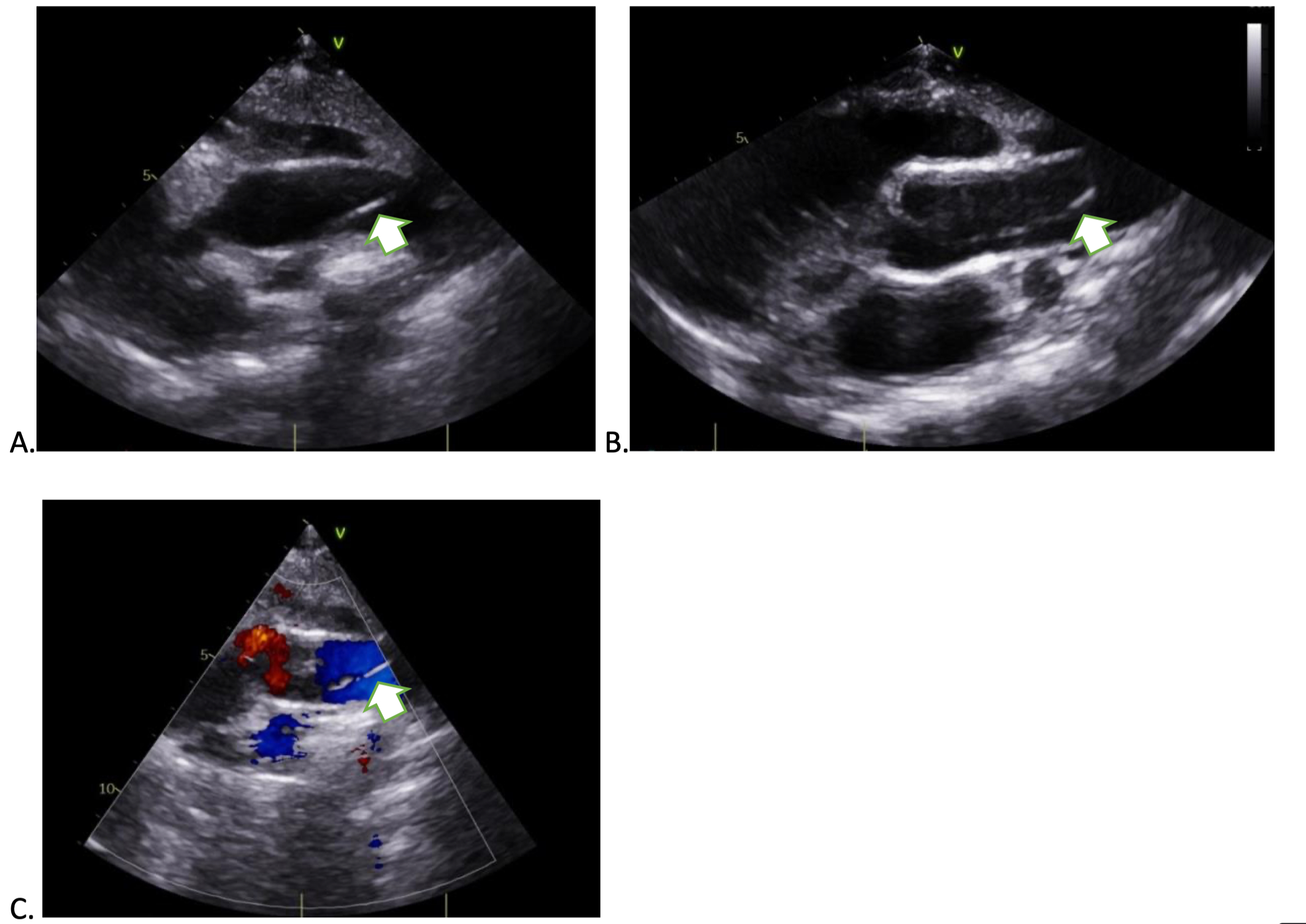
A 12-year-old male with a remote history of self-resolving dyspnea and previously noted trivial mitral regurgitation presented for routine follow-up. He was clinically well with no cardiac symptoms, normal vital signs, and an unremarkable physical exam. Echocardiography revealed an apparent intimal flap (Figure 1-3) in the proximal ascending aorta, raising concern for aortic dissection. There was no associated turbulent flow, pericardial effusion, or signs of hemodynamic compromise. Due to the gravity of potential dissection, a contrast-enhanced computed tomography (CT) aortogram was performed.
CT imaging showed normal aortic anatomy with no evidence of dissection, intimal flap, aneurysm, or other structural abnormalities. Retrospective echocardiographic image review suggested the finding was likely an artifact, possibly due to reverberation or suboptimal transducer angulation. A repeat echocardiogram three months later showed a persistent but less prominent artifact. No intervention was required, and the patient remained asymptomatic.
Conclusion:
This case demonstrates that echocardiographic artifacts can mimic life-threatening conditions such as aortic dissection. CT aortography remains the gold standard in confirming aortic pathology, particularly in cases where echocardiographic findings are incongruent with the clinical presentation. Incorporating clinical judgment and confirmatory imaging prevents unnecessary anxiety, testing, and interventions, especially in pediatric patients.
  • Koirala, Tapendra  ( LSU Health Shreveport , Shreveport , Louisiana , United States )
  • Mahajan, Siddharth  ( LSU Health Shreveport , Shreveport , Louisiana , United States )
  • Jones, Ryan  ( LSU Health Shreveport , Shreveport , Louisiana , United States )
  • Author Disclosures:
    Tapendra Koirala: DO NOT have relevant financial relationships | Siddharth Mahajan: No Answer | Ryan Jones: No Answer
Meeting Info:

Scientific Sessions 2025

2025

New Orleans, Louisiana

Session Info:

Interesting Cases Across Cardiovascular Disease Prevention and CKM

Sunday, 11/09/2025 , 03:15PM - 04:15PM

Abstract Poster Board Session

More abstracts on this topic:
A multi-ethnic foundation model-based artificial intelligence electrocardiogram for detection and prognostication of elevated left ventricular filling pressure

Lee Min Sung, Lee Seung-pyo, Lim Jaehyun, Kang Sora, Lee Hak Seung, Jang Jong-hwan, Son Jeong Min, Kwon Joon-myoung, Kim Yong-jin, Kim Kyung-hee

A large-scale multi-view deep learning-based assessment of left ventricular ejection fraction in echocardiography

Jing Linyuan, Metser Gil, Mawson Thomas, Tat Emily, Jiang Nona, Duffy Eamon, Hahn Rebecca, Homma Shunichi, Haggerty Christopher, Poterucha Timothy, Elias Pierre, Long Aaron, Vanmaanen David, Rocha Daniel, Hartzel Dustin, Kelsey Christopher, Ruhl Jeffrey, Beecy Ashley, Elnabawi Youssef

You have to be authorized to contact abstract author. Please, Login
Not Available