Barriers to Research Participation: The Impact of Race, Education, and Socioeconomic Status in a Diverse Urban Population
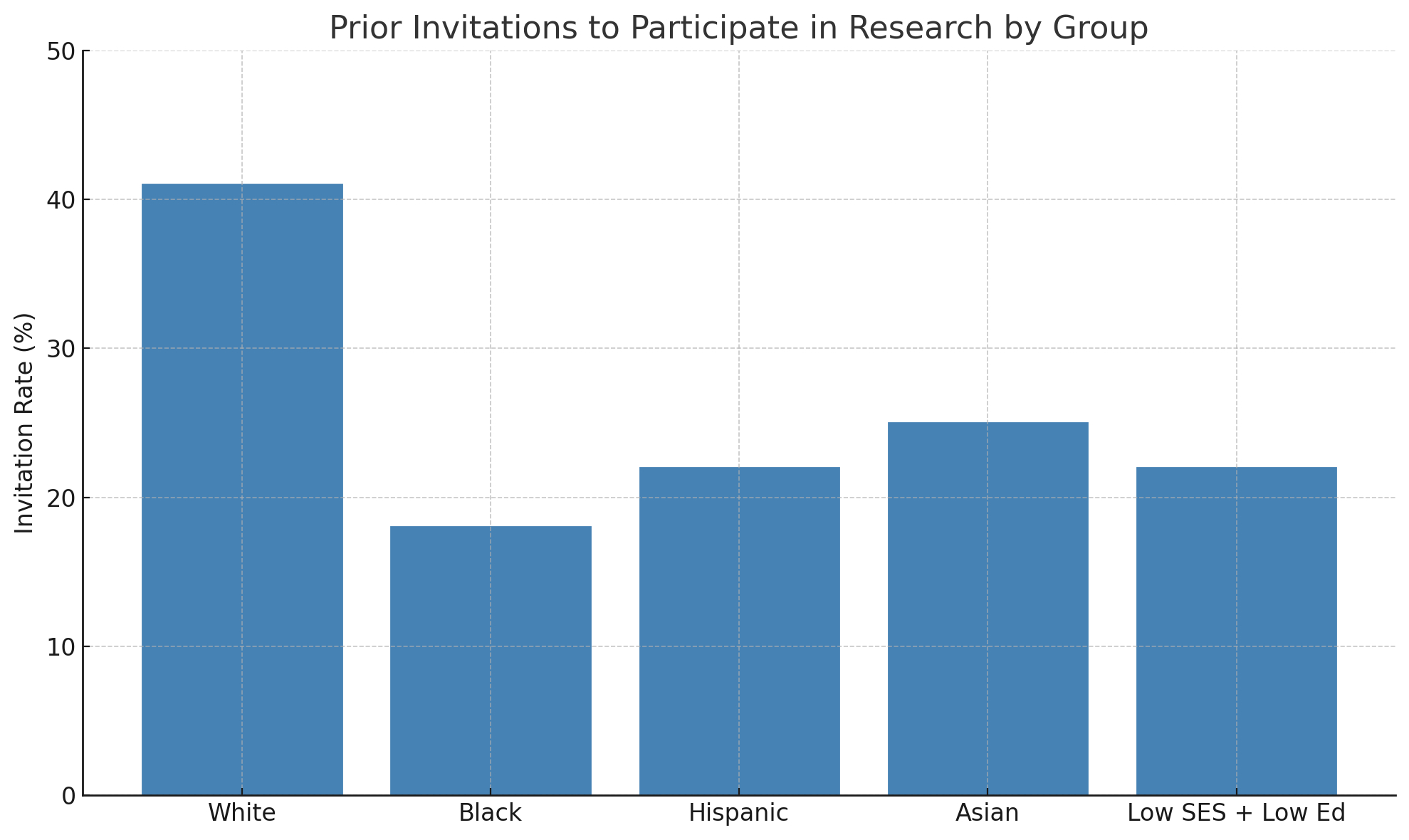
Abstract Body (Do not enter title and authors here): Background: Despite national efforts to diversify clinical trial populations, participation remains disproportionately low among racial and ethnic minorities. This underrepresentation undermines both the generalizability of findings and equity in evidence-based care. Research Question: What factors contribute to reluctance and underrepresentation in clinical research among diverse racial and socioeconomic groups? Methods: We surveyed 400 adults at Mount Sinai clinics and hospitals across New York City. Participants self-reported willingness to participate in research using a 1–5 Likert scale. Demographics included race/ethnicity, education level, and prior invitations to participate in research. ZIP code was used as a proxy for socioeconomic status (SES). Participants also identified their strongest motivators. Logistic regression identified predictors of low willingness (score ≤3). Results: Among participants (31% White, 26% Black, 24% Hispanic, 16% Asian, 3% Other), low education, low SES, and minority race were associated with lower willingness to participate in research (OR 1.90, 2.74, and 2.11; p < 0.01). Prior invitations were less frequent among Black (18%), Hispanic (22%), and Asian (25%) participants, compared to White participants (41%). Disparities were most pronounced in individuals with both low SES and limited education, where invitation rates were 22%, compared to 41% among participants with higher SES or education. Motivational factors varied: White and Asian participants most often cited improved understanding and perceived health benefit. Black and Hispanic participantsemphasized institutional trust, communication, and safety. Among low-SES individuals, financial compensation and transportation access were the most commonly reported concerns. Conclusions: To improve participation of underrepresented populations in clinical research, structural changes are essential to ensure equitable inclusion. Initiatives that prioritize outreach to diverse communities, culturally tailored education, trust-building, and removal of practical barriers such as transportation and compensation are critical for meaningful engagement.
Mueller, Anna Sophie
(
Mount Sinai
, New York , New York , United States )
Berman, Brandon
(
Mount Sinai Morningside and West
, New York , New York , United States )
Jafri, Komail
(
Mount Sinai Morningside and West
, New York , New York , United States )
Bonilla, Harrison
(
Mount Sinai Morningside-West
, New York , New York , United States )
Contreras, Johanna
(
MOUNT SINAI HOSPITAL
, New York , New York , United States )
Author Disclosures:
Anna Sophie Mueller:DO NOT have relevant financial relationships
| Brandon Berman:DO NOT have relevant financial relationships
| Komail Jafri:DO NOT have relevant financial relationships
| Harrison Bonilla:DO NOT have relevant financial relationships
| Johanna Contreras:DO NOT have relevant financial relationships