
Logo

American Heart Association

  18
  0


Final ID: Su1013

Markov Chain Modeling of Postoperative Hemodynamics and Vasoplegia After Cardiac Surgery Using a Novel Resistance Flow Ratio based State Definition

Abstract Body (Do not enter title and authors here): Introduction: Understanding postoperative hemodynamic progression following cardiac surgery is critical for effectively managing patient outcomes. Traditional methods inadequately characterize transitions between compensated and decompensated states during the postoperative course, limiting clinical insights. We applied Markov chain modeling to quantify progression between defined hemodynamic states using a novel classification based on the Resistance Flow Ratio (RFR), defined as the ratio of systemic vascular resistance index (SVRI) to cardiac index (CI).

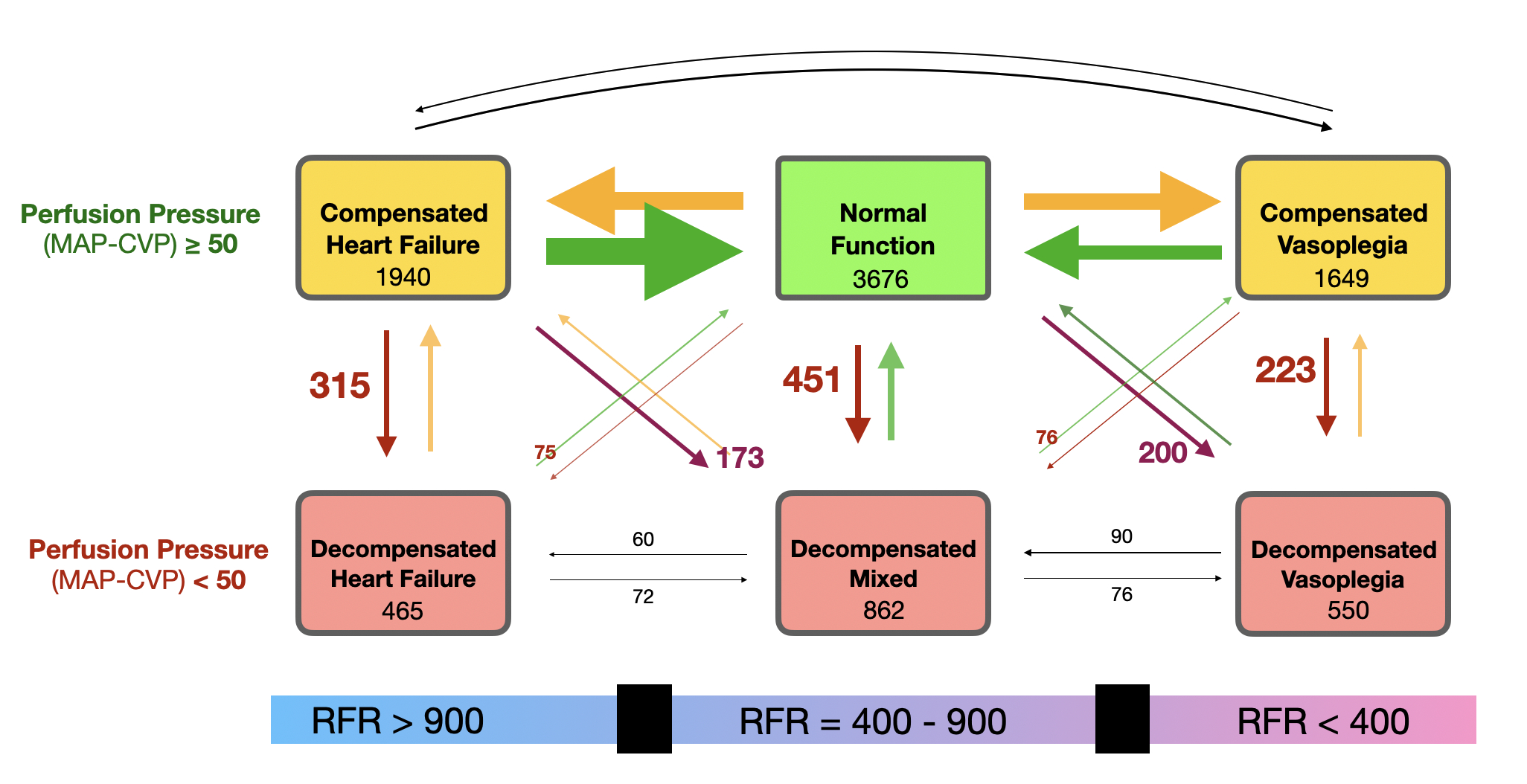
Methods: We retrospectively analyzed postoperative hemodynamic data from 3,393 cardiac surgical patients monitored with pulmonary artery catheters between 2014-2024. Hemodynamic states were classified using RFR and perfusion pressure (PP) into 6 distinct states, with criteria shown in Figure 1. Briefly, RFR>900 identifies cardiac dysfunction, and RFR<400 identifies vasoplegia. PP>50mmHg was considered compensated. Transition probabilities, incidences, and prevalence were analyzed via Markov chain modeling.

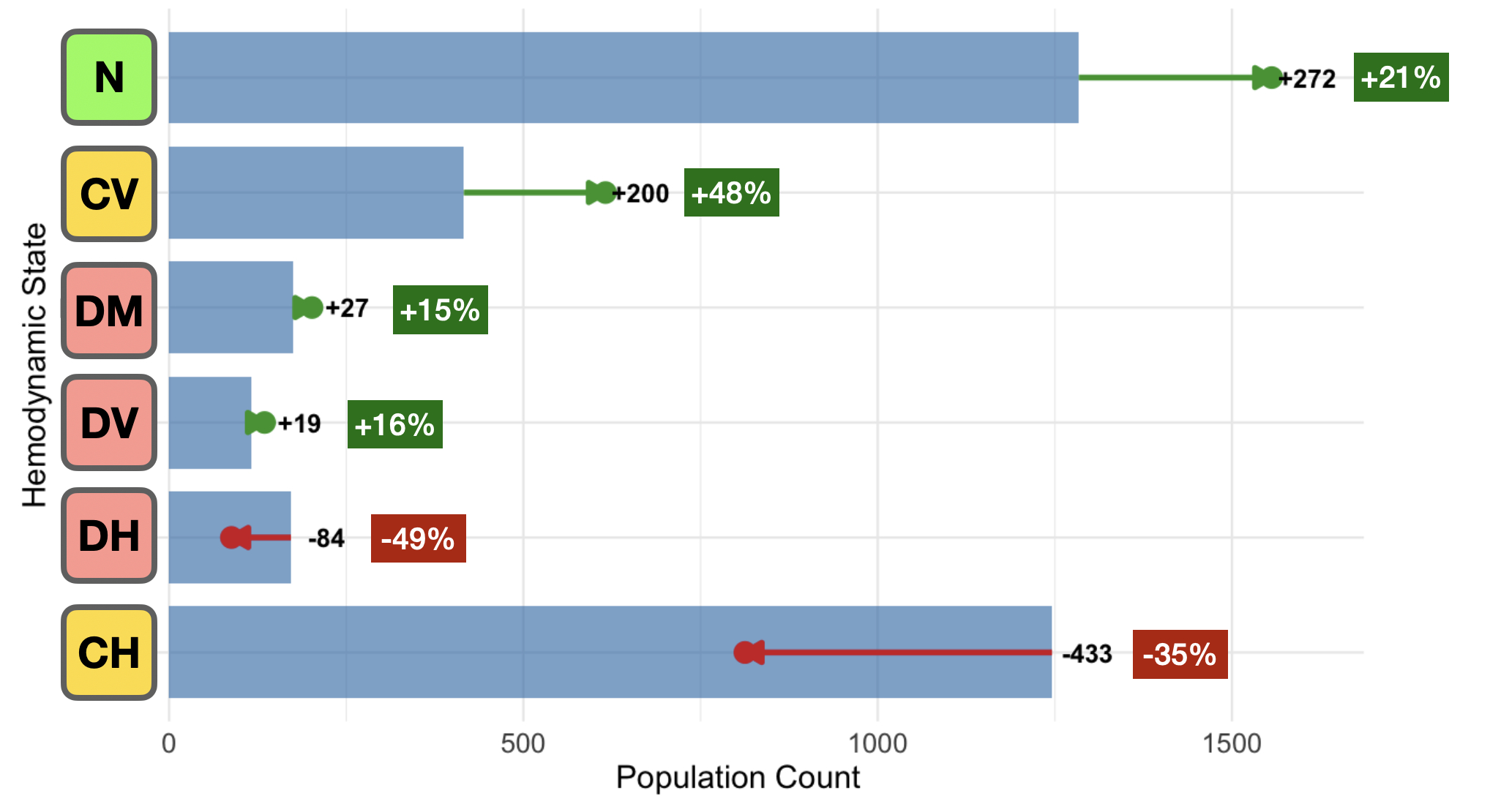
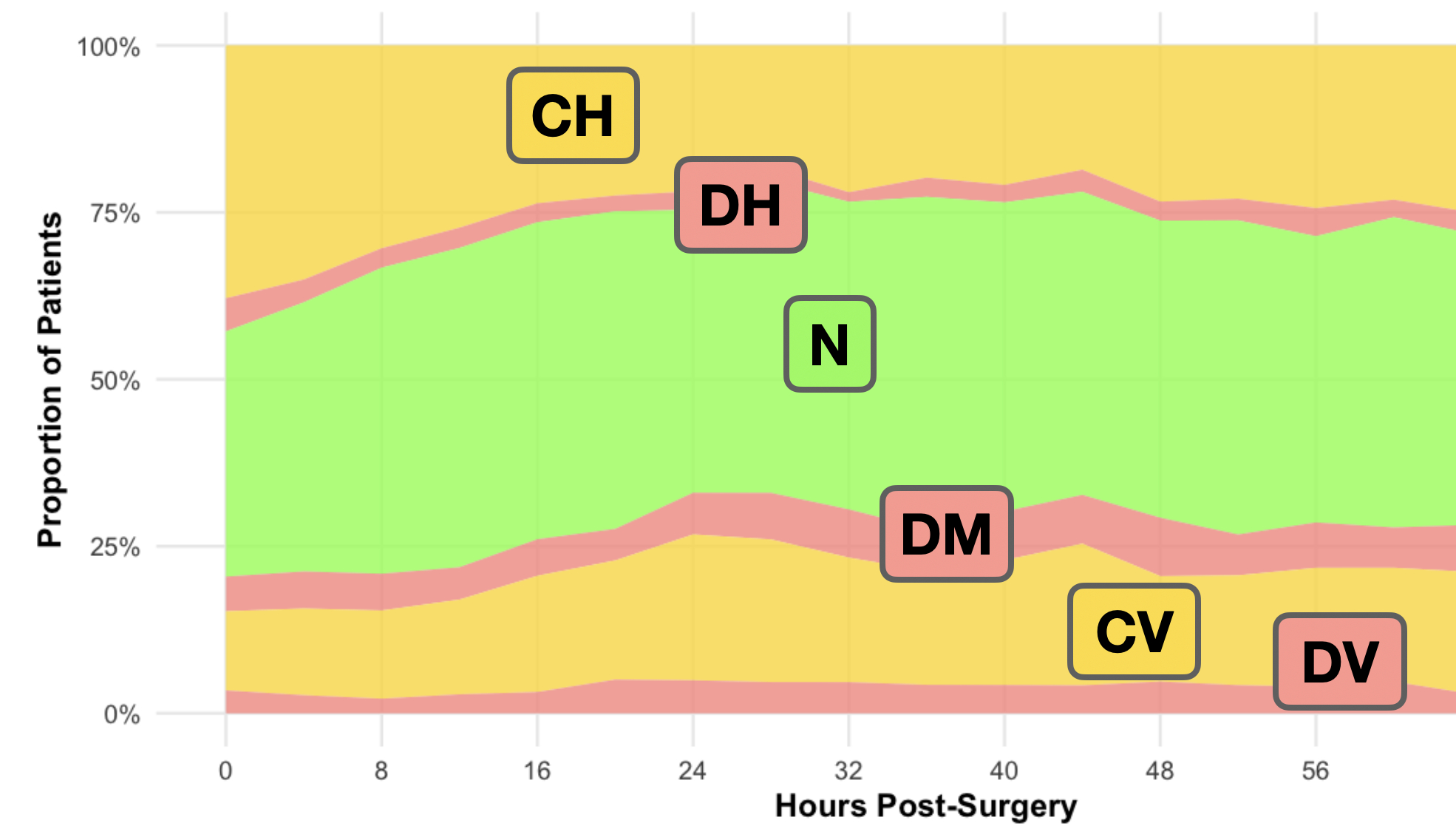
Results: Transition models demonstrated clear pathways, with transitions into decompensated states occurring most frequently from mixed etiologies, followed by vasoplegia, then heart failure states. Transitions predominantly occurred within the same RFR category, validating our distinct state definitions and highlighting the clinical significance of recognizing compensated precursor states. [Figure 1] Transitions into lower RFR categories (vasoplegic states) occurred more than twice as frequently as transitions into higher categories (cardiogenic states), underscoring vasoplegia as a predominant postoperative risk. Markov chain modeling of progression to steady state revealed notable decreases in compensated (-35%) and decompensated heart failure (-49%), with increases in normal function (21%), mixed etiology decompensation (15%), compensated vasoplegia (48%), and decompensated vasoplegia (16%). [Figure 2] Observed patient trajectories over 60 hours mirrored model predictions closely. [Figure 3]

Conclusions: Markov chain modeling accurately predicts postoperative hemodynamic transitions, offering insights into progression toward vasoplegia and clinical decompensation. These results emphasize early recognition of compensated states to prevent deterioration and support a RFR based categorization of postoperative hemodynamics.
  • Patel, Nikhil  ( Icahn School of Medicine , New York , New York , United States )
  • Levin, Matthew  ( Icahn School of Medicine at Mount S , New York , New York , United States )
  • Author Disclosures:
    Nikhil Patel: DO NOT have relevant financial relationships | Matthew Levin: DO NOT have relevant financial relationships
Meeting Info:

Scientific Sessions 2025

2025

New Orleans, Louisiana

Session Info:

At the Edge: Cases and Research that Shape Cardiac Critical Care

Sunday, 11/09/2025 , 03:15PM - 04:15PM

Abstract Poster Board Session

You have to be authorized to contact abstract author. Please, Login
Not Available