Electronegative Lipoprotein Subfractions Modulate Inflammation and Viability in Monocytes and Endothelial cells
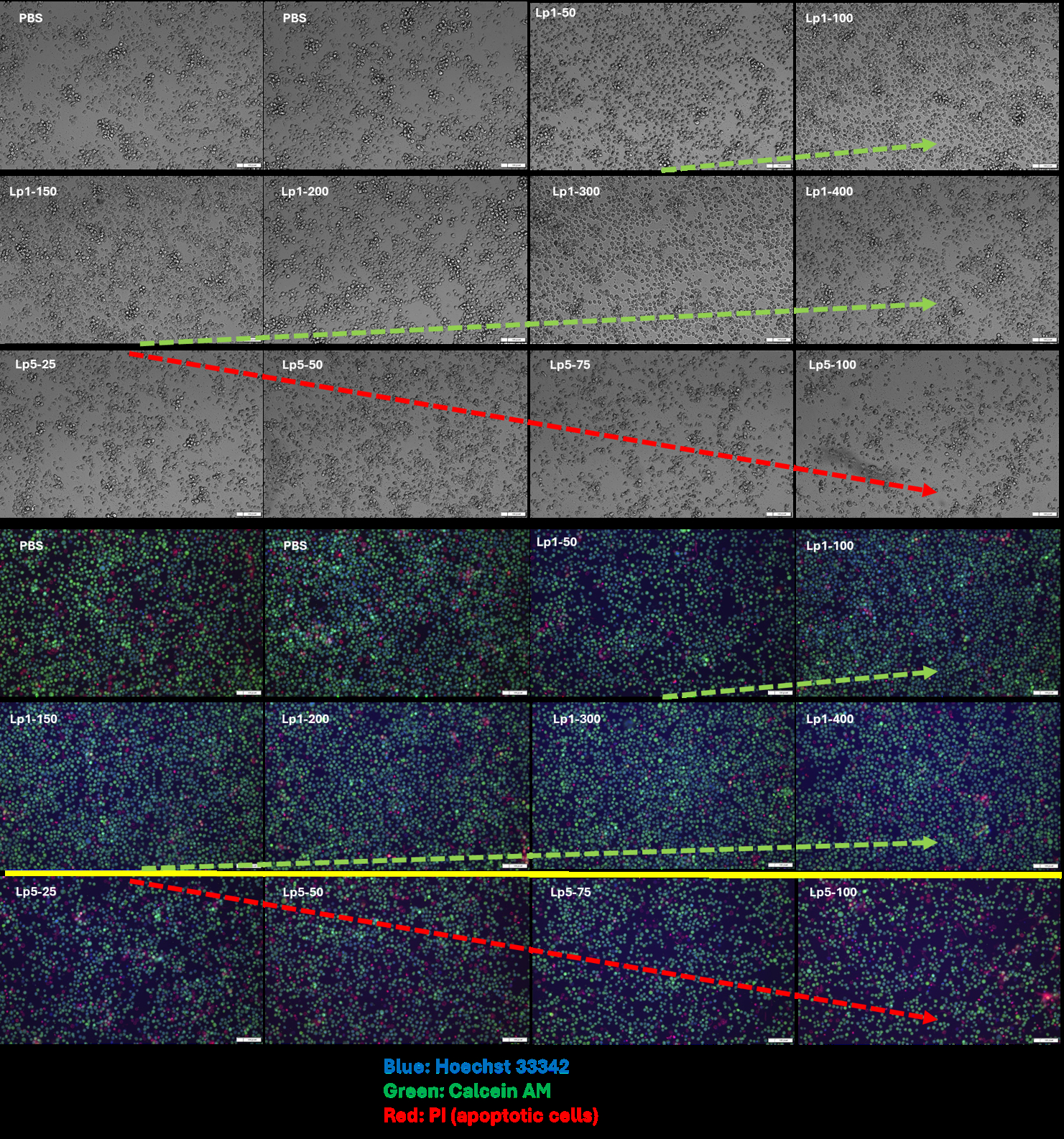
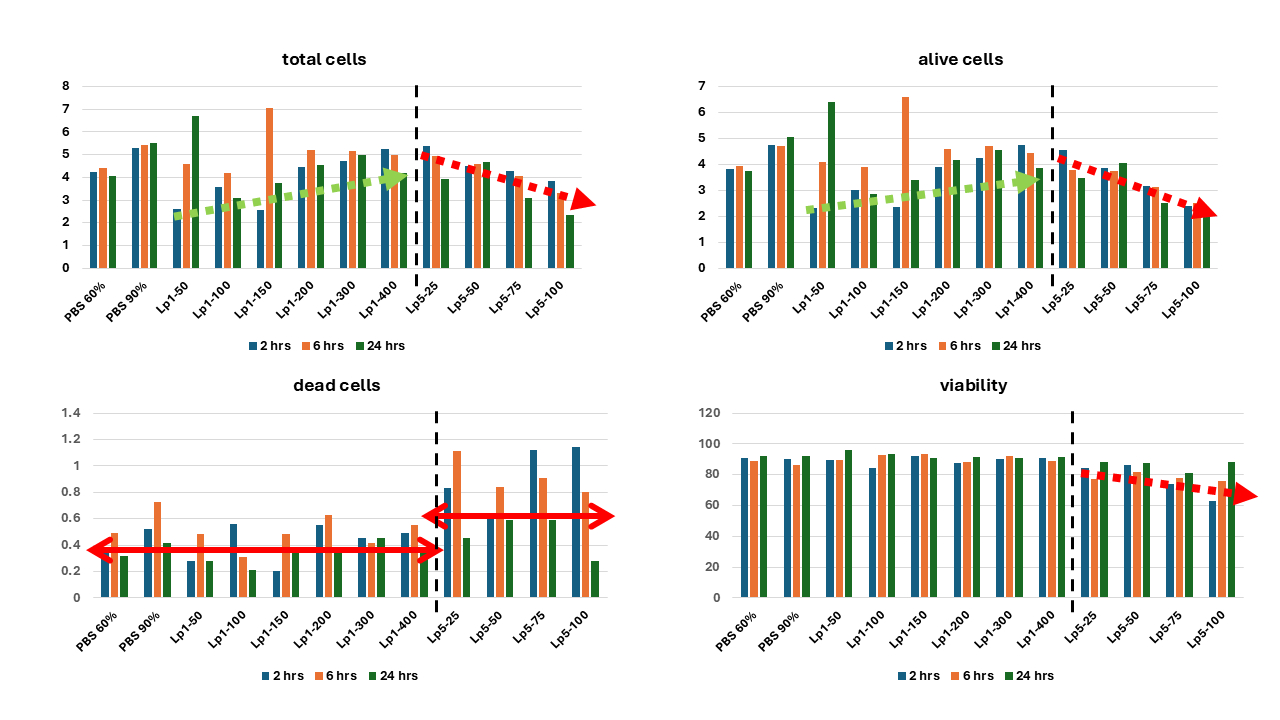
Abstract Body (Do not enter title and authors here): Background Emerging evidence indicates that lipoprotein quality, more than quantity, drives atherogenesis. Lipoproteins can be classified into five subfractions by electronegativity, with subfraction 1 being protective and subfraction 5 the most electronegative and atherogenic. In this study, we examined how the most electronegative subfractions, L5, H5, their combination L5+H5, and total Lp5 (all possible electronegative lipoprotein subtypes; VLDL, IDL, LDL, and HDL) affect cell viability and cytokine production in bovine aortic endothelial cells (BAECs) and THP-1 monocytes. Objective To assess how electronegative lipoprotein subfractions affect viability and cytokine production in endothelial cells and monocytes. Methods Lipoproteins were isolated by ultracentrifugation, followed by anion-exchange chromatography to obtain electronegative fractions. Cells were exposed to increasing concentrations of subfractions or their combination for 24 hours. Viability was assessed by fluorescence assay after trypan blue exclusion, quantified via image cytometry. Cytokine levels in culture media and cell supernatant were measured by ELISA. Results Following 24-hour incubation with single and combined lipoprotein subfractions, varying degrees of changes were observed in IL-6, TNF-α, and IL-10 levels in both cell culture media and cell lysate supernatants of THP-1 and BAEC. Subfraction 5 notably elevated pro-inflammatory cytokines. H5 slightly reduced THP-1 viability, while L5 caused a moderate decrease at 50µg/mL. Their combination produced a synergistic effect, significantly lowering cell number and viability. Total lipoproteins showed the strongest cytotoxicity, with Lp5 exhibiting dose- and time-dependent toxicity (25-100µg/mL) toward THP-1 cells, unlike the less electronegative Lp1 (Fig. 1&2). Conclusion Electronegative lipoprotein subfractions reduce endothelial and monocyte viability, indicating cytotoxicity that impairs vascular defenses and promotes atherogenesis. In contrast, the least electronegative subfractions enhance proliferation, suggesting a non-toxic, supportive role. Distinct cytokine profiles highlight divergent immunomodulatory effects and implicate dysfunctional lipoproteins in vascular inflammation and atherosclerosis. These findings highlight the potential clinical relevance of lipoprotein electronegativity, supporting the introduction of a 'lipoprotein electronegativity index' as a novel marker for assessing lipoprotein quality and atherogenic risk.
Akyol, Omer
(
Texas Heart Institute
, Houston , Texas , United States )
Ouyang, Frances
(
Texas Heart Institute
, Houston , Texas , United States )
Chiang, Huan-hsing
(
The Texas Heart Institute
, Houston , Texas , United States )
Hsu, Wen-li
(
Kaohsiung Medical University
, Kaohsiung , Taiwan )
Gotto, Antonio
(
Weill Cornell Medical College
, New York , New York , United States )
Sanchez-quesada, Jose Luis
(
Biomedical Research Institute IIB
, Barcelona , Spain )
Chen, Chu-huang
(
The Texas Heart Institute
, Houston , Texas , United States )
Author Disclosures:
Omer Akyol:DO NOT have relevant financial relationships
| Frances Ouyang:DO NOT have relevant financial relationships
| Huan-Hsing Chiang:DO NOT have relevant financial relationships
| Wen-Li Hsu:DO NOT have relevant financial relationships
| Antonio Gotto:No Answer
| Jose Luis Sanchez-Quesada:DO NOT have relevant financial relationships
| Chu-Huang Chen:No Answer