Rate vs Rhythm Control in Elderly Patients with Atrial Fibrillation: A Real-World Comparative Effectiveness Study
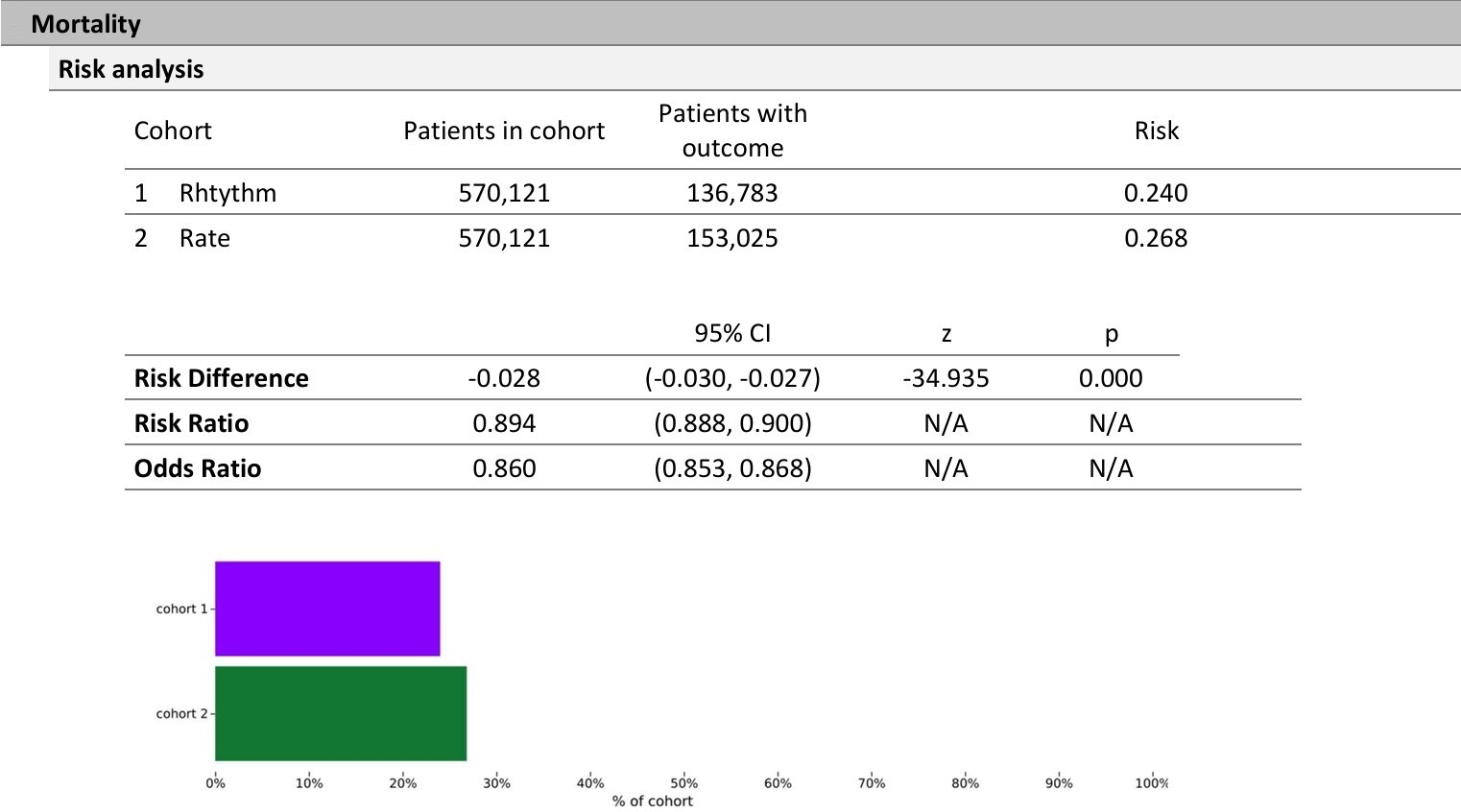
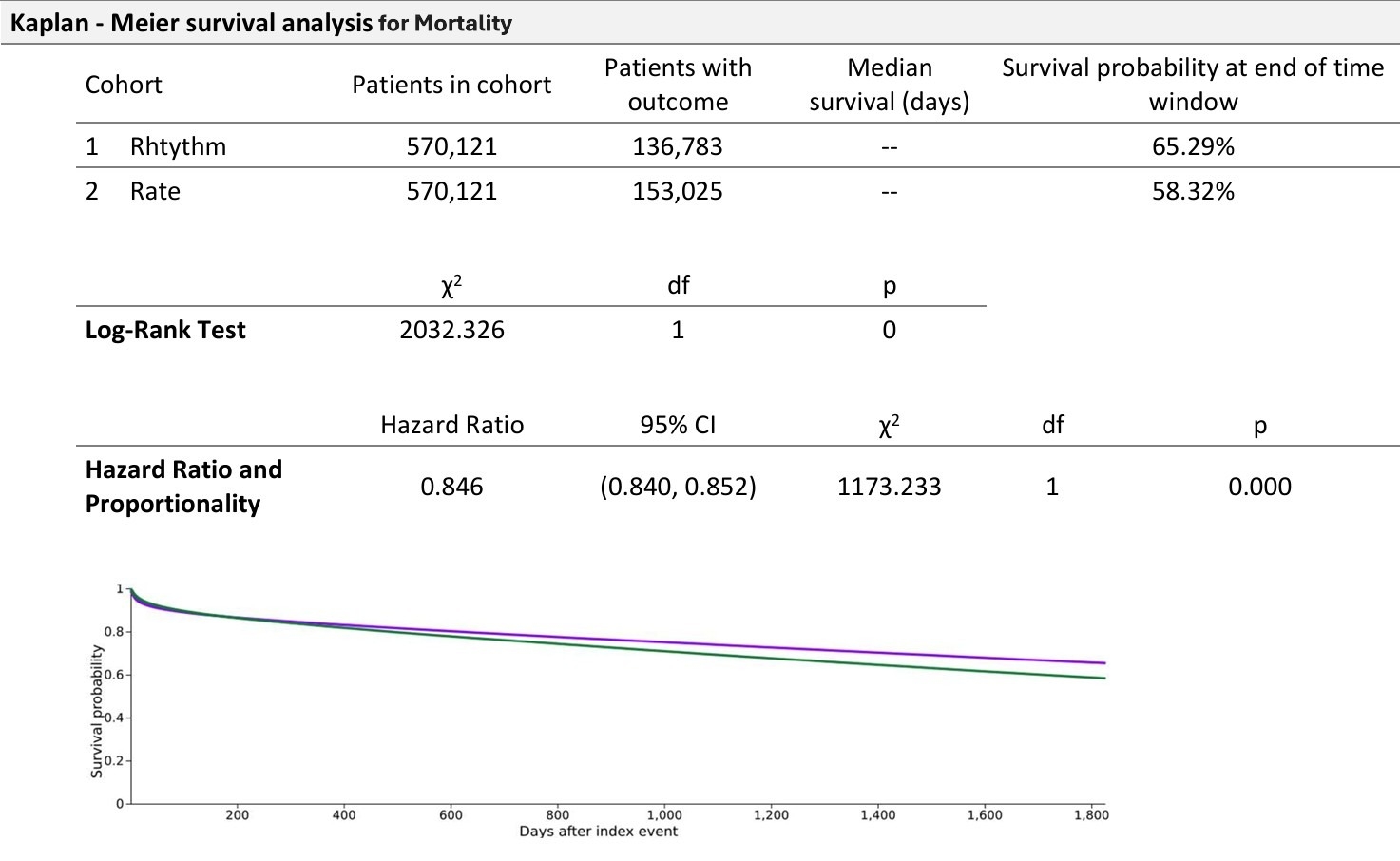
Abstract Body (Do not enter title and authors here): Background: Atrial fibrillation (AF) is a common arrhythmia in the elderly, with significant implications for mortality, thromboembolism, and bleeding. While both rate and rhythm control strategies are widely used, the optimal approach in real-world elderly populations remains debated. We compared clinical outcomes associated with rate versus rhythm control strategies in elderly AF patients using real-world data. Methods: We conducted a retrospective, real-world cohort study utilizing the TriNetX research network. Elderly patients (≥75 years) with a diagnosis of AF were stratified into two cohorts based on treatment strategy: rate control or rhythm control. Propensity score matching (1:1) was performed to balance baseline characteristics, yielding 570,121 patients in each cohort. Cohorts were compared for three primary outcomes: all-cause mortality, ischemic stroke, and major bleeding events. Analyses were conducted by calculating of risk differences, odd ratios and hazard ratios with employing Kaplan-Meier curves. Results: The rhythm control strategy was associated with significantly lower all-cause mortality compared to rate control (24.0% vs 26.8%; risk difference: –2.8%, 95% CI –3.0 to –2.7; OR: 0.86, 95% CI 0.85–0.87). Kaplan-Meier analysis demonstrated superior survival probability at the end of the time window in the rhythm cohort (65.29% vs 58.32%, log-rank p<0.001; HR: 0.85, 95% CI 0.84–0.85). Rates of ischemic stroke were also lower in the rhythm group (1.7% vs 2.2%; risk difference: –0.5%, OR: 0.77, 95% CI 0.75–0.79). Survival analysis showed a higher stroke-free probability in the rhythm group (97.31% vs 96.39%, log-rank p<0.001; HR: 0.74, 95% CI 0.72–0.76). Similarly, bleeding events occurred less frequently with rhythm control (2.8% vs 3.2%; risk difference: –0.5%, OR: 0.85, 95% CI 0.83–0.87), with a higher bleeding-free survival probability (95.43% vs 94.53%, log-rank p<0.001; HR: 0.82, 95% CI 0.81–0.83). Conclusion: In this large, real-world analysis of elderly patients with atrial fibrillation, rhythm control was associated with significantly lower risks of mortality, ischemic stroke, and major bleeding compared to rate control. These findings support consideration of rhythm control strategies in carefully selected elderly patients.
Nadeem, Bilawal
(
Boston Medical Center Health System
, Brighton , Massachusetts , United States )
Lorlowhakarn, Koravich
(
Boston Medical Center Brighton
, Boston , Massachusetts , United States )
Vehbi, Sezan
(
Boston Medical Center- Brighton
, Boston , Massachusetts , United States )
Sinauridze, Ana
(
Boston Medical Center Brighton
, Boston , Massachusetts , United States )
Al Khalili, Mahmoud
(
Boston Medical Center- Brighton
, Boston , Massachusetts , United States )
Jahandideh, Dariush
(
Boston Medical Center
, Boston , Massachusetts , United States )
Author Disclosures:
Bilawal Nadeem:DO NOT have relevant financial relationships
| Koravich Lorlowhakarn:DO NOT have relevant financial relationships
| SEZAN Vehbi:No Answer
| Ana Sinauridze:No Answer
| Mahmoud Al Khalili:DO NOT have relevant financial relationships
| Dariush Jahandideh:DO NOT have relevant financial relationships