WAVE-AI: Wearable and Portable Vision-enabled ECG interpretation using AI
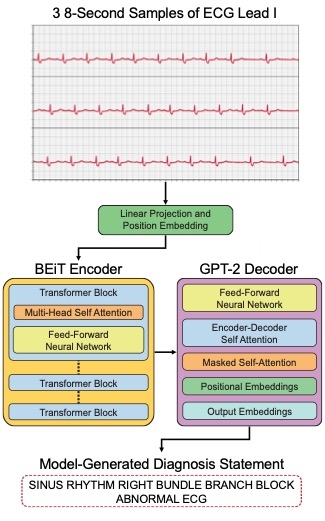
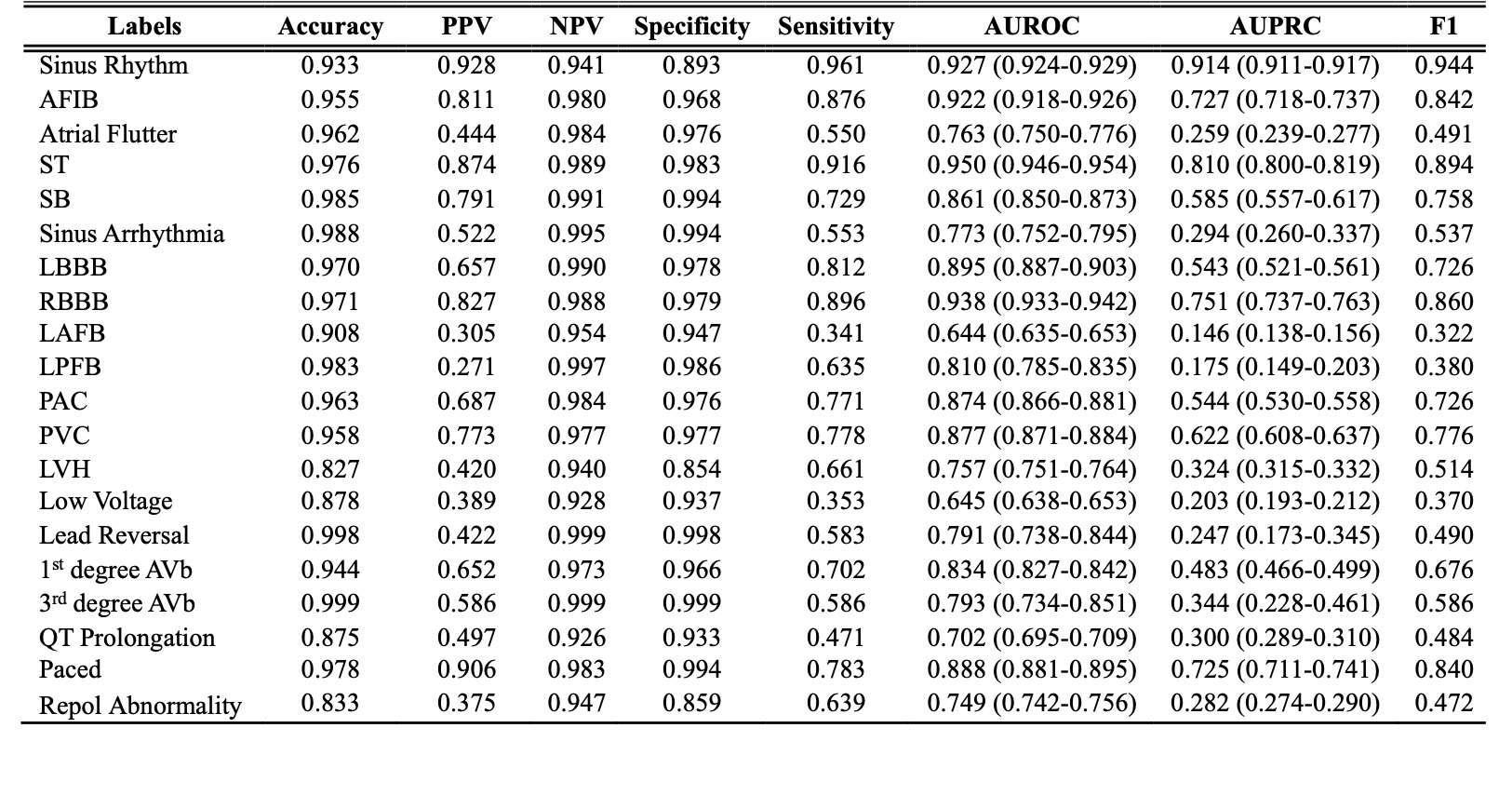
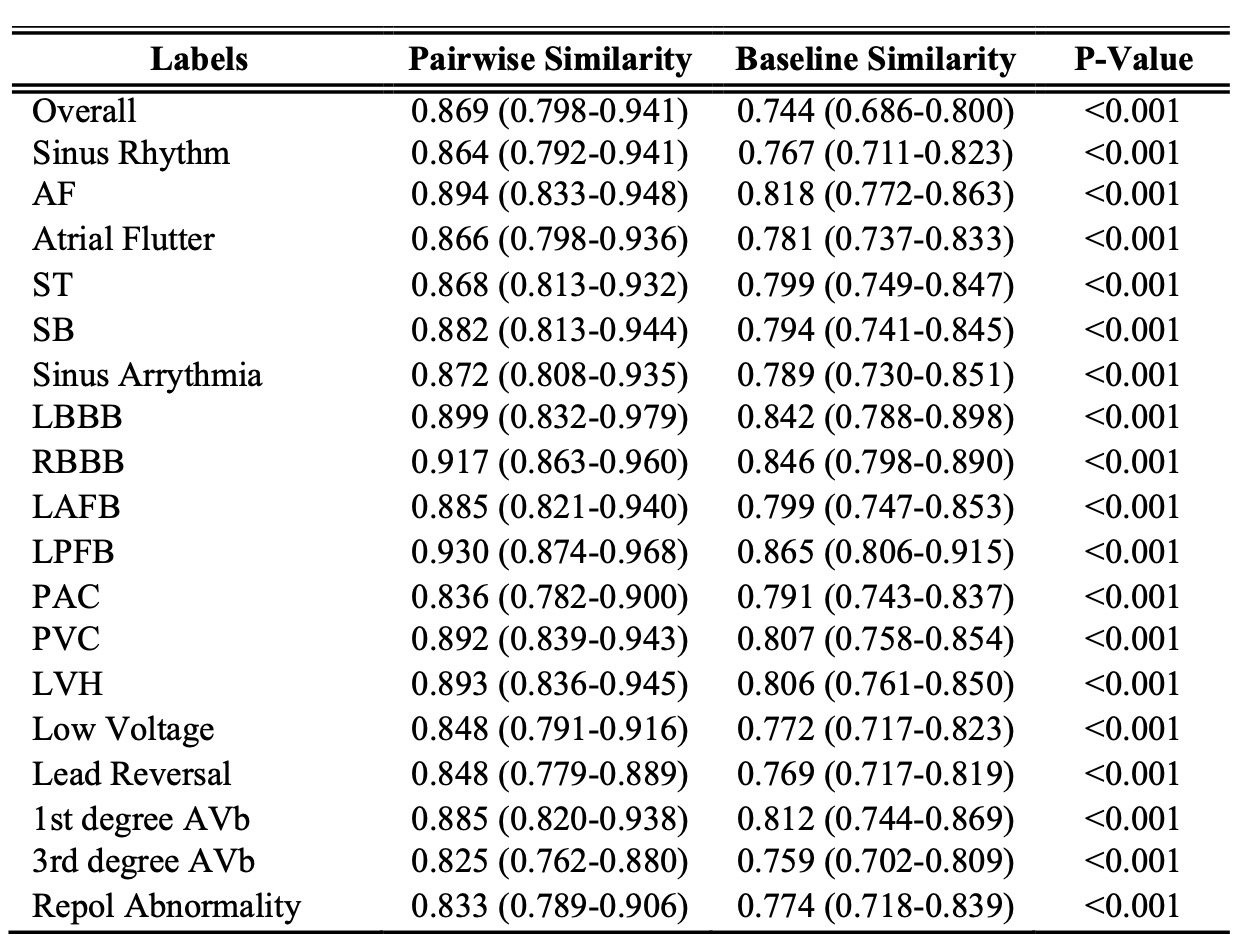
Abstract Body (Do not enter title and authors here): Background: Clinical 12-lead ECGs are used to diagnose a range of conditions, but the diagnostic utility of wearable and portable devices is limited to a limited number of rhythm disorders. These devices capture lead I ECG, which are displayed as a PDF. We present a vision-text transformer – WAVE-AI - capable of generating accurate and comprehensive interpretations from images (e.g., PDFs) of single-lead ECGs recorded on wearable and portable devices. Methods: We fine-tuned an ECG image-text foundation model, ECG-GPT, using 389,482 ECGs and accompanying corresponding diagnosis statements from a large tertiary health system to develop a model that could infer a full ECG report from a printed lead I image. For this, we plotted lead I in multiple image formats to enable the model to generate reports from PDF outputs from various consumer devices (Figure 1). We evaluated model performance in a held-out test set across structured clinical assessment, semantic similarity, and conventional natural language generation metrics. Results: In 43,108 ECGs distinct from development, the model performed well across 20 rhythm and conduction abnormalities extracted from diagnosis statements, with high AUROCs, sensitivities, and specificities (Table 1). The AUROCs for detecting atrial fibrillation, right bundle branch block, and sinus tachycardia were 0.92, 0.94, and 0.95, respectively. The model identified the full context of diagnosis statements, including all associated modifiers and conditions, with a median pairwise similarity of 0.87 (IQR 0.80-0.94), significantly greater than the similarity of 0.74 (IQR 0.69-0.80, p < 0.001) between two randomly selected statements (Table 2). The model also performed well across conventional metrics, with ROUGE-L and BLEU-1 scores of 0.576 and 0.472, respectively. Conclusions: WAVE-AI is a vision encoder-decoder model capable of generating ECG reports from single-lead ECG images. This approach represents an automated and accessible strategy for generating expert-level complete ECG reporting on lead I ECGs that can be acquired from wearable and portable devices.
Khunte, Akshay
(
Yale School of Medicine
, New Haven , Connecticut , United States )
Sangha, Veer
(
Yale Universty
, New Haven , Connecticut , United States )
Oikonomou, Evangelos
(
Yale School of Medicine
, New Haven , Connecticut , United States )
Dhingra, Lovedeep
(
Yale School Of Medicine
, New Haven , Connecticut , United States )
Aminorroaya, Arya
(
Yale University
, New Haven , Connecticut , United States )
Pedroso, Aline
(
Yale School of Medicine
, New Haven , Connecticut , United States )
Coppi, Andreas
(
Yale University
, New Haven , Connecticut , United States )
Vasisht Shankar, Sumukh
(
Yale University
, New Haven , Connecticut , United States )
Khera, Rohan
(
Yale School of Medicine
, New Haven , Connecticut , United States )
Author Disclosures:
Akshay Khunte:DO NOT have relevant financial relationships
| Veer Sangha:DO have relevant financial relationships
;
Ownership Interest:Ensight AI:Active (exists now)
| Evangelos Oikonomou:DO have relevant financial relationships
;
Consultant:Caristo Diagnostics, Ltd:Past (completed)
; Consultant:Ensight-AI, Inc:Active (exists now)
; Ownership Interest:Evidence2Health, LLC:Active (exists now)
| Lovedeep Dhingra:DO NOT have relevant financial relationships
| Arya Aminorroaya:DO NOT have relevant financial relationships
| Aline Pedroso:DO NOT have relevant financial relationships
| Andreas Coppi:DO NOT have relevant financial relationships
| Sumukh Vasisht Shankar:No Answer
| Rohan Khera:DO have relevant financial relationships
;
Research Funding (PI or named investigator):Bristol-Myers Squibb:Active (exists now)
; Research Funding (PI or named investigator):NovoNordisk:Active (exists now)
; Research Funding (PI or named investigator):BridgeBio:Active (exists now)