
Logo

American Heart Association

  17
  0


Final ID: Mo2015

Policy Optimization for Dynamic Heart Transplant Allocation

Abstract Body (Do not enter title and authors here): Introduction: The current US adult heart allocation policy has several limitations, including being heavily focused on device utilization rather than individual patient illness severity, high number of exceptions, not considering donor-patient match quality, and not incorporating individualized predicted waitlist and post-transplant survival for prioritization.

Research question: The hypothesis of this study is that using artificial intelligence and operations research techniques, a better optimized heart allocation policy can be developed that would result in an increase in aggregate number of years of life gained on a national level compared to the current policy.

Approach: This study utilizes national data from UNOS. A new simulator was developed that resamples that data, enabling the evaluation and comparison of various allocation policies. The current allocation policy was evaluated using the simulator. A myopic policy was then developed that allocates each incoming heart to the patient who maximizes the number of predicted years gained by the transplant. This gain was computed as the difference between predicted survival years with the transplant and the predicted survival years without it. These predictors were trained using Cox regression. Two more sophisticated policies were developed. One accounts for the dynamic nature of the allocation process through the use of potentials, where each patient's potential is the patient's expected contribution to life year gains in the future, and is learned via simulations. The other considers batching together a small number of donors to patients that maximize life years gained to further reduce myopia.

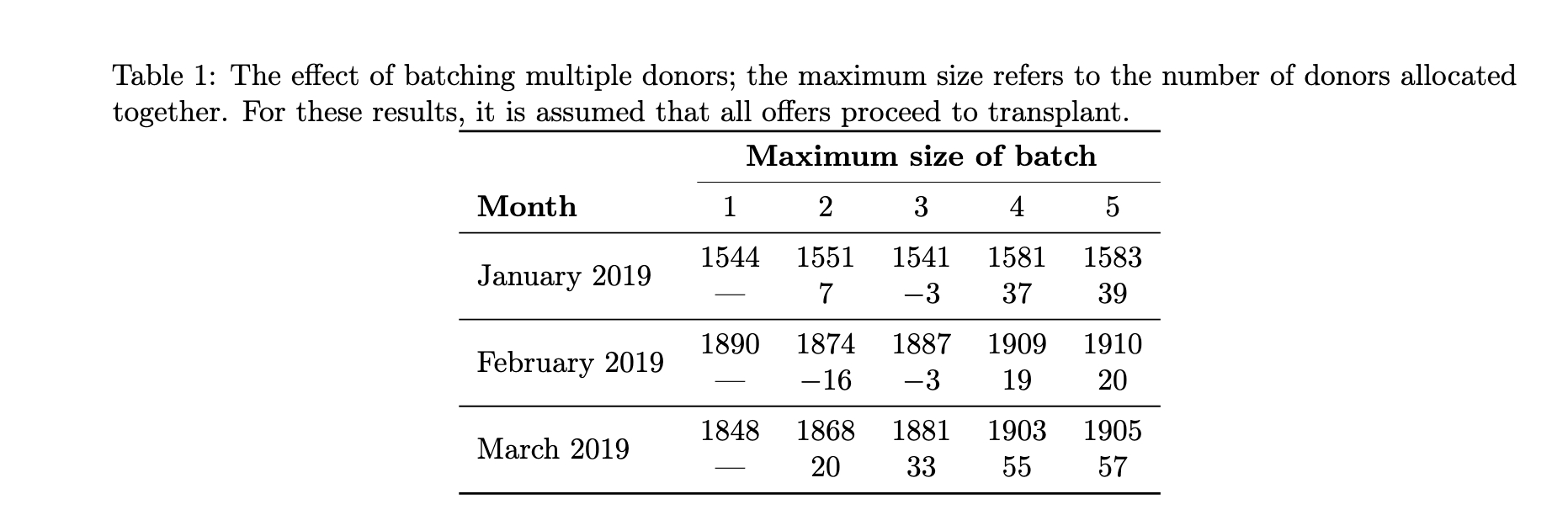
Results: The myopic policy increases life years gained by (an average of) 50.4% over the status quo policy. The use of potentials further increases the gain by 1.6% compared to the myopic policy. The use of batching (even just batches of size 5 within a maximum duration of 48 hours) further increases the gain by 2.2% compared to the myopic policy (Table 1).

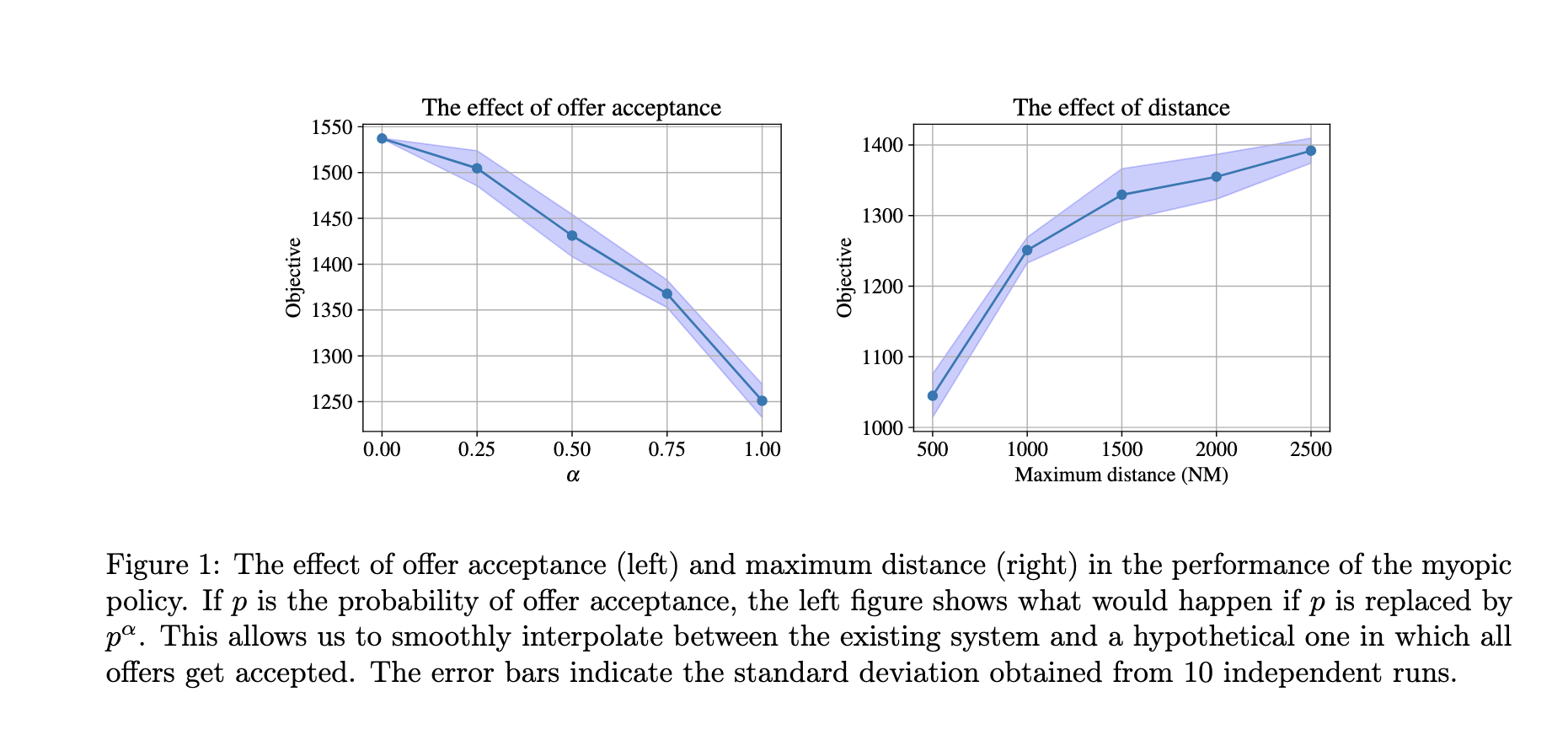
Also, gains in life years would increase by 22.9% if centers would not reject offers (Figure 1, left). Furthermore, up to 33.2% gain in life years would be achieved if the maximum allowable geographic distance increased from 500 to 2,500 nautical miles (NM), with diminishing returns (Figure 1, right).

Conclusions: These artificial intelligence techniques can lead to considerable improvements in years of life gained with heart transplants on a national scale.
  • Anagnostides, Ioannis  ( Carnegie Mellon University , Pittsburgh , Pennsylvania , United States )
  • Sollie, Zachary  ( Medical University South Carolina , Charleston , South Carolina , United States )
  • Kilic, Arman  ( Medical University of South Carolin , Charleston , South Carolina , United States )
  • Sandholm, Tuomas  ( Carnegie Mellon University , Pittsburgh , Pennsylvania , United States )
  • Author Disclosures:
    Ioannis Anagnostides: DO NOT have relevant financial relationships | Zachary Sollie: DO NOT have relevant financial relationships | Arman Kilic: DO have relevant financial relationships ; Consultant:johnson and johnson:Active (exists now) ; Ownership Interest:QImetrix, LLC:Active (exists now) ; Consultant:livanova:Past (completed) ; Consultant:abbott:Active (exists now) ; Consultant:3ive:Past (completed) | Tuomas Sandholm: No Answer
Meeting Info:

Scientific Sessions 2025

2025

New Orleans, Louisiana

Session Info:
More abstracts on this topic:
More abstracts from these authors:
Heart Transplant Outcomes in Donor After Circulatory Death vs Donor After Brain Death Donors for Patients Bridged with HeartMate 3 Devices.

Sollie Zachary, Inampudi Chakradhari, Zhang Jingwen, Xuan Lefan, Welch Brett, Kilic Arman

Multicenter Model to Predict Right Heart Failure After HeartMate 3 Left Ventricular Assist Device Implantation

Zhao Manyun, Genuardi Michael, Moss Noah, Kilic Arman, Saeed Omar, Shah Samit, Moin Danyaal, Chen Jinbo, Vidula Himabindu

You have to be authorized to contact abstract author. Please, Login
Not Available