Gene Editing in Congenital Heart Disease Models: A 15-Year Scoping Review of CRISPR/Cas9 Applications in Human and Animal Systems
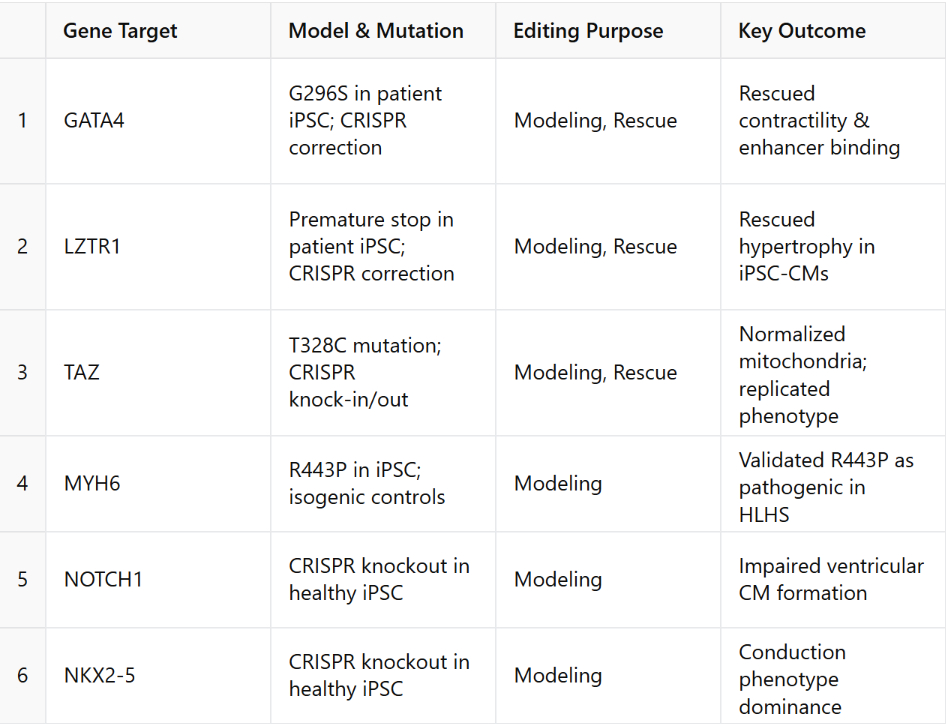
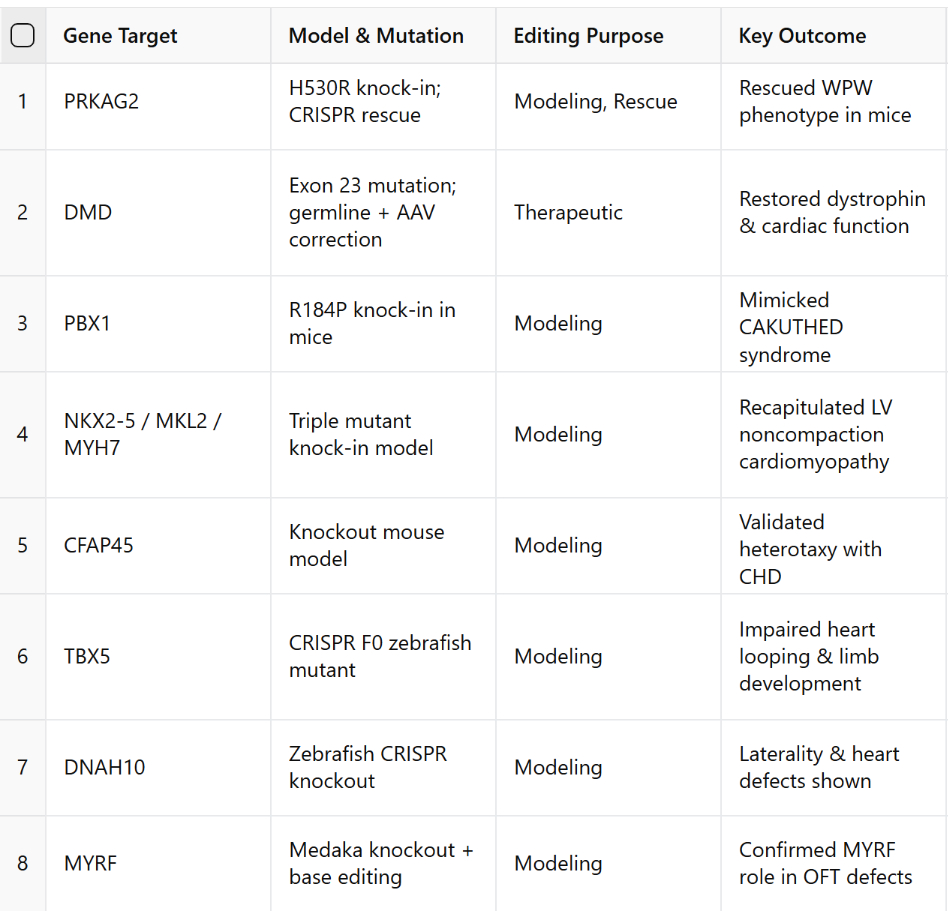
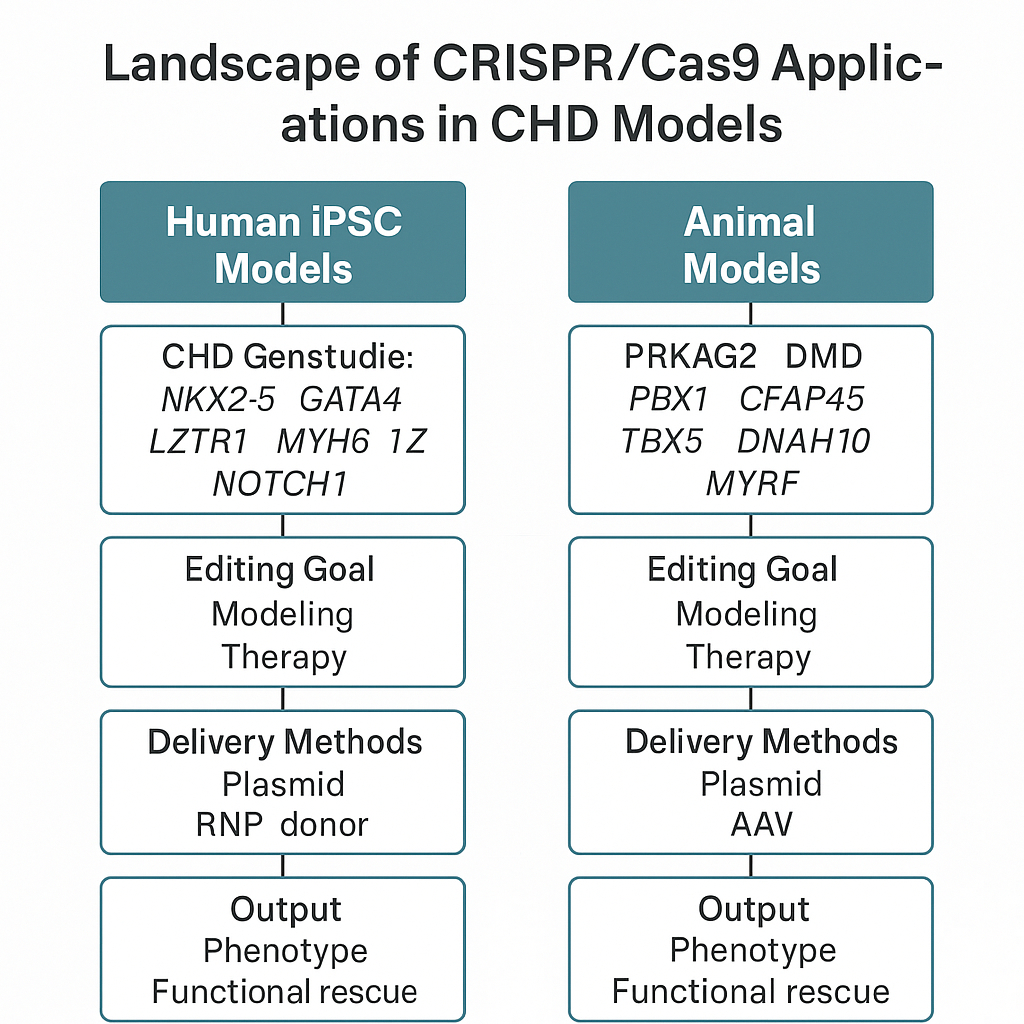
Abstract Body (Do not enter title and authors here): Background: Congenital heart disease (CHD) is the most common birth defect globally, yet its genetic underpinnings remain incompletely understood. Since the introduction of CRISPR/Cas9, gene editing has emerged as a transformative tool for modeling and potentially treating CHD. However, no consolidated review exists mapping the scope of CRISPR/Cas9-based applications in this domain. Research Question: What genes, models, and delivery strategies have been used in CRISPR/Cas9-based CHD research over the past 15 years, and what are the major outcomes and translational gaps? Methods: We conducted a scoping review following PRISMA-ScR guidelines. PubMed, Web of Science, and Embase were searched for studies published between 2010–2025 that utilized CRISPR/Cas9 in CHD-related gene editing. Inclusion criteria encompassed human-induced pluripotent stem cell (hiPSC) models and animal systems (e.g., mice, zebrafish) focused on either disease modeling or therapeutic correction of known CHD-associated genes. Results: A total of 87 studies met inclusion criteria. In human hiPSC models, CRISPR was primarily used to introduce or correct mutations in key CHD genes (NKX2-5, GATA4, TBX5, MYH6, NOTCH1), enabling mechanistic insights and phenotypic rescue in cardiomyocytes. In animal models, CRISPR/Cas9 created disease-relevant knockouts or knock-ins across species such as mice, zebrafish, and medaka. Notably, therapeutic editing was successfully demonstrated in neonatal mice using AAV9-mediated somatic CRISPR to correct PRKAG2 and DMD mutations. However, few studies addressed polygenic inheritance, in utero delivery, or long-term safety. Tables 1 and 2 summarize the genes, models, editing purposes, delivery methods, and outcomes. A conceptual figure maps the landscape of CRISPR applications in CHD. Conclusion: CRISPR/Cas9 has revolutionized CHD research, enabling precise modeling and first steps toward somatic correction in preclinical systems. Nonetheless, significant translational barriers remain, including delivery challenges, modeling of complex genotypes, and ethical concerns with prenatal editing. Future studies integrating base editing, 3D cardiac organoids, and multiplex gene targeting may overcome current limitations. This scoping review identifies critical gaps and serves as a roadmap for accelerating genome-editing-based CHD therapeutics.
Arko, Soumyadipto Biswas
(
Dhaka Medical College and Hospital
, Dhaka , Bangladesh )
Saha, Utsow
(
Icahn School of Medicine at Mount Sinai
, Queens , New York , United States )
Author Disclosures:
Soumyadipto Biswas Arko:DO NOT have relevant financial relationships
| Utsow Saha:DO NOT have relevant financial relationships