Persistent Statin Underutilization in Cancer Survivors for Primary Prevention NHANES (2013-2020)
Abstract Body (Do not enter title and authors here): Background Cancer survivors are at an increased risk of cardiovascular disease (CVD) due to shared risk factors and the cardiotoxicity of cancer therapies. While statins are widely recommended for primary prevention, their real-world utilization and adherence in this population remain inadequately characterized. Understanding gaps in implementation is crucial for optimizing cardiovascular care in this population.
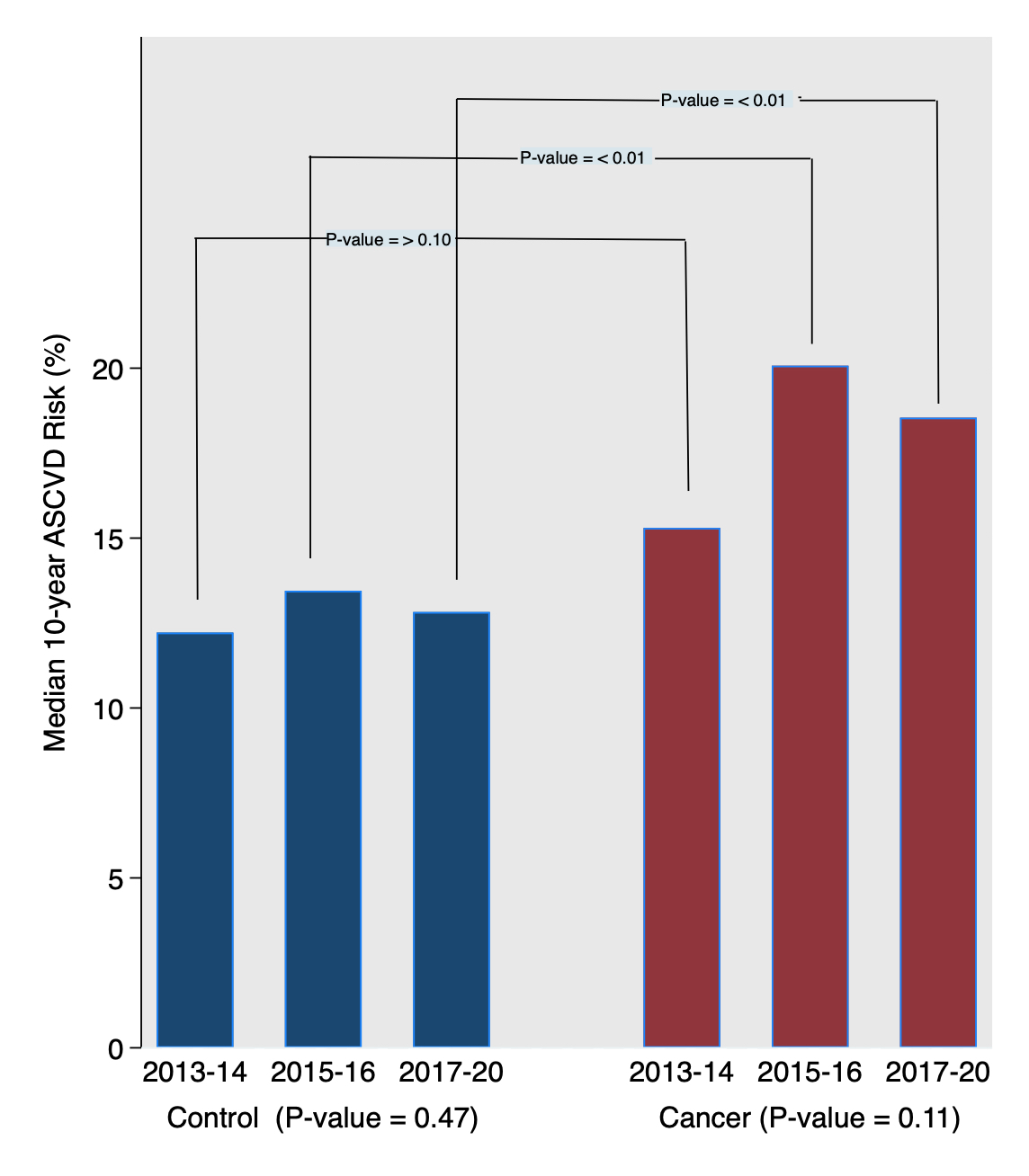
Hypothesis We assessed trends over time in the use of guideline-recommended statin therapy among statin eligible cancer survivors and evaluated the impact of the 2013 AHA/ACC cholesterol treatment guidelines.
Method We conducted a cross-sectional analysis using data from the National Health and Nutrition Examination Survey (NHANES) from 2013 to March, 2020. From 35,706 participants, we identified 11,974 individuals aged 40 to 75 years. Statin eligibility was determined based on established criteria, including an Atherosclerotic Cardiovascular Disease (ASCVD) risk score of ≥7.5%, low-density lipoprotein cholesterol (LDL-C) levels of ≥190 mg/dL, or a diagnosis of diabetes. This yielded a cohort of 2,008 statin-eligible individuals. The final analytic sample comprised 1,498 participants with seld reported cancer diagnosis, medication use, including antihypertensive therapy and statin therapy (a derived variable for statin use based on prescription medication data).
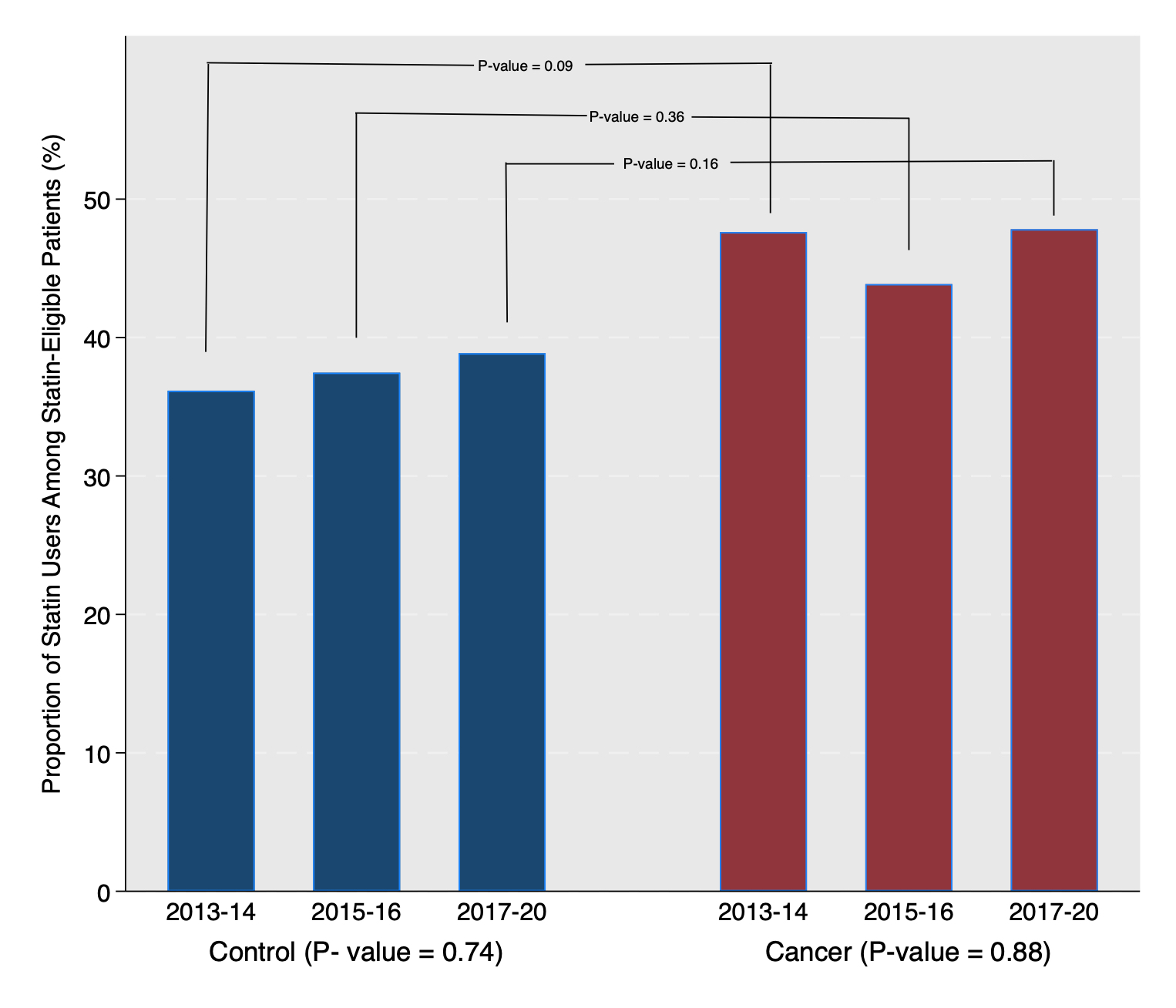
Results Among individuals with a history of cancer (n=202), 93.6% met the criteria for statin therapy. However, only 45.0% were receiving treatment (p=0.012). In the overall statin-eligible cohort (n=1,316), statin prescription rates were even lower, with only 39.0% undergoing therapy (p< 0.0001). Statin utilization among eligible cancer patients exhibited minimal progress across successive NHANES cycles (47.6% in 2013–14, 43.8% in 2015–16, and 47.8% in 2017–20), highlighting a persistent gap in adherence to clinical guidelines.
Conclusion Despite their increased cardiovascular risk, cancer survivors exhibit significant underutilization of statins for primary prevention, with no significant improvement following guideline updates. This persistent treatment gap underscores the need for better integration of preventive cardiovascular care within oncology practice. Future efforts should prioritize the development of cardio-oncology-specific implementation strategies, targeted provider education, and multidisciplinary collaboration to optimize preventive cardiovascular care in cancer survivors.
Patel, Harshkumar
(
GMERS Medical College Himmatnagar
, Himmatnagar , Gujarat , India )
Ravani, Shuddhi
(
NHL Medical College and Hospital
, Ahemdabad , Gujarat , India )
Thangjui, Sittinun
(
Heart and Vascular Institute
, Morgantown , West Virginia , United States )
Thyagaturu, Harshith
(
Heart and Vascular Institute
, Morgantown , West Virginia , United States )
Patel, Brijesh
(
Indiana University
, Carmel , Indiana , United States )
Author Disclosures:
Harshkumar Patel:DO NOT have relevant financial relationships
| Shuddhi Ravani:No Answer
| Sittinun Thangjui:DO NOT have relevant financial relationships
| Harshith Thyagaturu:DO NOT have relevant financial relationships
| Brijesh Patel:No Answer