Logo

American Heart Association

  22
  0


Final ID: MP1023

Left Atrial Appendage Occlusion Is Safe and Effective in Cardiac Amyloidosis: Real-World Single-Center Experience

Abstract Body (Do not enter title and authors here): Background:
Cardiac amyloidosis (CA) is associated with increased thromboembolic risk, particularly in patients with atrial fibrillation (AF), who often also have high bleeding risk. Left atrial appendage closure (LAAC) offers an alternative to oral anticoagulation (OAC) in high-bleeding-risk AF patients, but data about its safety and efficacy in CA patients remain limited. This study evaluates procedural success, safety, and clinical outcomes of LAAC in CA patients

Methods:
We conducted a retrospective chart review study of patients with confirmed CA who underwent LAAC at the Cleveland Clinic Foundation (CCF) between January 2014 and December 2024. Procedural success, peri-device leak (PDL), thromboembolic, and bleeding events were assessed. Peri-device leak (PDL) was defined as flow around the implanted device into the left atrial appendage. Event-free survival (EFS) was defined from the time of implantation to the occurrence of a major bleeding event, Stroke/TIA, or death.

Results:
A total of 21 patients were identified, with 90.5% being of the wild-type transthyretin amyloidosis type. The mean age at the time of procedure was 82 ± 6 years, and 100% of the cohort was white. The mean CHA2DS2-VASc score was 4 ± 1, and the mean HAS-BLED score was 3.5 ± 1.3. Five patients (~24%) had a history of at least one ischemic stroke or TIA.
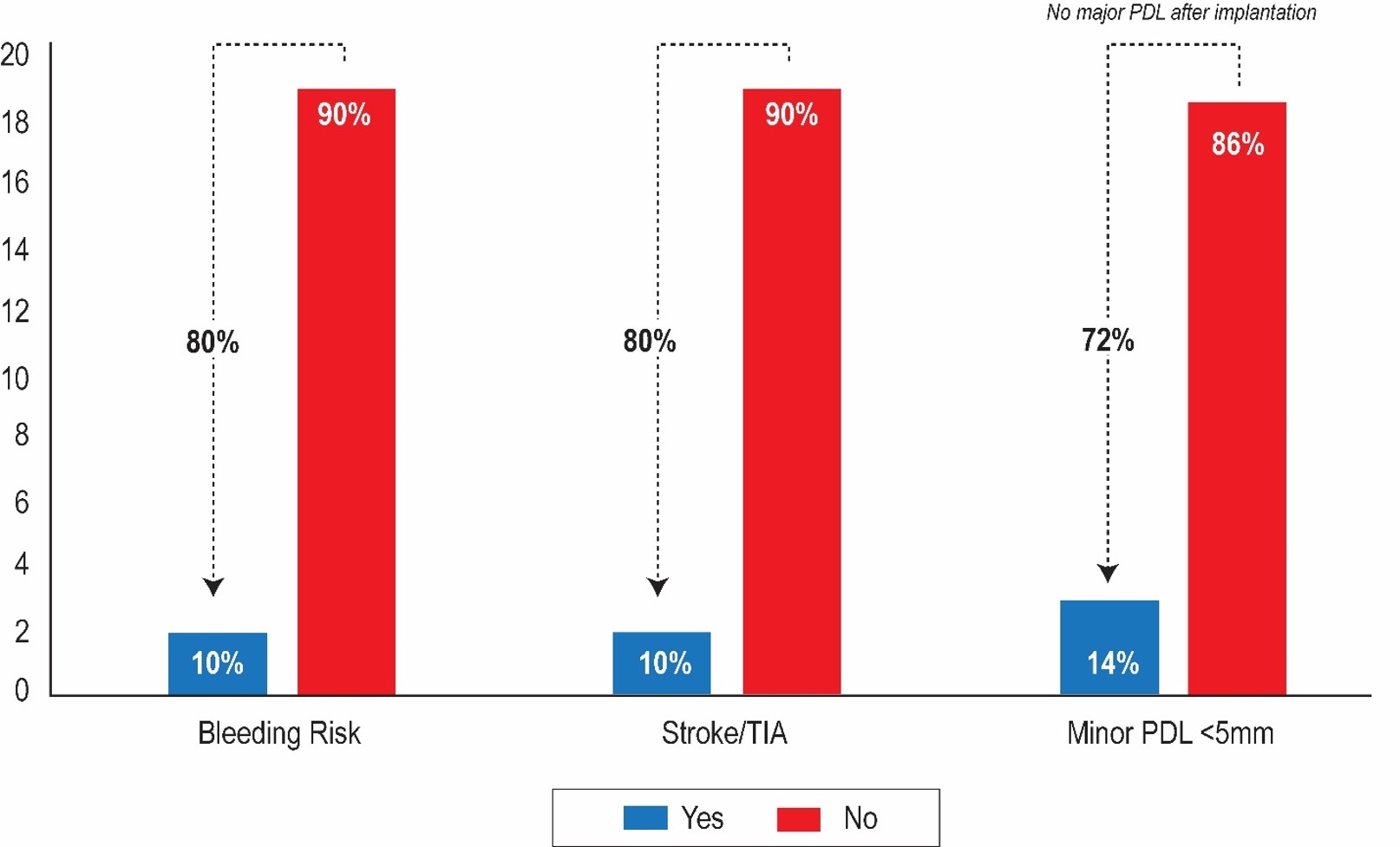
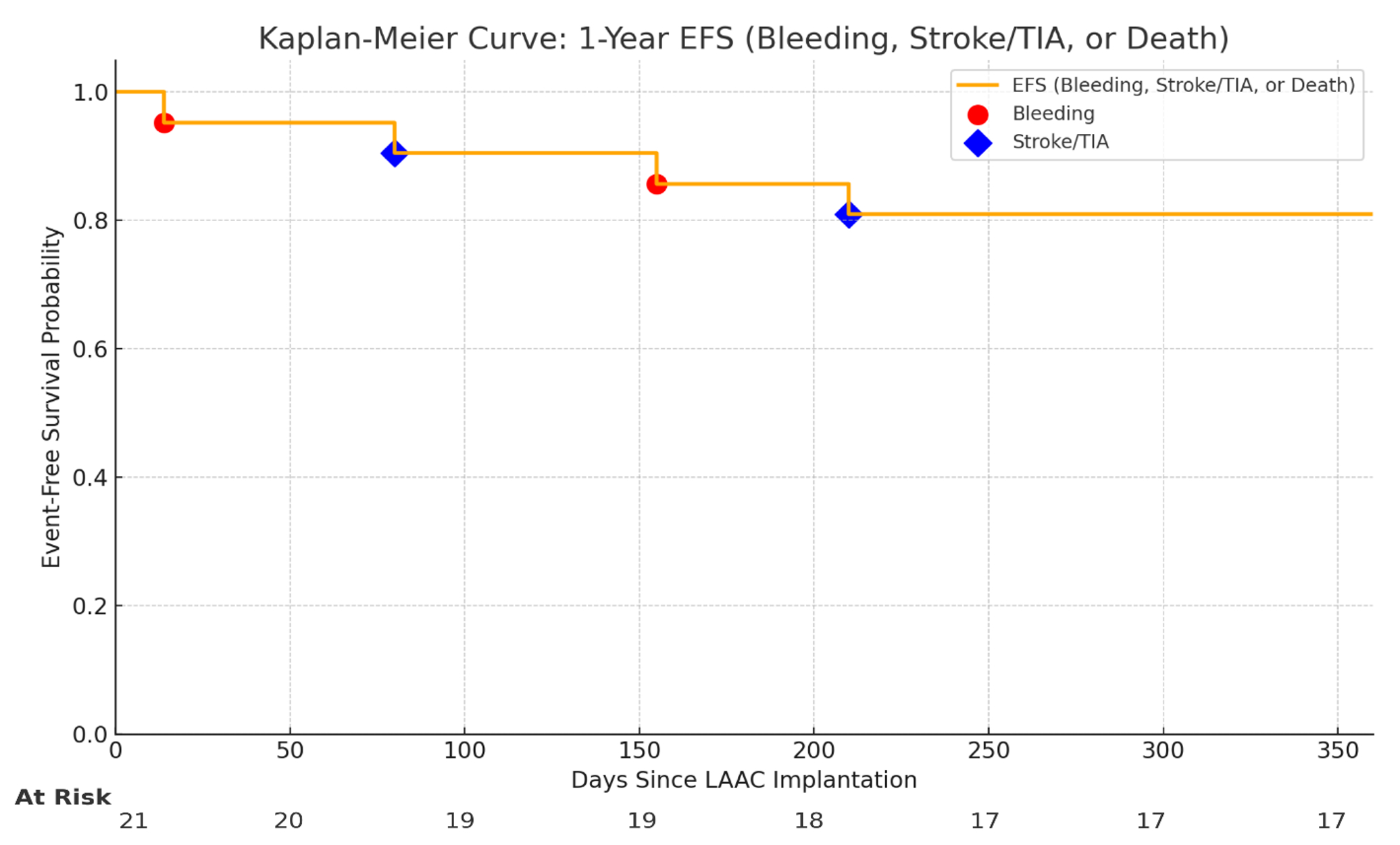
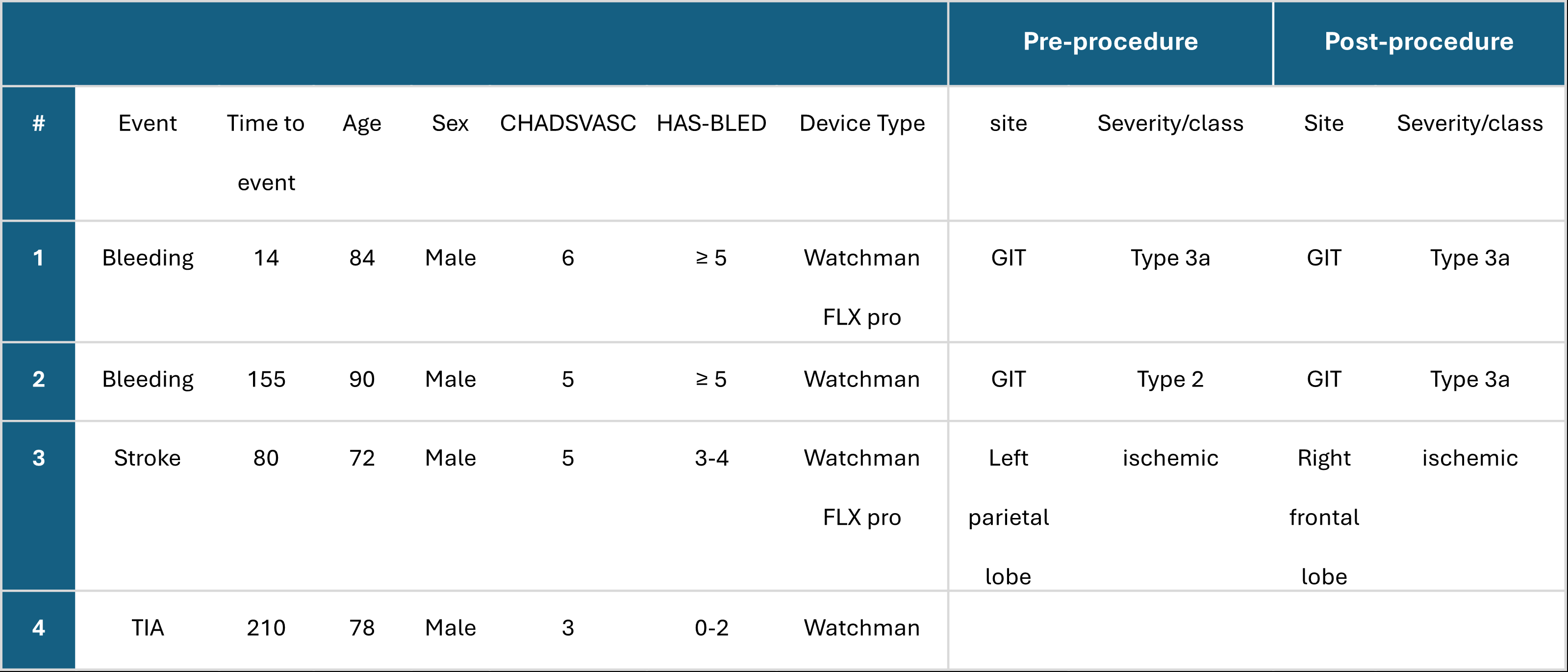
Procedural success was achieved in 95% of patients, with only one case aborted due to the persistence of an LAA thrombus despite anticoagulation therapy. No intra- or peri-procedural complications were observed. An immediate complete seal was achieved in all patients, with no PDL noted. At a median follow-up of 24 months (IQR: 14-30), minor PDL (≤5 mm) developed in 3 patients (14.3%), with no major leaks (>5 mm) observed and no device-related thrombosis (DRT) (Figure 1). Two patients (9.5%) experienced post-procedural major bleeding; both were on OAC at the time of bleeding and had a prior history of bleeding at the same site. Two patients (9.5%) experienced ischemic stroke or TIA, both with prior ischemic stroke/TIA history (Table 1). The 12-month and 2-year EFS were both 81% (Figure 2).

Conclusion:
In CA patients, LAAC demonstrated high procedural success and low complication rates, suggesting it is a safe and feasible approach for stroke prevention. However, vigilance for potential complications, such as peri-device leaks, is needed. Larger, multicenter studies are needed to validate these findings and further assess long-term safety
  • Mohamed, Ahmed  ( Charleston Area Medical Center , Charleston , West Virginia , United States )
  • Chabaklo, Khodor  ( Cleveland Clinic , Cleveland , Ohio , United States )
  • Alzahrani, Ashraf  ( Univeristy of Iowa Hospitals , Iowa City , Iowa , United States )
  • Alvarez, Paulino  ( Cleveland Clinic , Cleveland , Ohio , United States )
  • Jaber, Wael  ( CLEVELAND CLINIC FOUNDATION , Cleveland , Ohio , United States )
  • Saliba, Walid  ( CLEVELAND CLINIC , Cleveland , Ohio , United States )
  • Wazni, Oussama  ( Cleveland Clinic Foundation , Cleveland , Ohio , United States )
  • Kanj, Mohamed  ( Cleveland Clinic , Cleveland , Ohio , United States )
  • Hanna, Mazen  ( CLEVELAND CLINIC , Cleveland , Ohio , United States )
  • Author Disclosures:
    Ahmed Mohamed: DO NOT have relevant financial relationships Ashraf Alzahrani: DO NOT have relevant financial relationships | Paulino Alvarez: DO NOT have relevant financial relationships | Wael Jaber: DO have relevant financial relationships ; Consultant:Boston Scientific:Active (exists now) ; Consultant:Pfizer:Active (exists now) | Walid Saliba: DO have relevant financial relationships ; Advisor:Boston Scientific:Active (exists now) | Oussama Wazni: DO NOT have relevant financial relationships | Mohamed Kanj: DO have relevant financial relationships ; Speaker: boston scientific:Active (exists now) | Mazen Hanna: DO have relevant financial relationships ; Advisor:Pfizer:Active (exists now) ; Advisor:Alnylam:Active (exists now) ; Advisor:ATTRALUS:Active (exists now) ; Advisor:Alexion:Active (exists now) ; Advisor:Ionis:Active (exists now) ; Advisor:Bridge Bio:Active (exists now)
Meeting Info:

Scientific Sessions 2025

2025

New Orleans, Louisiana

Session Info:

Arrhythmic Risks in Infiltrative Cardiomyopathy: Pathophysiology and Management

Saturday, 11/08/2025 , 03:15PM - 04:30PM

Moderated Digital Poster Session

More abstracts on this topic:
Among Older Adults With Atrial Fibrillation, First Anticoagulant Prescription Is Not Associated with Reduced Hazard of Ischemic Stroke but Is Associated with Increased Hazard of Major Bleeding: A Nationwide Study

Lusk Jay, Li Fan, Mac Grory Brian, Nalawade Vinit, Wilson Lauren, Yarnell Stephanie, Song Ailin, Schrag Matthew, Poli Sven, Hammill Bradley, Xian Ying


Acute Myocardial Infarction outcomes in patients on single anticoagulation versus combined anticoagulation and antiplatelet therapy

Rosario Manuel, Vasquez Moises, Garcia Gustavo, Wojtas Caroline, Vargas Ian, Behers Benjamin

More abstracts from these authors:
GLP-1 Receptor Agonist in Patients Undergoing Percutaneous Left Atrial Appendage Occlusion: Impact on Outcomes

Goyal Aman, Saeed Humza, Kanj Mohamed, Wazni Oussama, Hussein Ayman, Saliba Walid, Taigen Tyler, Santangeli Pasquale

Stroke prevention after ablation of paroxysmal AF

Wazni Oussama, Saliba Walid, Pellegrini Cara

You have to be authorized to contact abstract author. Please, Login
Not Available