High Prevalence and Adverse Cardiovascular Outcomes of the Transthyretin p.Asp119Asn Variant in Japan
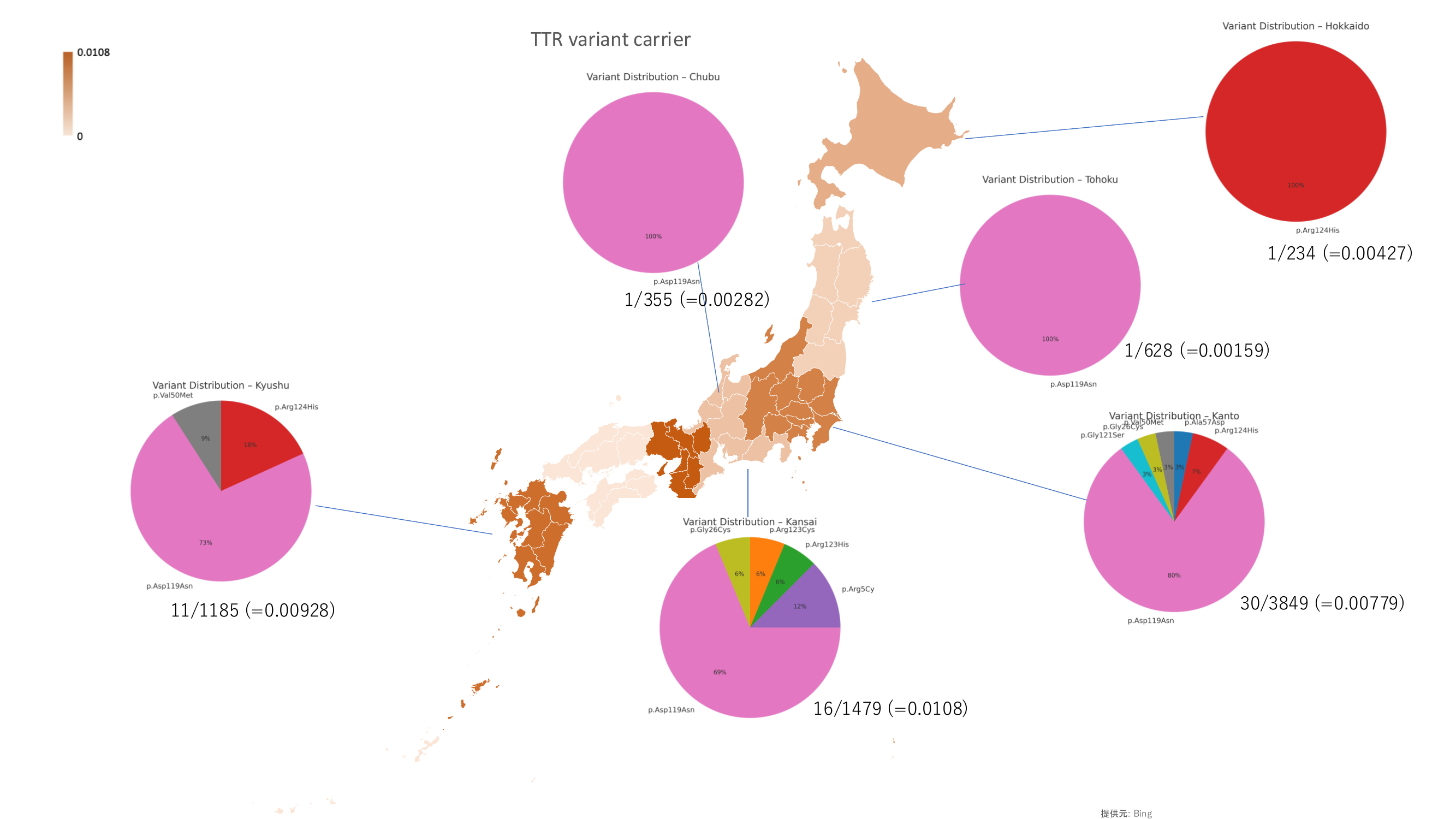
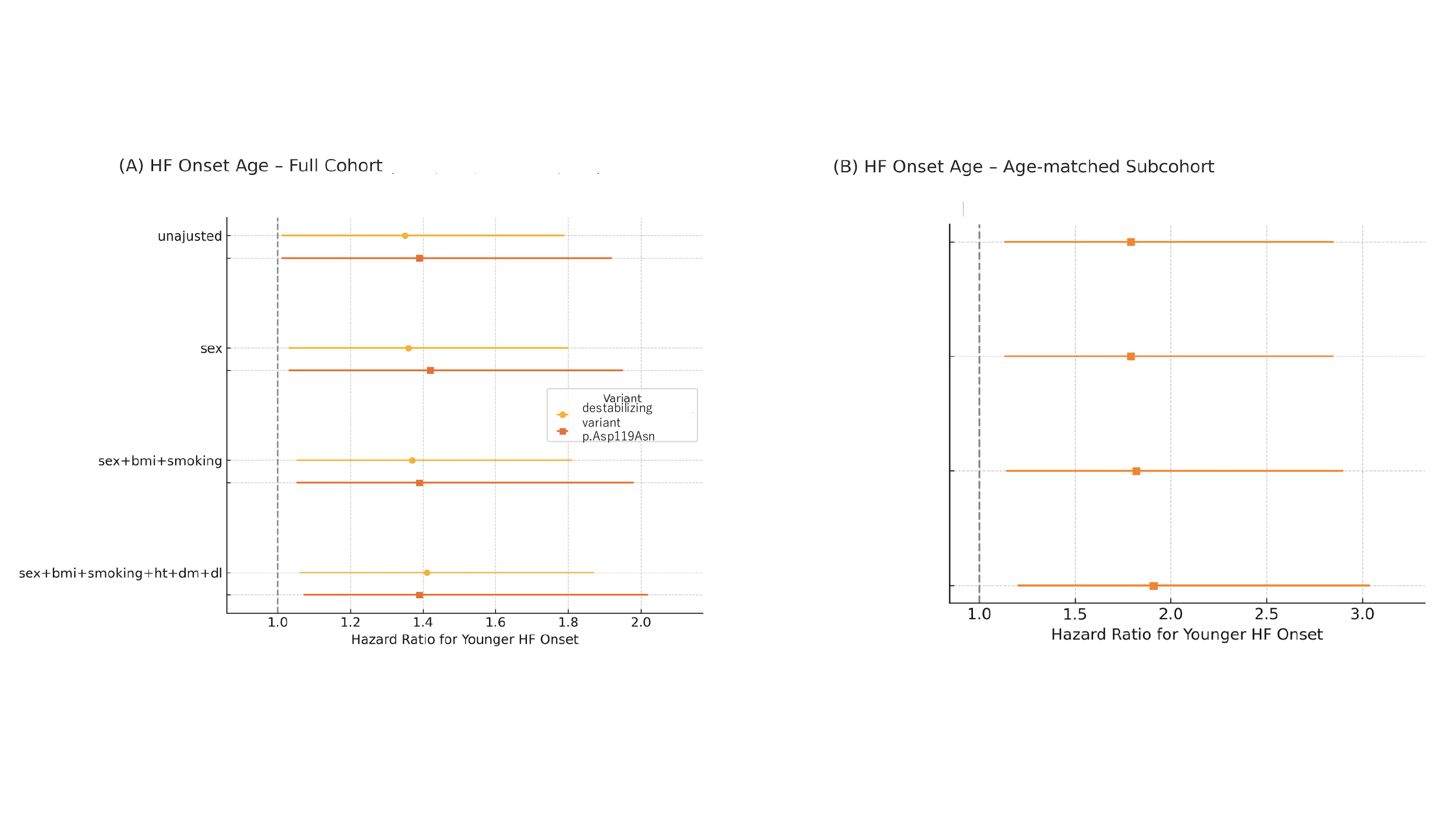
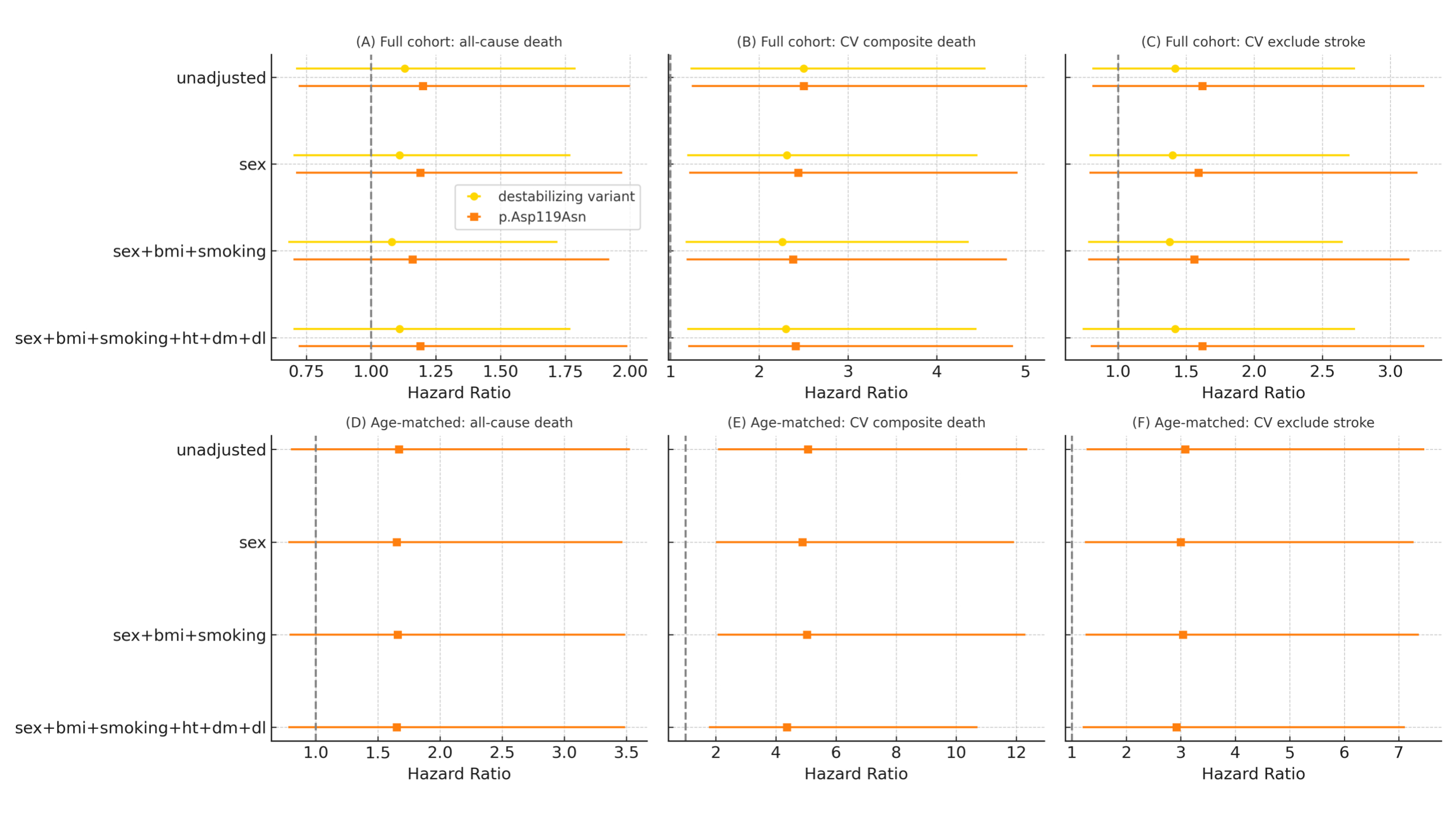
Abstract Body (Do not enter title and authors here): Background Transthyretin tetramer destabilizing variants accelerate hereditary transthyretin amyloidosis and shorten survival. The contribution of transthyretin tetramer destabilizing variants to prognosis in the general population, particularly in Asians, remains limited. Objective To quantify nationwide prevalence of transthyretin tetramer destabilizing variants in Japanese population and evaluate its association with incident heart failure and cardiovascular mortality. Methods Data were used from Biobank Japan, a hospital-based national biobank that enrolled participants between 2003 and 2007. After stringent sample and variant quality control, 7,949 individuals with complete survival information remained eligible for analysis. The entire TTR locus was interrogated using either targeted sequencing or whole-genome sequencing. A 1:1 age-matched subcohort (2,096 HF cases, 2,096 non-HF controls) served as validation. Longitudinal clinical data available in a nested observational subset were also examined and all time-to-event outcomes were ascertained from follow-up records. Results Among 7,949 participants, the mean baseline age was 65 ± 13 years and 32.3 % were women. Sixty individuals (0.75 %) carried TTR variants. Prevalence was highest in Kanto region (eastern Japan, including Tokyo; 0.78 %) and in Kansai region (western Japan, including Osaka; 1.08 %). After adjusting for sex, body-mass index, smoking status, hypertension, diabetes, and dyslipidemia, carriage of the p.Asp119Asn variant was linked to a 39 % higher risk of incident heart failure (HR 1.39, 95 % CI 1.07–2.02; P = 0.042) and to more than a twofold increase in composite cardiovascular death ,defined as death from ischemic events or progressive heart failure (HR 2.41, 95 % CI 1.20–4.86; P = 0.014). This excess cardiovascular mortality persisted when the analysis was restricted to participants who developed heart failure. All-cause mortality did not differ (HR 1.20, 95 % CI 0.72–2.00; P = 0.48), and age-matched models yielded similar estimates. Conclusions p.Asp119Asn is present in about 1 in 130 Japanese adults, a prevalence far higher than that of destabilizing TTR variants reported in Europeans. It independently accelerates heart failure onset and doubles cardiovascular mortality, supporting ancestry-tailored genetic screening and early therapeutic trials in East Asia.
Yoshida, Hiroki
(
RIKEN Center for Integrative Medica
, Tokyo , Japan )
Miyazawa, Kazuo
(
The Broad Institute of MIT and Harv
, Cambridge , Massachusetts , United States )
Satoh, Masahiro
(
RIKEN
, Kanagawa , Japan )
Enzan, Nobuyuki
(
The Broad Institute
, Cambridge , Massachusetts , United States )
Kurosawa, Ryo
(
Tohoku University
, Sendai , Japan )
Takeda, Norihiko
(
The University of Tokyo
, Tokyo , Japan )
Komuro, Issei
(
UNIV TOKYO GRADUATE SCHOOL MEDICINE
, Tokyo , Japan )
Ito, Kaoru
(
RIKEN IMS
, Yokohama , Japan )
Author Disclosures:
HIROKI YOSHIDA:DO NOT have relevant financial relationships
| Kazuo Miyazawa:DO NOT have relevant financial relationships
| Masahiro Satoh:DO NOT have relevant financial relationships
| Nobuyuki Enzan:DO NOT have relevant financial relationships
| Ryo Kurosawa:DO NOT have relevant financial relationships
| Norihiko Takeda:DO NOT have relevant financial relationships
| Issei Komuro:DO NOT have relevant financial relationships
| Kaoru Ito:DO NOT have relevant financial relationships