
Logo

American Heart Association

  18
  0


Final ID: MP97

High Visit-to-Visit Systolic Blood Pressure Variability Predicts Adverse Outcomes in Kidney Transplant Recipients: A Nationwide Cohort Study

Abstract Body (Do not enter title and authors here): Background & Objective:
Visit-to-visit blood pressure variability (VVBPV) has emerged as an independent predictor of cardiovascular and renal outcomes, but its prognostic significance in kidney transplant recipients—especially in Asian populations—remains unclear. We aimed to assess whether elevated VVBPV predicts adverse long-term outcomes in Korean kidney transplant recipients, using a nationwide cohort to provide real-world evidence in this underrepresented population.
Methods:
We analyzed 5,532 adult recipients from the Korea Organ Transplantation Registry (2014–2022). VVBPV was calculated as the average real variability (ARV), standard deviation (SD), and coefficient of variation (CV) of systolic blood pressure (SBP) measured during routine post-transplant follow-up. Patients were stratified into tertiles based on ARV. The primary composite outcome included graft loss, new-onset cardiovascular disease (CVD), or ≥50% decline in estimated glomerular filtration rate (eGFR). Cox proportional hazards models were adjusted for age, sex, BMI, comorbidities, and 6-month post-transplant clinical variables.
Results:
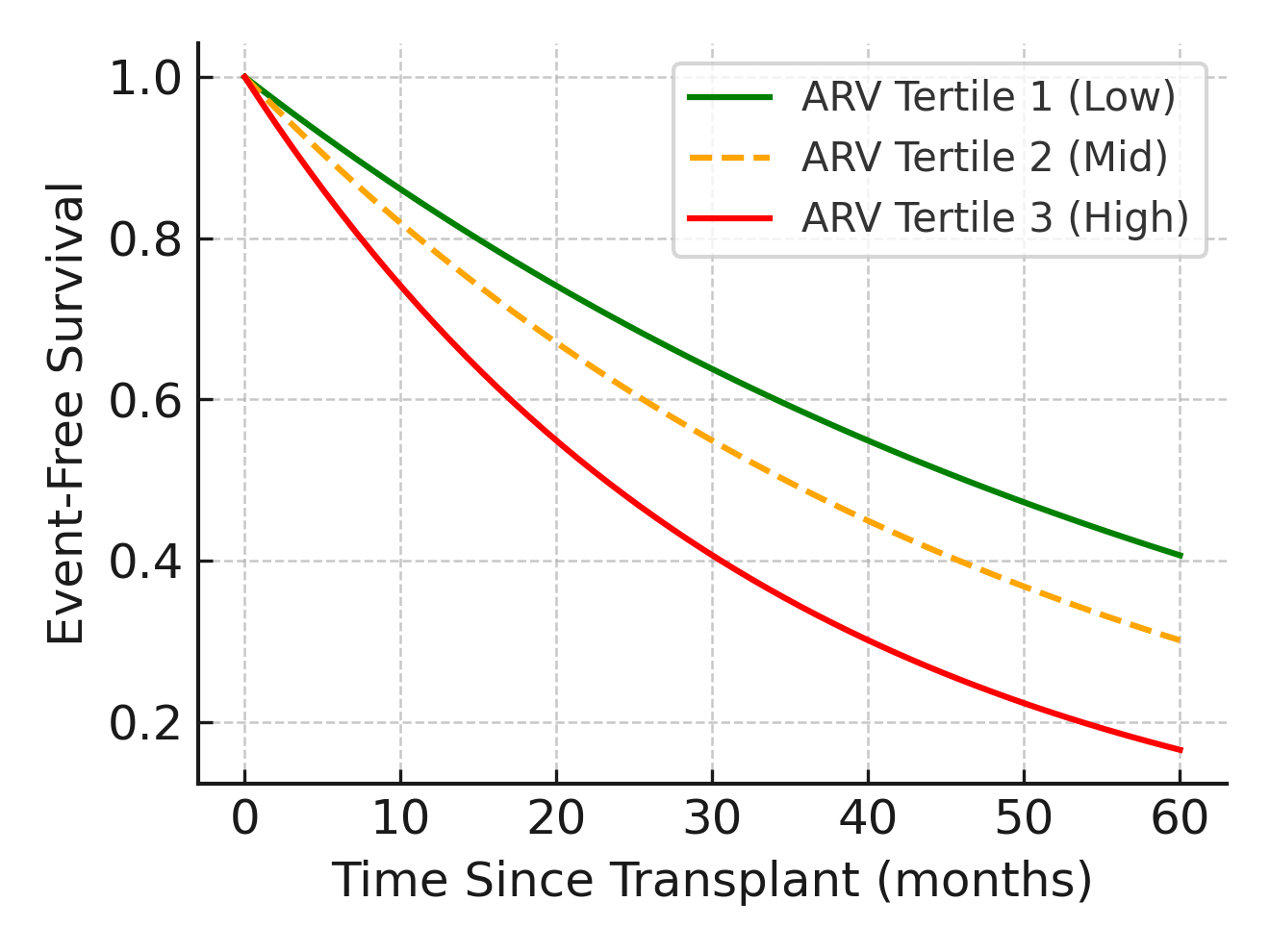
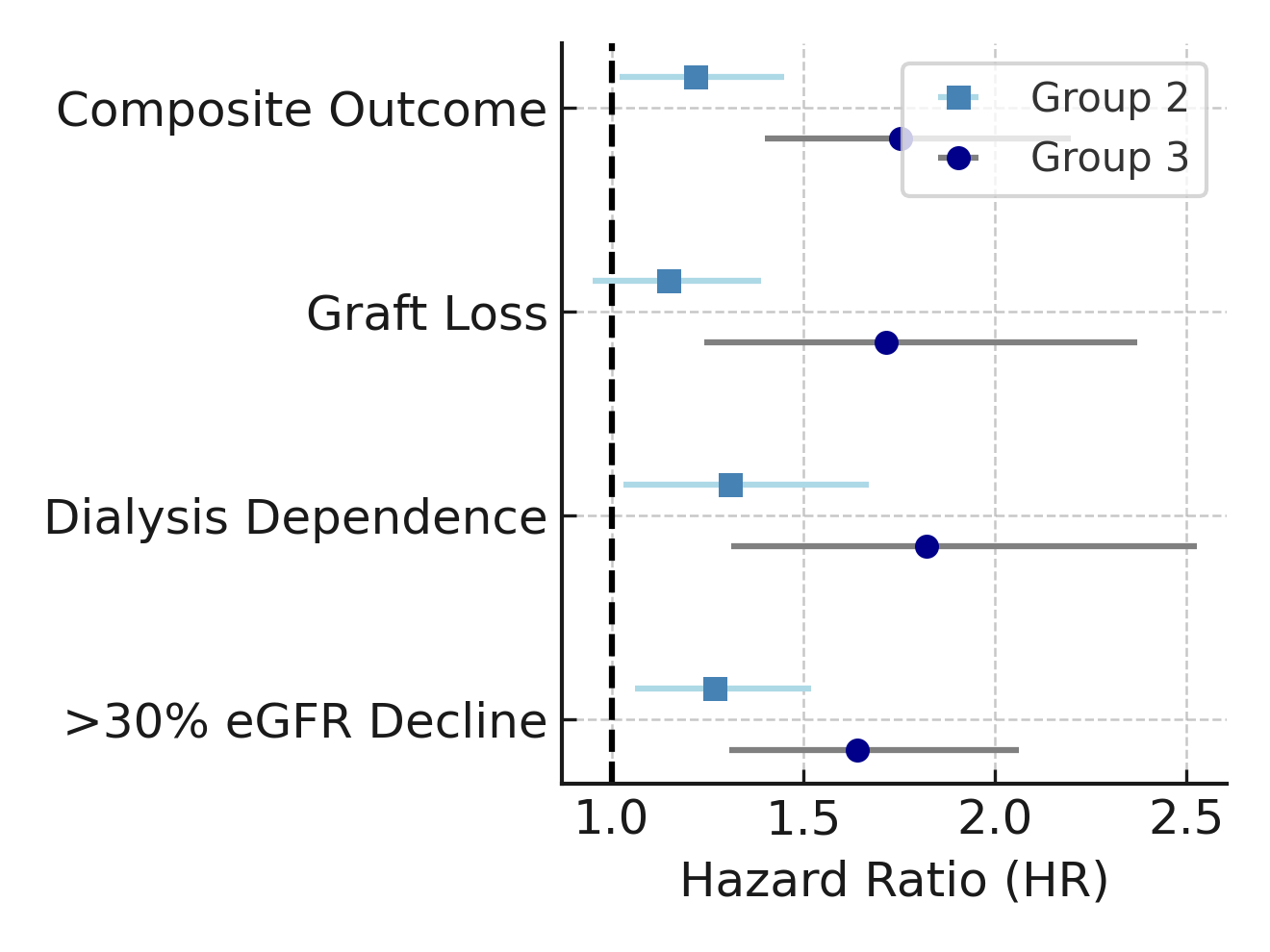
During a median follow-up of 55.4 months, 541 patients (9.8%) experienced the primary outcome. Graft loss occurred in 200 patients (3.6%), incident CVD in 176 (3.2%), and ≥50% eGFR decline in 337 (6.1%). Compared with Group 1 (lowest ARV), Group 3 (highest ARV) had a significantly increased risk of the composite outcome (HR 1.755; 95% CI 1.401–2.198; p<0.001). SD and CV showed consistent results (SD: HR 1.483; 95% CI 1.194–1.841; CV: HR 1.558; 95% CI 1.256–1.932; all p<0.001). Group 3 also had elevated risk for secondary outcomes including graft loss (HR 1.716; 95% CI 1.242–2.372; p<0.001), dialysis dependence (HR 1.822; 95% CI 1.312–2.526; p<0.001), and >30% eGFR decline (HR 1.641; 95% CI 1.306–2.062; p<0.001). Subgroup analyses revealed more pronounced associations in patients with diabetes (HR 2.13) and those with pre-existing CVD (HR 1.96), although interaction p-values were not statistically significant. Kaplan-Meier analysis showed reduced event-free survival in higher VVBPV groups (log-rank p<0.001).
Conclusion:
VVBPV may be a clinically relevant prognostic indicator in kidney transplant recipients. Prospective studies are needed to validate these associations and explore potential interventions. These findings suggest that VVBPV may also serve as a useful risk stratification marker in long-term transplant care.
  • Lee, Ju-hee  ( Chungbuk National University , Cheongju, Chungbuk , Korea (the Republic of) )
  • An, Suk-young  ( National Institutes of Health , Cheongju , Korea (the Republic of) )
  • Kim, Sang Cheol  ( National Institutes of Health , Cheongju , Korea (the Republic of) )
  • Author Disclosures:
    Ju-Hee Lee: DO NOT have relevant financial relationships | Suk-Young An: No Answer | Sang Cheol Kim: DO NOT have relevant financial relationships
Meeting Info:

Scientific Sessions 2025

2025

New Orleans, Louisiana

Session Info:

Intersections of Comorbidities with Hypertension Treatment

Saturday, 11/08/2025 , 10:45AM - 12:00PM

Moderated Digital Poster Session

More abstracts on this topic:
More abstracts from these authors:
Postprandial Hypotension and Blood Pressure Variability in Type 2 Diabetes

Lee Ju-hee, Yoon Woong-su, Kim Sangmin, Choi Woong-gil, Cho Myeong-chan, Hwang Kyung-kuk

Effect of Medical-Grade Mask Use on Exercise Physiology in Healthy Adults: A Randomized Crossover Study

Lee Ju-hee, Lee Goo Joo, Kang Mingyu, Eom Sang Yong

You have to be authorized to contact abstract author. Please, Login
Not Available