Global Trends in Maternal Hypertensive Disorders-Associated Mortality from 2000 to 2019.
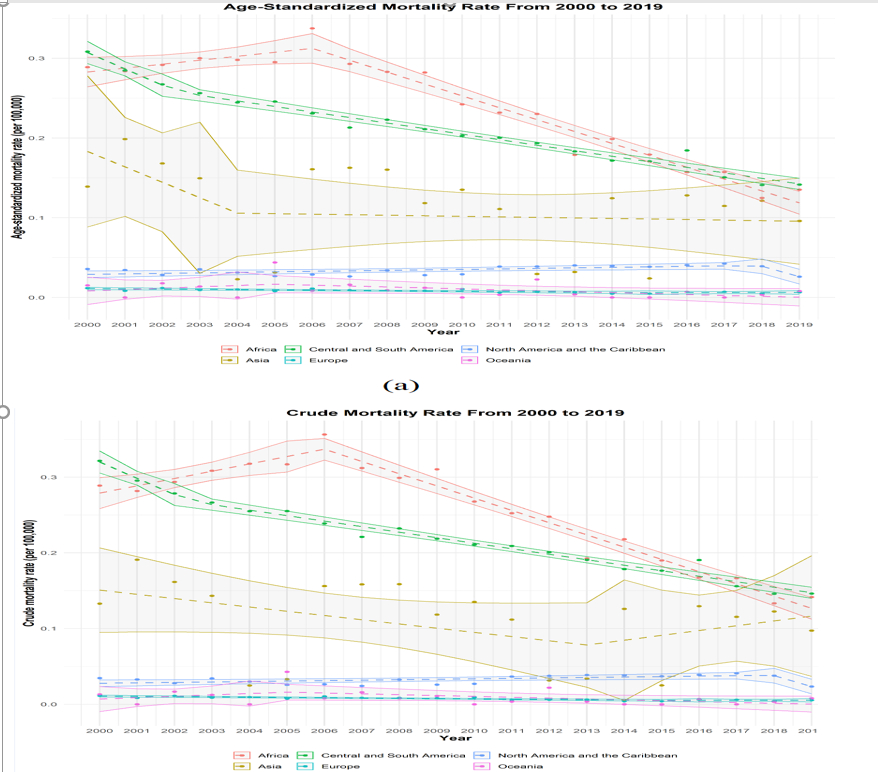
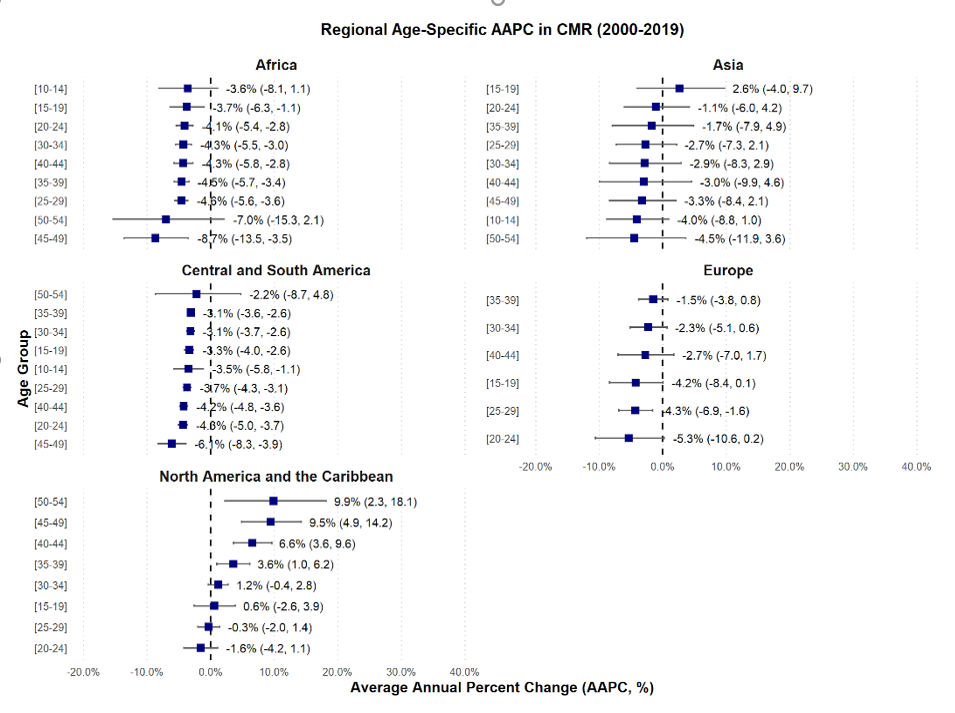
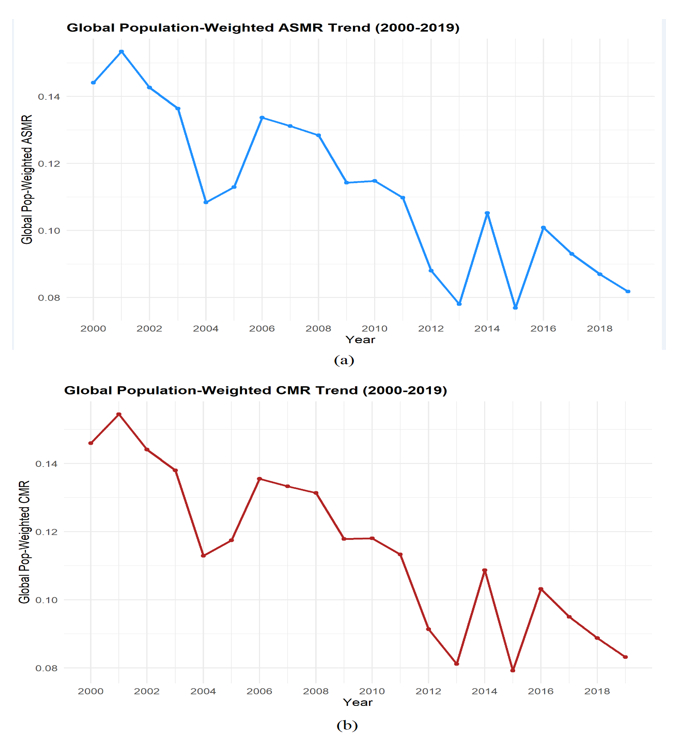
Abstract Body (Do not enter title and authors here): Background: Maternal hypertensive disorders-associated mortality is a major cause of maternal deaths. This study evaluated the global, regional, country, and age-specific maternal mortality trend due to maternal hypertensive disorders between 2000 to 2019. Methods: The study included data from World Health Organization (WHO) mortality database, comprising 117 countries, and 42,827 maternal hypertensive disorder deaths. Age-Standardized Mortality Rates (ASMR) and Crude Mortality Rates (CMR) per 100,000 population were calculated. Trends were evaluated using Average Annual Percent Change (AAPC) with 95% Confidence Intervals (CI). Results: Globally, maternal hypertensive disorders deaths reduced from 2,493 in 2000 to 1,714 in 2019. ASMR significantly decreased from 0.144 to 0.082 (AAPC: -3.06%, 95% CI: -3.89% to -2.23%), with similar CMR trends (AAPC: -3.01%). Regionally, significant ASMR reductions were seen in Africa (AAPC: -4.58%), Central/South America (AAPC: -3.62%), and Europe (AAPC: -3.31%). Trends in Asia, North America/Caribbean, and Oceania were non-significant. In 2019, the ASMR rates were highest in Central/South America (0.142) and Africa (0.135). Country-level analyses found substantial heterogeneity. Significant ASMR declines occurred in countries like Mexico (AAPC: -7.12%) and the Netherlands (AAPC: -9.41%), while Thailand (AAPC: 3.52%) and the Dominican Republic (AAPC: 7.81%) showed significant increases. Age-specific CMRs significantly decreased across most reproductive ages in Africa (AAPC -3.74% to -8.67%) and Central/South America (-3.48% to -6.10%). In contrast, North America/Caribbean saw significant CMR increases in older reproductive women (35-54 years; AAPCs: 3.57% to 9.92%). Asia showed no significant age-specific trends and European declines were limited (25-29y, AAPC: -4.29%). Conclusion: While global maternal mortality from hypertensive disorders has declined, significant disparities still persist. Progress in Africa, Central/South America, and Europe is significant. However, concerning trends in specific regions, countries, and older reproductive women in North America/Caribbean highlight the need for targeted public health strategies.
Chowdhury, Faisal
(
Chittagong Medical College Hospital
, Chittagong , Bangladesh )
Shirin, Fahmida
(
Chittagong Medical College Hospital
, Chittagong , Bangladesh )
Karim, Tanjila
(
Chittagong Medical College Hospital
, Chittagong , Bangladesh )
Shrestha, Abhigan
(
Medical Research Hub, Nepal
, Kathmandu , Nepal )
Hanif, Muhammad
(
Upstate Medical University
, New York , New York , United States )
Jaiswal, Vikash
(
JCCR Cardiology Research
, Jaunpur , India )
Author Disclosures:
Faisal Chowdhury:DO NOT have relevant financial relationships
| Fahmida Shirin:No Answer
| Tanjila Karim:No Answer
| Abhigan Shrestha:DO NOT have relevant financial relationships
| Muhammad Hanif:DO NOT have relevant financial relationships
| Vikash Jaiswal:DO NOT have relevant financial relationships