Countywide Burden of Sudden Death Caused by Aortic Dissection and Rupture: From the POstmortem Systematic InvesTigation of Sudden Cardiac Death (POST SCD) Study
Abstract Body (Do not enter title and authors here): Background: The total burden of lethal acute aortic dissection (AD) and subsequent aortic rupture causing sudden cardiac death (SCD) is unknown as previous SCD studies presume cardiac/arrhythmic causes without autopsy; these are now considered presumed SCD (pSCD) by international consensus. Moreover, current epidemiology reflects only diagnosed survivors, missing occult cases undetected before death. We evaluated data from the POST SCD Study to determine the true burden of AD among all community sudden deaths.
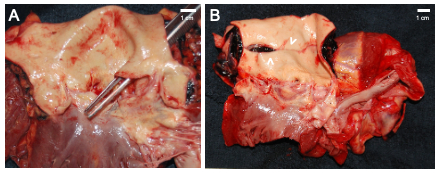
Methods: POST SCD is an ongoing prospective study using autopsy and clinical records to adjudicate cardiac (e.g., acute MI, cardiomyopathy) vs. non-cardiac (e.g., overdose, stroke) causes among 1210 incident pSCDs meeting WHO criteria aged 18-90 years in San Francisco County from 2/1/2011 to 10/23/2024. We defined AD as an aortic intimal tear allowing blood to split the wall layers to form a false lumen. Type A involves the ascending aorta (may extend to descending); Type B is limited to the descending aorta. We compared AD deaths to pSCDs due to other causes.
Results: Of 1210 pSCDs, 692 (57%) were due to cardiac and 518 (43%) non-cardiac causes; 66 (5.5% of all pSCDs, 13% of non-cardiac) were due to AD (mean 63 years, 73% male): 55 (83%) Type A and 11 (17%) Type B. Other leading causes included acute and chronic coronary artery disease (CAD; 55% of cardiac), and occult overdose and neurologic, 38% and 14% of non-cardiac causes, respectively. Most AD sudden deaths (62/66 [94%]) progressed to aortic rupture and hemorrhage, 39 (63%) of which had proximal (root and ascending) intimal tears without signs of prior dissection. HTN (62%, p=0.003) and chronic CAD (73%, p<0.001) were more prevalent in AD cases, but only 10% of CAD was diagnosed premortem, while dyslipidemia (11%, p=0.01) and obesity (23%, p=0.04) were less prevalent. More AD cases (33/66 [50%]) had severe aortic atherosclerosis (>50% intimal coverage) than non-AD pSCDs (317/947 [33%], p=0.006).
Conclusion: In this 14-year countywide postmortem study of pSCDs, AD comprised 5.5% of total sudden mortality and was the third leading non-cardiac cause. The majority of cases advanced to rupture with a 5:1 Type A/B ratio, higher than the published 2:1 estimate in survivors. Higher prevalence of HTN in AD vs. non-AD pSCDs underscores its importance in AD pathogenesis and suggests the need for greater screening and management, especially in patients with major atherosclerosis, to prevent AD sudden deaths.
Huynh-o'keefe, Christine
(
UCSF School of Medicine
, San Francisco , California , United States )
Kinkead, Brielle
(
UCSF
, San Francisco , California , United States )
Tsan, Jelix
(
UCSF
, San Francisco , California , United States )
Connolly, Andrew
(
UCSF
, San Francisco , California , United States )
Moffatt, Ellen
(
San Francisco Medical Examiner
, San Francisco , California , United States )
Tseng, Zian
(
UCSF
, San Francisco , California , United States )
Author Disclosures:
Christine Huynh-O'Keefe:DO NOT have relevant financial relationships
| Brielle Kinkead:DO NOT have relevant financial relationships
| Jelix Tsan:DO NOT have relevant financial relationships
| Andrew Connolly:DO NOT have relevant financial relationships
| Ellen Moffatt:DO NOT have relevant financial relationships
| Zian Tseng:No Answer