Prospective Validation of opportunistic screening for Chagas disease using Artificial Intelligence-enabled ECG: the SaMi-Trop Project
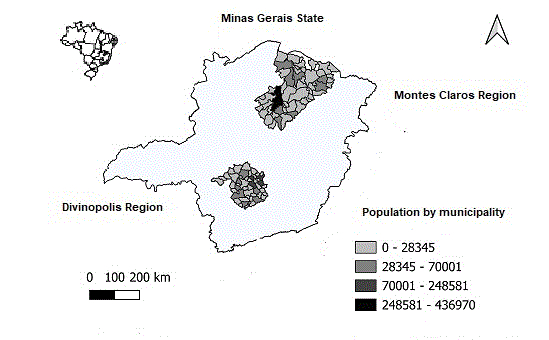
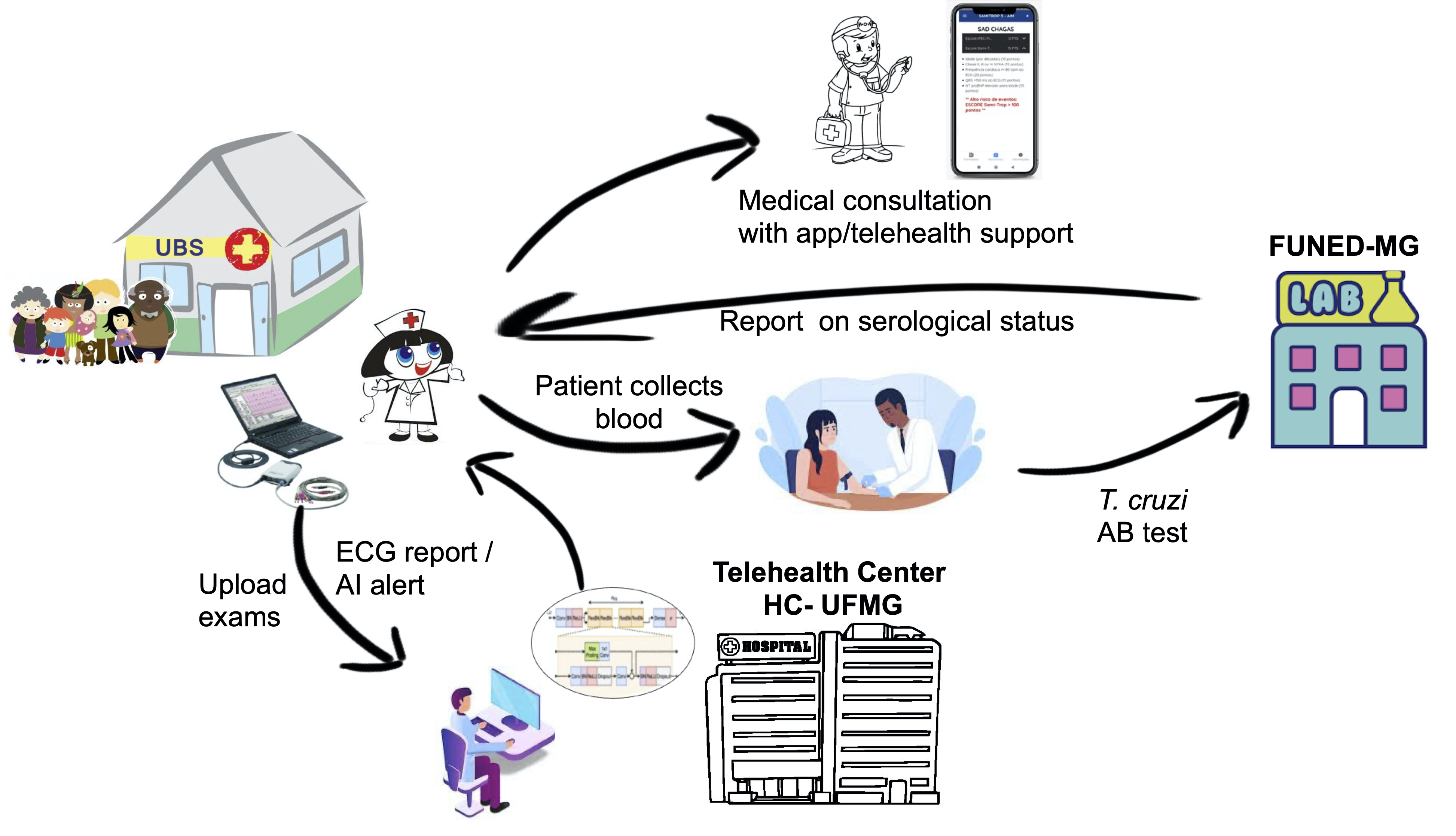
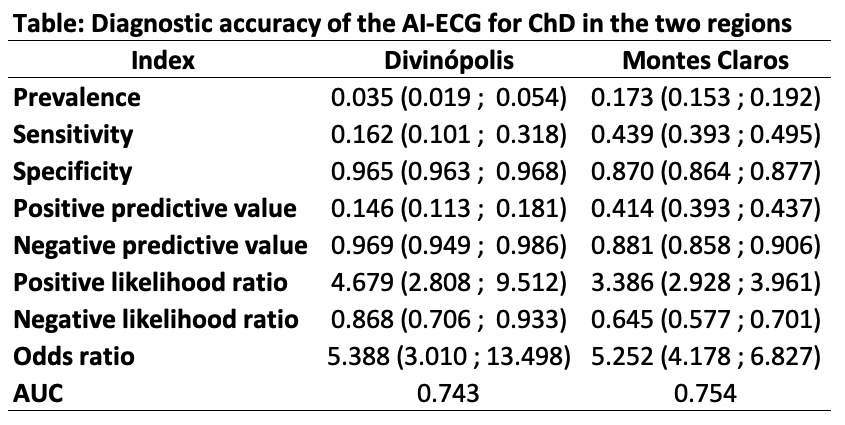
Abstract Body (Do not enter title and authors here): Introduction: Patients with Chagas disease (ChD) encounter numerous barriers to receiving timely diagnosis, treatment, and follow-up care: fewer than 10% of infected individuals are diagnosed, and less than 1% receive treatment. We developed an accurate AI-ECG model to detect ChD through routine ECG; however, large-scale adoption in endemic regions depends on prospective real-world validation. Objective: To evaluate the diagnostic performance of an AI-ECG-based strategy in the real-world primary health care (PHC) setting of an endemic region for ChD. Methods: This study is part of the NIH-funded SaMi-Trop Project, developed within the framework of the Minas Gerais Telehealth Network (RTMG) through a tele-ECG service. To integrate the AI-ECG algorithm for screening ChD within the clinical pathway, we embed it into the routine tele-ECG system serving PHC units in two regions of Brazil: Montes Claros (54 municipalities), a hyperendemic area, and Divinópolis (53 municipalities), an endemic area (Fig. 1). The AI-ECG model operated in parallel with the routine ECG performed at PHC units, estimating the probability of ChD based on the AI-ECG deep model and self-reported risk factors. If classified as a possible ChD case, an alert prompts local health professionals to collect a blood sample for serological testing, which is the gold standard for diagnosis (Fig. 2). We aimed to evaluate 2,500 AI-ECG model-positive cases and 1,000 negative cases. Results: We performed 75,779 ECGs over a 10-month period, resulting in 5,851 positive AI alerts for serological testing (7.7%). Out of those notified, 2,157 (37%) underwent serology, and 927 tested positive for ChD, indicating a 37% prevalence among AI-ECG-positive cases. In contrast, the positivity rate among AI-ECG-negative individuals was 9%, reflecting a diagnostic odds ratio of 5.7. The AI-ECG exhibited a sensitivity of 0.34, specificity of 0.92, positive predictive value of 0.37, negative predictive value of 0.91, and an overall area under the curve (AUC) of 0.76. The table shows the accuracy in both regions. Conclusion: The IA-ECG algorithm shows strong potential as an opportunistic screening tool for Chagas disease in primary care settings. By integrating AI systems with telehealth infrastructure, PHC teams can improve screening, expedite diagnosis, and facilitate timely patient management. However, widespread implementation in Brazil will require addressing logistical and operational challenges.
Ribeiro, Antonio Luiz
(
UFMG
, Belo Horizonte , Brazil )
Cardoso, Clareci
(
Federal University of São João del-Rei
, Divinópolis , Minas Gerais , Brazil )
Oliveira, Claudia
(
Federal University of São João del-Rei
, Divinópolis , Minas Gerais , Brazil )
Ribeiro, Antonio
(
Uppsala University
, Uppsala , Sweden )
Ferreira, Ariela
(
State University of Montes Claros
, Montes Claros , Minas Gerais , Brazil )
Mendes, Mayara
(
UFMG
, Belo Horizonte , Brazil )
Gomes, Paulo
(
UFMG
, Belo Horizonte , Brazil )
Quintino, Nayara
(
Federal University of São João del-Rei
, Divinópolis , Minas Gerais , Brazil )
Barbosa, Marco
(
UFMG
, Belo Horizonte , Brazil )
Oliveira-da Silva, Léa
(
Hospital das Clinicas de Sao Paulo
, Sao Paulo , Brazil )
Taconeli, Cesar
(
Federal University of Parana
, Curitiba , Brazil )
Baldoni, Nayara
(
Federal University of São João del-Rei
, Divinópolis , Minas Gerais , Brazil )
Vinhal, Wanessa
(
UFSJ
, Divinopolis , Brazil )
Goncalves, Ana
(
UFSJ
, Divinopolis , Brazil )
Cruz, Dardiane
(
State University of Montes Claros
, Montes Claros , Minas Gerais , Brazil )
Nunes, Maria
(
UFMG
, Belo Horizonte , Brazil )
Sabino, Ester Cerdeira
(
Universidade de São Paulo
, São Paulo , São Paulo , Brazil )
Author Disclosures:
Antonio Luiz Ribeiro:DO NOT have relevant financial relationships
| Léa Oliveira-da Silva:DO NOT have relevant financial relationships
| Cesar Taconeli:No Answer
| Nayara Baldoni:No Answer
| Wanessa Vinhal:No Answer
| Ana Goncalves:DO NOT have relevant financial relationships
| Dardiane Cruz:No Answer
| Maria Nunes:DO NOT have relevant financial relationships
| Ester Cerdeira Sabino:No Answer
| Clareci Cardoso:DO NOT have relevant financial relationships
| Claudia Oliveira:No Answer
| Antonio Ribeiro:No Answer
| ariela mota ferreira:DO NOT have relevant financial relationships
| Mayara Mendes:No Answer
| Paulo Gomes:No Answer
| Nayara Quintino:No Answer
| Marco Barbosa:No Answer