Prevalence of Dysglycemia-Based Chronic Disease in Iranian Adults
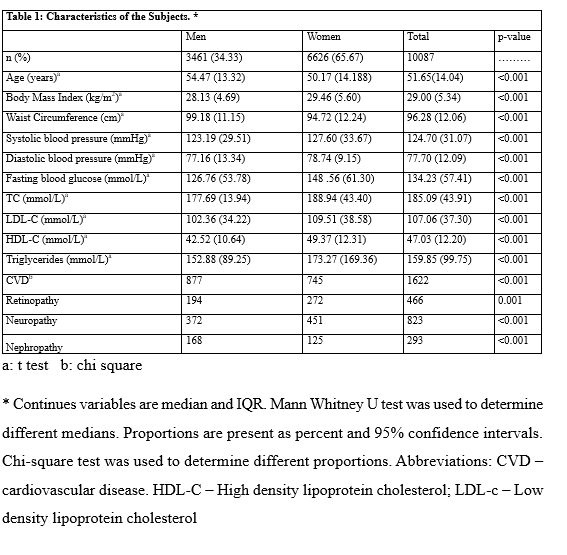
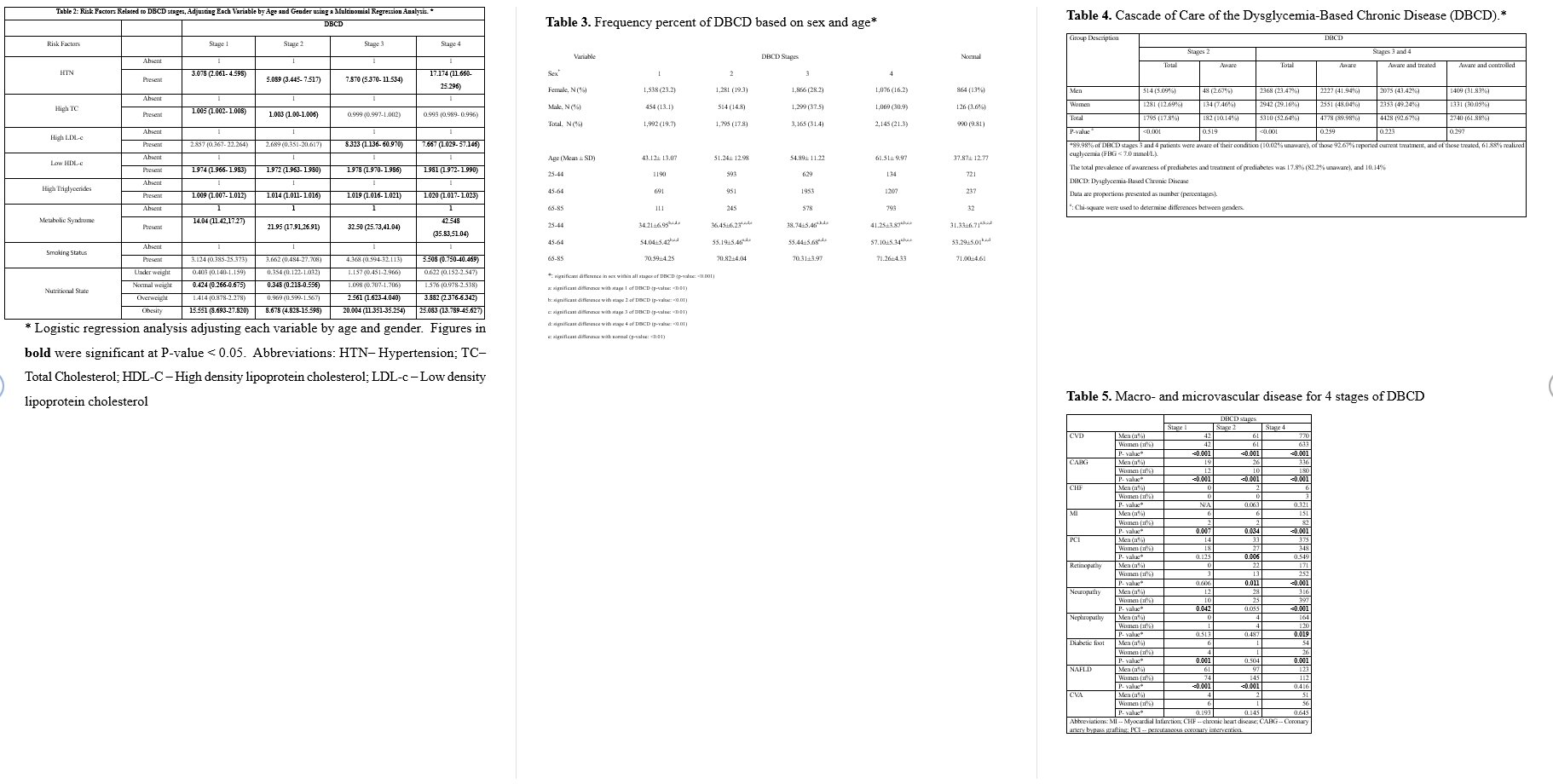
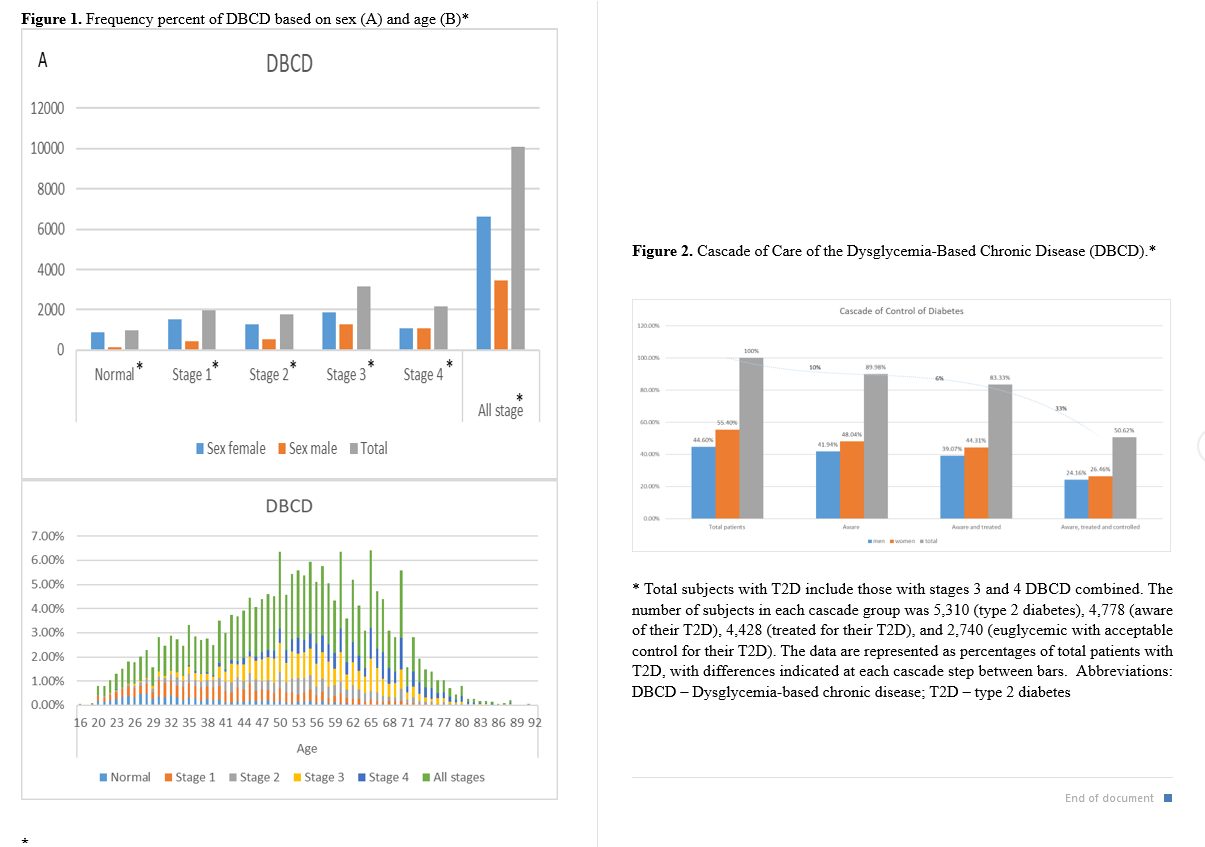
Abstract Body (Do not enter title and authors here): Background: The Dysglycemia-Based Chronic Disease (DBCD) multi-morbidity care model was developed by American Association of Clinical Endocrinology to address the requirement for preventive care measures to reduce the impact of type two diabetes (T2D) and its complications. The DBCD model consists of four distinct stages including: insulin resistance, prediabetes, T2D and vascular complication spectrum. This study assesses the prevalence and associated risk factors for each of the four DBCD stages in Iranian adults. Methods: From February 2002 to March 2020, 10,087 participants who attended clinic of Vali-Asr Hospital, Tehran, Iran, were evaluated. In total, 3,465 (34.3%) men with median age of 54.47 years and 6,629 (65.67%) women with median age of 50.2 years were included. A 10 ml blood sample was collected after an overnight fast, centrifuged, and stored at -70°C for lab evaluation to measure fasting blood sugar (FBS). Hemoglobin A1c was measured using high-performance liquid chromatography, while fasting and post-prandial glucose were assessed using enzymatic colorimetric methods. Results: Stage 1 was found in 19.7% of the population (23.2% in women and 13.1% in men), stage 2 in 17.8% of the population (19.3% in women and 14.8% in men), stage 3 in 31.4% of the population (28.2% in women and 37.5% in men), and stage 4 in 21.3% of the population (16.2% in women and 30.9% in men). DBCD stages increased significantly with age (stage 1=43.12, stage 2=51.24, stage 3=54.89, stage 4=61.51, P-value <0.01). All DBCD stages were associated with hypertension (stage 1: OR=3.07, stage 2: OR=5.08 ,stage 3: OR=7.87 and stage 4: OR=17.17) dyslipidemia (stage 1: OR=2.85, stage 2: OR=2.68, stage 3: OR=8.32, and stage 4: OR=7.66)and metabolic syndrome (stage 1: OR=14.04, stage 2: OR=21.95, stage 3: OR=32.50, and stage 4: OR=42.54). Conclusion: The findings of the current study further support the importance of the DBCD model in early detection and prevention of dysglycemia and their associated complications
Abomohsen, Mustafa
(
Brookdale hospital
, Brooklyn , New York , United States )
Idries, Iyad
(
Brookdale hospital
, Brooklyn , New York , United States )
Dehghani Firouzabadi, Fatemeh
(
Brookdale hospital
, Brooklyn , New York , United States )
Mechanick, Jeffrey
(
icahn school of med at mount siani
, New York , New York , United States )
Ghannam, Mohammad
(
Brookdale hospital
, Brooklyn , New York , United States )
Almakadma, Abdul Hakim
(
Brookdale hospital
, Brooklyn , New York , United States )
Nasir, Ayesha Nayab
(
Brookdale hospital
, Brooklyn , New York , United States )
Duodu, Esther Fosuaah
(
Brookdale hospital
, Brooklyn , New York , United States )
Saedifard, Farzane
(
Brookdale hospital
, Brooklyn , New York , United States )
Author Disclosures:
Mustafa Abomohsen:DO NOT have relevant financial relationships
| Iyad Idries:No Answer
| Fatemeh Dehghani Firouzabadi:DO NOT have relevant financial relationships
| Jeffrey mechanick:DO have relevant financial relationships
;
Advisor:Abbott Nutrition:Active (exists now)
; Speaker:Merck:Active (exists now)
; Speaker:Abbott Nutrition:Active (exists now)
; Advisor:Twin Health:Active (exists now)
| Mohammad Ghannam:DO NOT have relevant financial relationships
| Abdul Hakim Almakadma:No Answer
| Ayesha Nayab Nasir:No Answer
| ESTHER FOSUAAH DUODU:No Answer
| Farzane Saedifard:No Answer