Impact of PCSK9 Inhibitors on Mortality and Cardiovascular Events in Statin-Treated ASCVD Patients with Elevated Lipoprotein A: A Retrospective Study
Abstract Body (Do not enter title and authors here): Background: Lipoprotein(a) [Lp(a)] is an independent and genetically determined risk factor for atherosclerotic cardiovascular disease (ASCVD). In patients with well-controlled low-density lipoprotein cholesterol (LDL-C), elevated Lp(a) may represent residual risk. PCSK9 inhibitors modestly reduce Lp(a) levels, but the clinical implications of this effect remain uncertain in real-world populations. This study aims to evaluate the association between PCSK9 inhibitor use and clinical outcomes in statin-treated ASCVD patients with elevated Lp(a) and LDL-C <70 mg/dL.
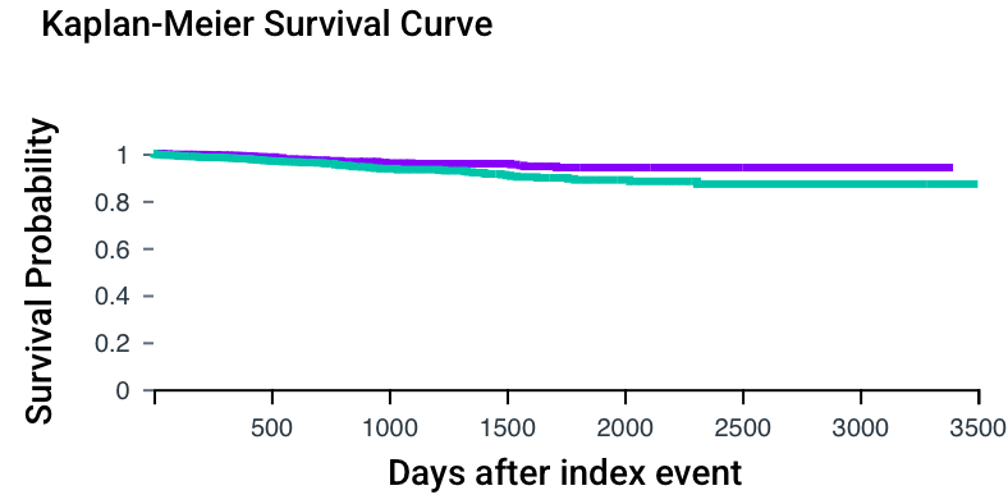
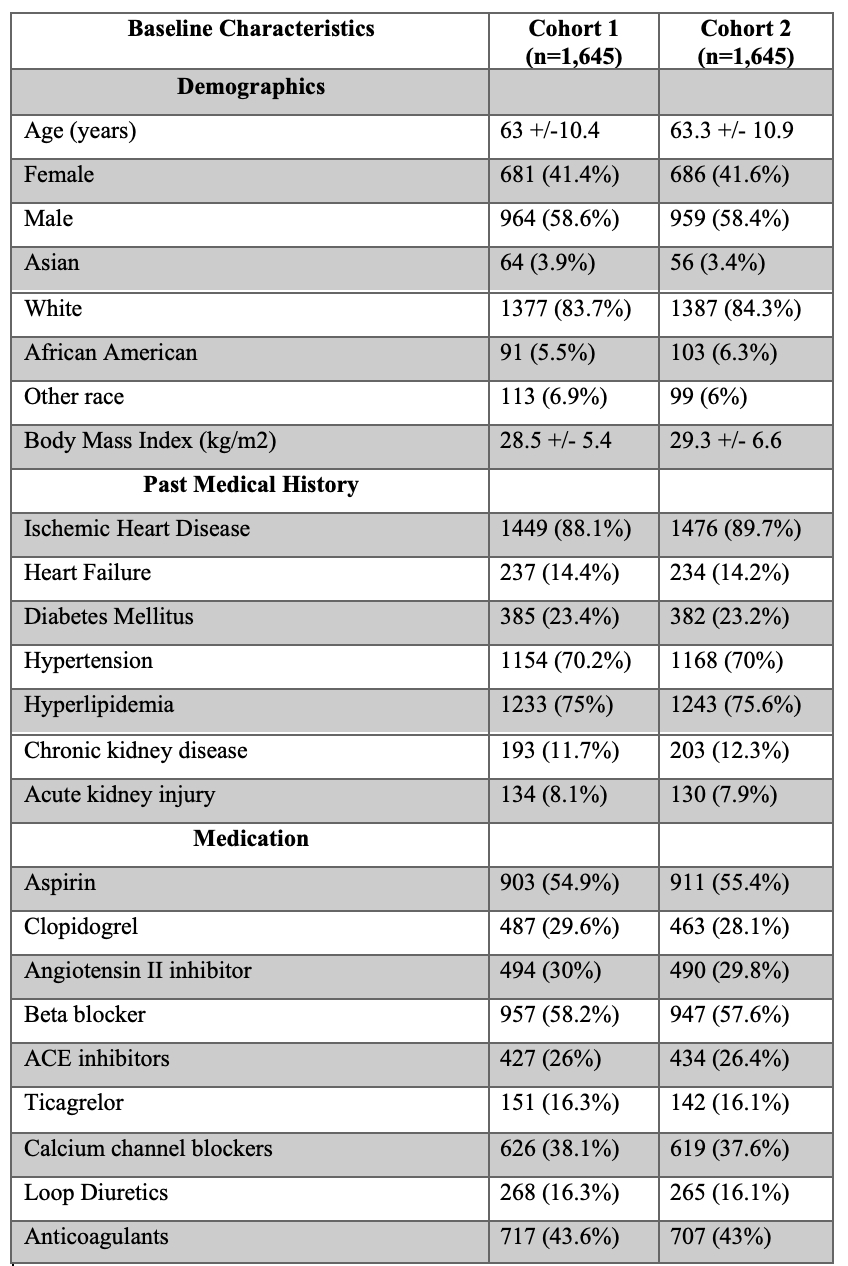
Methods: We performed a retrospective analysis of a cohort of patients aged ≥40 years with established ASCVD, LDL-C <70 mg/dL, elevated Lp(a), and ongoing statin therapy from the TriNetX research network. We divided the patients into two groups based on PCSK9 inhibitor use. Propensity score matching (1:1) was performed to balance baseline characteristics, including age, race, sex, comorbidities, concurrent medications, and baseline laboratory values. The primary outcomes were all-cause mortality, new ischemic stroke, and new ST-elevation or non-ST-elevation myocardial infarction (STEMI/NSTEMI). Kaplan-Meier survival analysis and hazard ratios were used to assess outcomes, with statistical significance set at p<0.05.
Results: The initial cohort was 6,204 patients. After matching, baseline characteristics were well-balanced between the two groups(n = 1,639 per cohort). The average age was 63 years, there were 1,367 females, 471 patients with heart failure, 767 with diabetes, and 3,122 had hypertension. PCSK9 inhibitor use was associated with a significant reduction in all-cause mortality: 2.3% in group 1 vs 4.7% in group 2 (hazard ratio 0.625, 95% CI: 0.42–0.93; p = 0.0194). No statistically significant differences were observed in the incidence of stroke (7.6% vs 8.6%) or STEMI/NSTEMI (12% vs 13.3%) between groups (p > 0.05 for both). The mortality benefit was more pronounced among patients who experienced greater Lp(a) reductions.
Conclusion: In this large, propensity-matched cohort of ASCVD patients with LDL-C <70 mg/dL and elevated Lp(a), PCSK9 inhibitor use was associated with reduced all-cause mortality but not with reduced incidence of stroke or MI. These findings highlight a potential mortality benefit of Lp(a) reduction in statin-treated patients with residual cardiovascular risk and support further investigation into targeted therapies for elevated Lp(a).
Azzo, Joe David
( Cooper University Healthcare
, Camden
, New Jersey
, United States
)
Nakhoul, Charbel
( Cooper University Healthcare
, Camden
, New Jersey
, United States
)
Mrad, Rudy
( UT Southwestern
, Dallas
, Texas
, United States
)
Salman, Oday
( SIUH
, Staten Island
, New York
, United States
)
Rachoin, Jean-sebastien
( Cooper University Healthcare
, Cherry Hill
, New Jersey
, United States
)
Author Disclosures:
Joe David Azzo:DO NOT have relevant financial relationships
| Charbel Nakhoul:DO NOT have relevant financial relationships
| Rudy Mrad:No Answer
| Oday Salman:No Answer
| jean-sebastien rachoin:No Answer