
Logo

American Heart Association

  19
  0


Final ID: MP508

Hormonal Therapy and the Risk of Cardiovascular Diseases Among Men with Prostate Cancer

Abstract Body (Do not enter title and authors here): Background
Hormonal therapy (HT) is a cornerstone of prostate cancer treatment; however, its potential cardiovascular risks remain a clinical concern. This study evaluated the incidence of cardiovascular events among prostate cancer patients treated with HT compared to those managed with prostatectomy or radiation alone.

Hypothesis
We hypothesized that hormonal therapy in men with prostate cancer would be associated with an increased risk of major cardiovascular events at 1, 2, and 3 years of follow-up compared to those not receiving hormonal therapy.

Methods
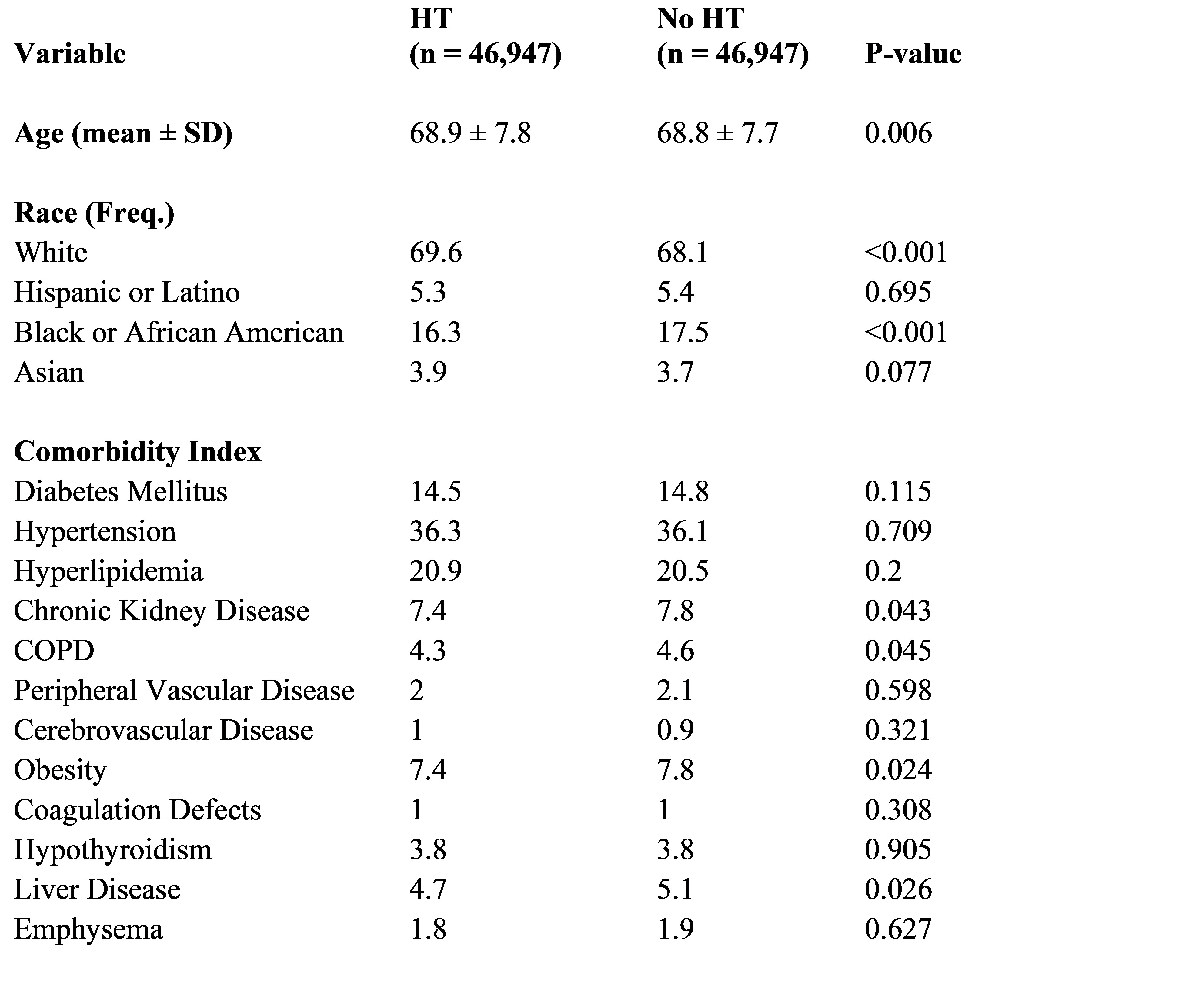
A retrospective cohort study was conducted using TriNetX. Male patients aged ≥50 years diagnosed with prostate cancer between 2010 and 2024 were included. Patients were stratified by receipt of HT versus no HT (prostatectomy or radiation only). Propensity score matching (1:1) was used to balance demographics and comorbidities. Outcomes included acute myocardial infarction, cerebral infarction, cardiomyopathy, heart failure, atrial fibrillation, and chronic ischemic heart disease. Kaplan-Meier survival analysis and Cox proportional hazards models estimated 1-, 2-, and 3-year risks.

Results
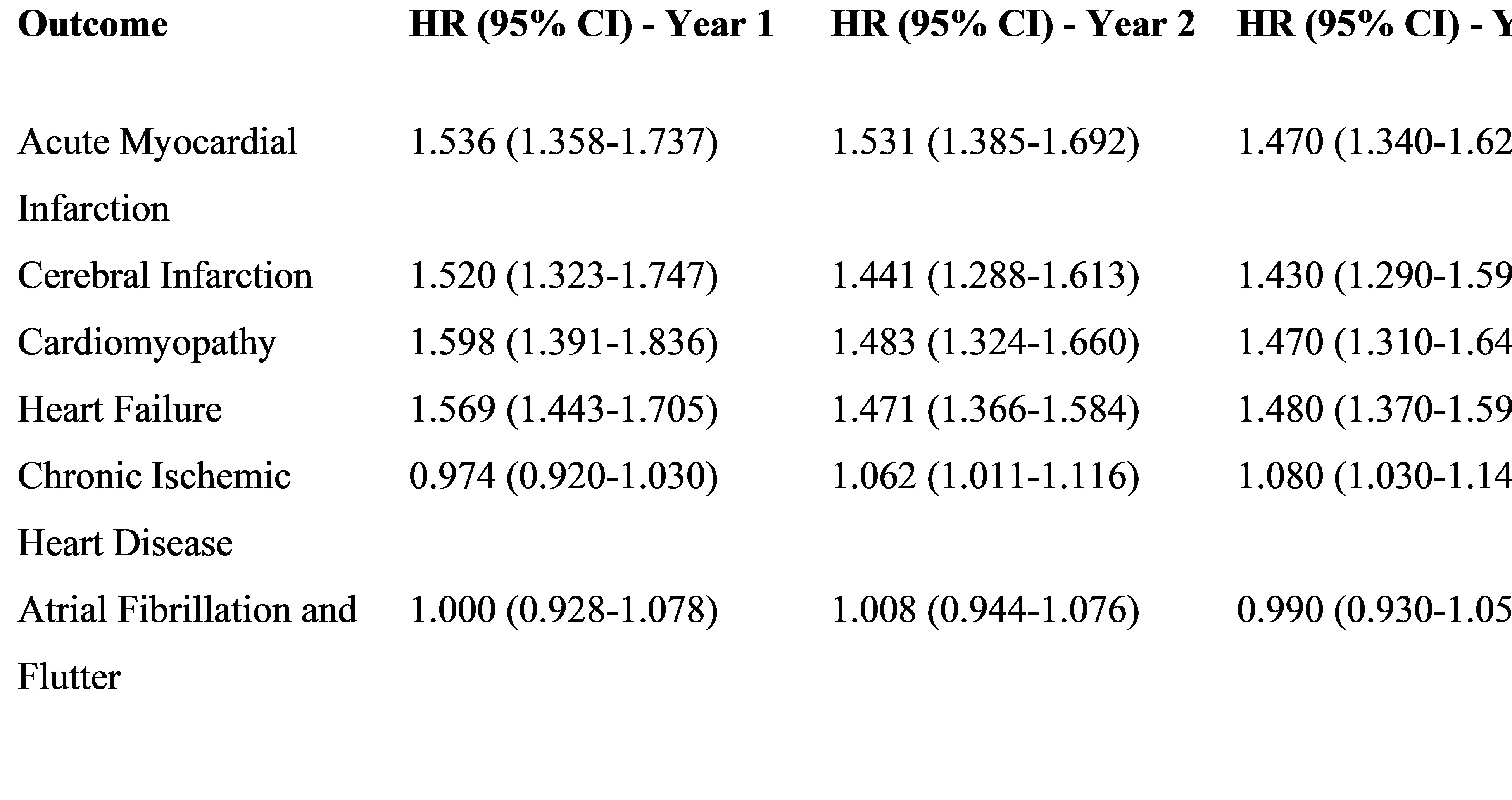
After matching (n = 46,947 per group), HT was associated with increased risks of myocardial infarction (HR 1.54), cerebral infarction (HR 1.52), cardiomyopathy (HR 1.60), and heart failure (HR 1.57) at Year 1 (all p < 0.001). These associations persisted through Years 2 and 3 (HRs 1.43–1.54). Chronic ischemic heart disease showed modest but significant risk at Years 2 and 3. No significant differences were observed for atrial fibrillation. Kaplan-Meier curves showed lower event-free survival with HT across significant outcomes.

Conclusions
HT in prostate cancer is associated with sustained increased cardiovascular risks over 3 years. These findings highlight the need for long-term cardiovascular monitoring and incorporation of preventive strategies in shared treatment planning.
  • Albayyaa, Mohanad  ( University of Texas Medical Branch , Galveston , Texas , United States )
  • Saxena, Ritika  ( University of Texas Medical Branch , Galveston , Texas , United States )
  • Jneid, Hani  ( UTMB , Galveston , Texas , United States )
  • Author Disclosures:
    Mohanad Albayyaa: DO NOT have relevant financial relationships | Ritika Saxena: No Answer | Hani Jneid: DO NOT have relevant financial relationships
Meeting Info:

Scientific Sessions 2025

2025

New Orleans, Louisiana

Session Info:

Where Cancer and Cardiovascular Disease Collide: Risks, Disparities, and Evolving Evidence

Saturday, 11/08/2025 , 03:15PM - 04:25PM

Moderated Digital Poster Session

More abstracts on this topic:
More abstracts from these authors:
Sex Differences in Onset of New Cognitive or Psychological Complaints Following Acute Coronary Syndrome in Older Adults

Priyadarshni Shivani, Saxena Ritika, Jneid Hani, Gaalema Diann

Outcomes of catheter ablation in cardiac sarcoidosis patients with ventricular tachycardia

Al Taii Haider, Saxena Ritika, Gaalema Diann, Narayanan Chockalingam, Morcos Ramez, Sabayon Muhie Dean, Jneid Hani

You have to be authorized to contact abstract author. Please, Login
Not Available