Proprotein Convertase Subtilisin/ Kexin Type 9 Inhibitors Improve Lipid Profile and May Stabilize Vasculopathy in Heart Transplant Recipients with Chronic Allograft Vasculopathy: A Pooled Analysis of Existing Studies
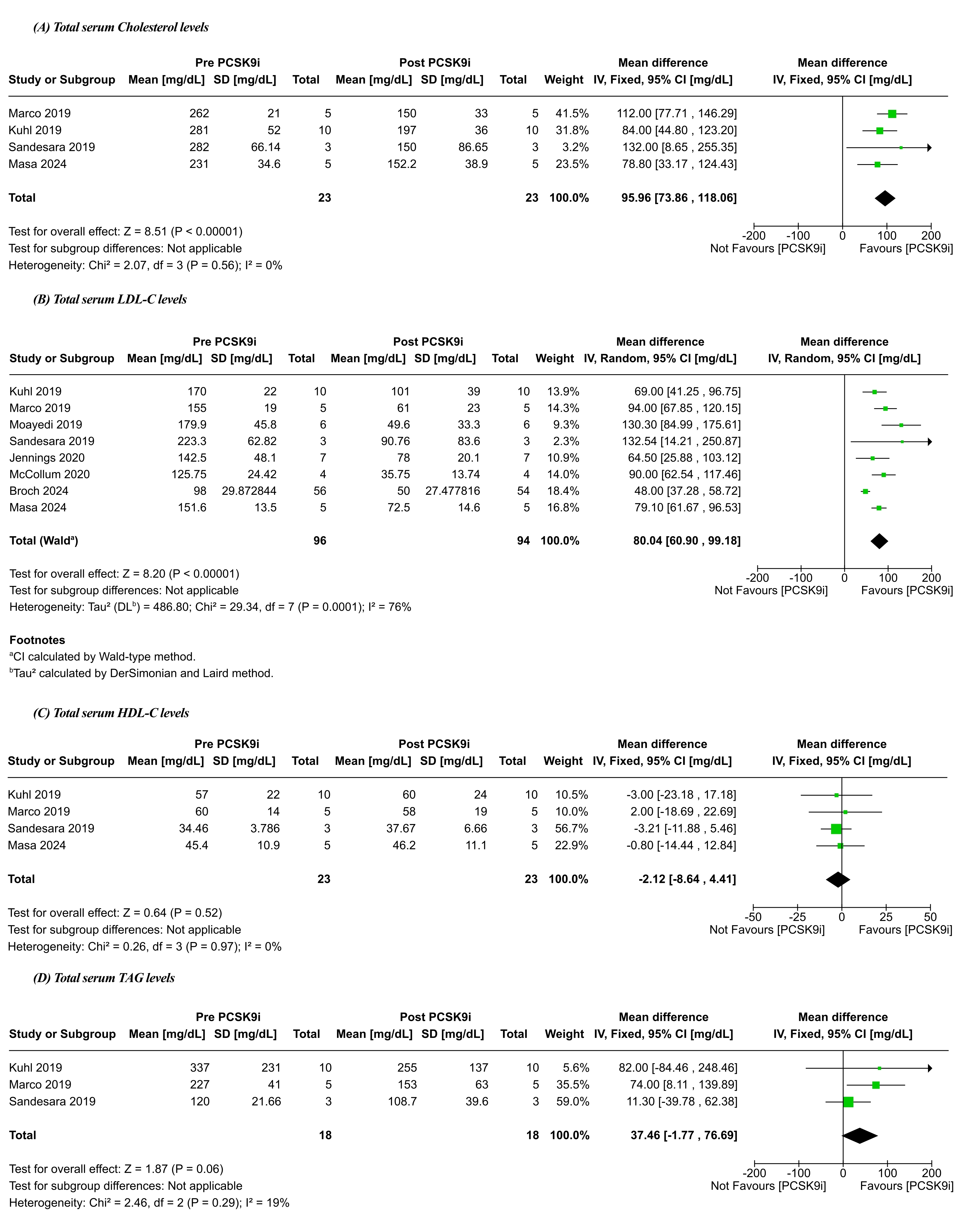
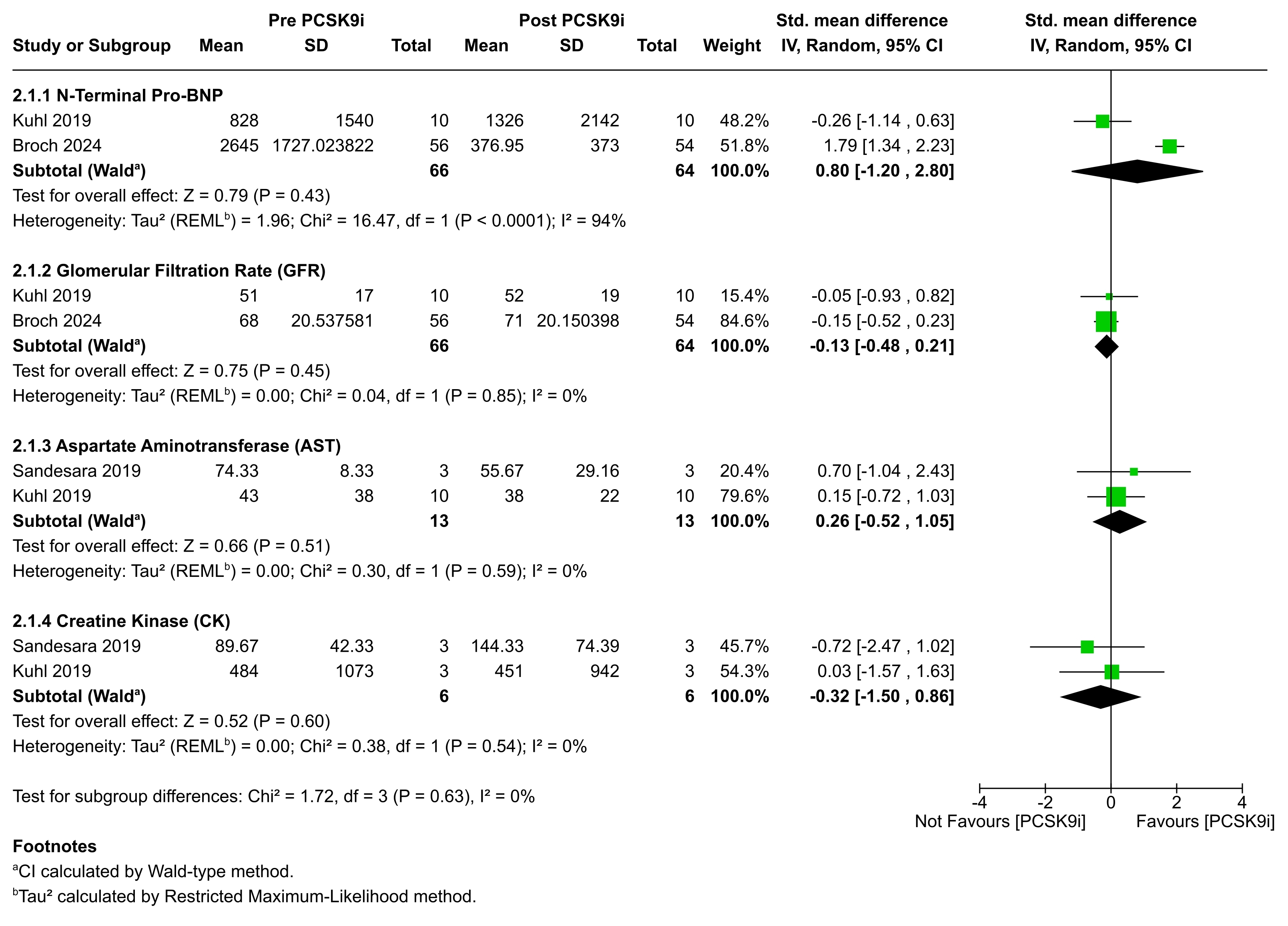
Abstract Body (Do not enter title and authors here): Introduction: Dyslipidemia plays a critical role in the progression of chronic allograft vasculopathy (CAV), which is a major cause of long-term graft failure and mortality in heart transplant patients. Proprotein convertase subtilisin/ kexin type 9 (PCSK9) inhibitors have emerged as potent lipid-lowering agents, but their role in managing CAV in this high-risk population remains unclear. Research Question: Do PCSK9 inhibitors improve the lipid profile, stabilize maximal coronary intimal thickness, and affect serum biomarker levels compared to baseline in heart transplant patients with or at risk of chronic allograft vasculopathy? Methods: PubMed, Embase, Cochrane, ClinicalTrials.gov, and WHO ICTRP were searched. All analyses were conducted using RevMan Web, wherein pre- and post-PCSK9 inhibitor parameters were compared. A fixed- or random-effects model was used depending upon the observed heterogeneity. Results: A total of nine studies comprising 240 patients were included. PCSK9 inhibitor therapy led to a statistically significant reduction in total cholesterol (MD=95.96 mg/dL; 95%CI: 73.86, 118.06; P<0.00001) and LDL-C (MD=80.04 mg/dL; 95%CI: 60.90, 99.18; P<0.00001). In contrast, no significant changes were observed in HDL-C (MD= -2.12 mg/dL; 95%CI: -8.64, 4.41; P=0.52) and triglycerides (MD=37.46 mg/dL; 95%CI: -1.77, 76.69; P=0.06). The maximal coronary intimal thickness pre- and post-PCSK9 inhibitor therapy was comparable (MD= -0.03 mm; 95%CI: -0.07, 0.02; P=0.23). Additionally, there were no significant effects on key biomarkers, including N-terminal pro-BNP (SMD=0.80; 95%CI: -1.20, 2.80; P=0.43), glomerular filtration rate (SMD=-0.13; 95%CI: -0.48, 0.21; P=0.45), AST (SMD=0.26; 95%CI: -0.52, 1.05; P=0.51), or creatine kinase (SMD=-0.32; 95%CI: -1.50, 0.86; P=0.60) levels. Conclusions: PCSK9 inhibitors significantly improved lipid parameters, specifically total cholesterol and LDL-C levels, in heart transplant recipients, thereby supporting their role in dyslipidemia management within this high-risk cohort. The comparable pre- and post-therapy maximal coronary intimal thickness may indicate the slowing down of vasculopathy. The absence of significant effects on HDL-C, triglycerides, and non-lipid biomarkers suggests that the benefits are predominantly confined to reducing atherogenic lipoproteins. Further research is needed to evaluate the long-term impact of PCSK9 inhibition on cardiovascular outcomes in these patients.
Shabbir, Muhammad Asad
(
Gujranwala Medical College
, Gujranwala , Pakistan )
Maqsood, Musab
(
King Edward Medical University
, Lahore , Pakistan )
Nadeem, Ali Ahmad
(
King Edward Medical University
, Lahore , Pakistan )
Arshad, Hafiz Muhammad Ehsan
(
King Edward Medical University
, Lahore , Pakistan )
Raza, Muhammad Zain
(
King Edward Medical University
, Lahore , Pakistan )
Ashraf Zia, Aiza
(
King Edward Medical University
, Lahore , Pakistan )
Shahid, Abdullah
(
Khawaja Muhammad Safdar Medical College
, Sialkot , Pakistan )
Shahid, Aymon
(
King Edward Medical University
, Lahore , Pakistan )
Author Disclosures:
Muhammad Asad Shabbir:DO NOT have relevant financial relationships
| Musab Maqsood:DO NOT have relevant financial relationships
| Ali Ahmad Nadeem:DO NOT have relevant financial relationships
| Hafiz Muhammad Ehsan Arshad:DO NOT have relevant financial relationships
| Muhammad Zain Raza:No Answer
| Aiza Ashraf Zia:No Answer
| Abdullah Shahid:DO NOT have relevant financial relationships
| Aymon Shahid:DO NOT have relevant financial relationships
Qadeer Abdul, Shehryar Muhammad, Malik Muhammad Jehangir Ameen, Usman Muhammad, Khan Sardar Muhammad Imran, Hamza Mohammad, Fouad Michele, Khawar Muneeb, Pathak Prutha, Nadeem Ali Ahmad, Muhammad Awon, Hadeed Khawar Mirza Muhammad, Bista Roshani, Twayana Anu
4366569_File000000.jpg
4366569_File000001.jpg
You have to be authorized to contact abstract author. Please, Login