Communicating Cognitive Health Results to Patients: Effects of Visualization and Labeling Strategies
Abstract Body (Do not enter title and authors here): Background Cognitive impairment affects roughly one in three individuals with cardiovascular disease, and is linked to poor self-care and outcomes. Communicating cognitive screening results (e.g.,MoCA) is critical for comprehension, risk awareness, and decision-making.Yet, little is known on how to return these results effectively. Aim This study aimed to examine how 1) tailoring label wording and 2) visualization format in communicating MoCA results affects comprehension, perceived risk, and behavioral intentions.
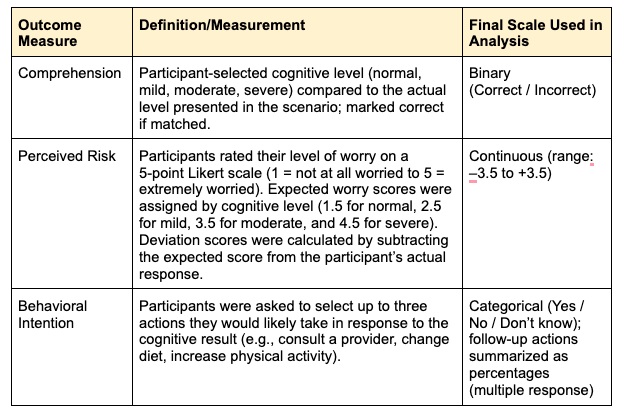
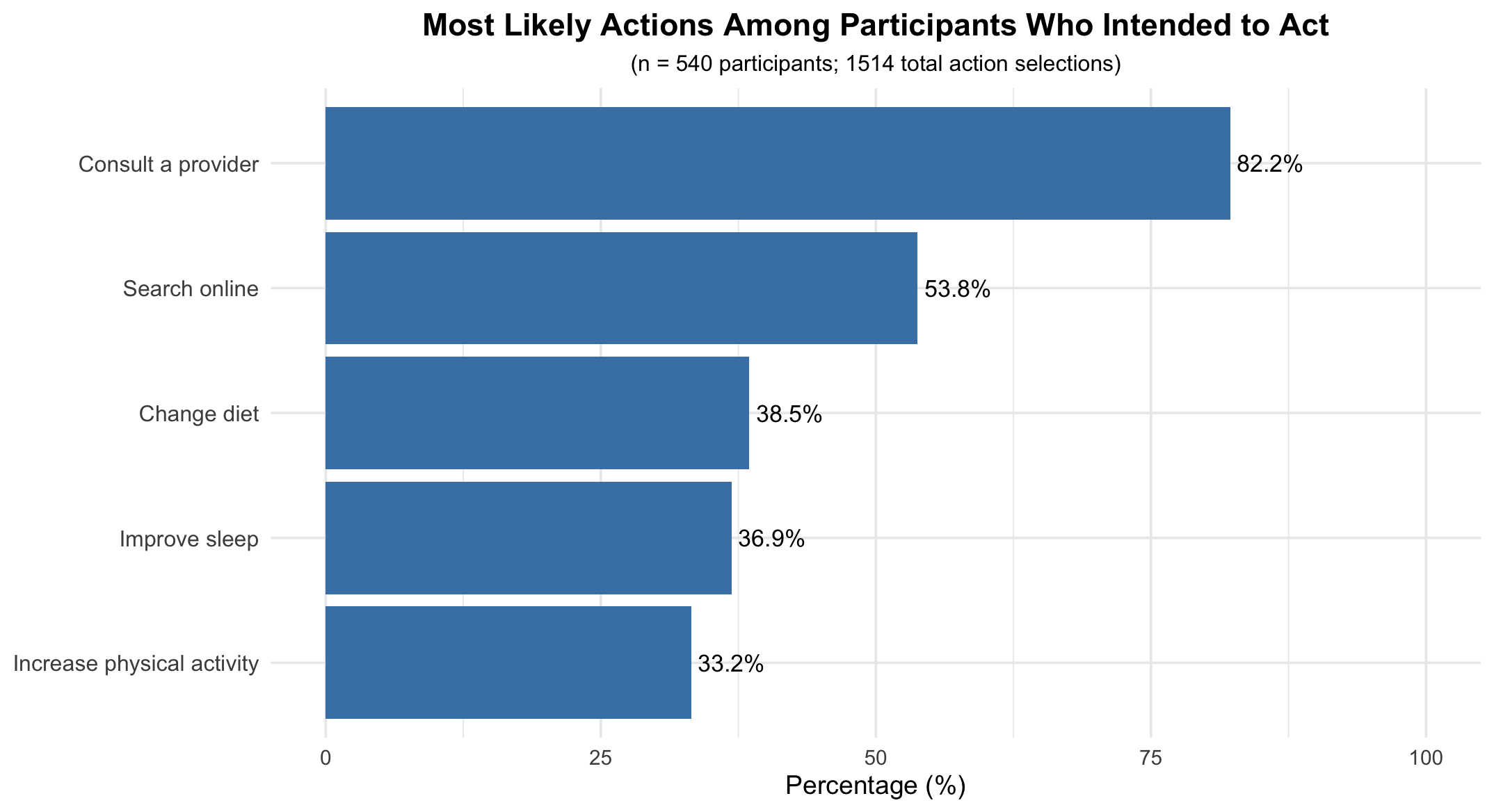
Methods In a two-phase online study, participants (n=366) first compared two label types across four MoCA-based cognitive levels (normal, mild, moderate, severe). Based on preferences, tailored labels were applied in the main study. Then, participants (n = 540) were randomized to one of four sets, each containing combinations of cognitive level and visualization (Figure 1): A) text-only, B) text plus gauge, C) horizontal number line, and D) vertical line graph. Outcomes included comprehension, perceived risk, and behavioral intention. We used chi-square tests in R to compare outcomes across formats. Results Participants (N = 540) were U.S. adults (M = 37.4, SD = 11.6), with 49% men and 49% women. The sample was racially and ethnically diverse: 34.4% White, 26.1% Black, 23.8% Asian, and 19.6% Hispanic. Most (61%) had some college or a bachelor's degree. Label preferences varied by severity; original labels were preferred for normal, mild, and moderate results, while modified labels (i.e., concerns for severe cognitive difficulties) for severe results. Comprehension was highest in the gauge format (94%) and lowest in text-only (89%), with a significant difference between them (p = 0.042). Participants perceived greater risk than expected for mild impairment (mean deviation = +0.49). Normal cognition was associated with underestimated risk (–0.18). Overall, 73% of participants reported an intention to act. The proportion of participants intending to act increased with severity of the cognitive result: 96% for severe, 90% for moderate, 77% for mild, and 17% for normal. Among those intending to act, the most frequently selected actions are shown in Figure 3. Conclusions Tailored presentation of cognitive screening results—via language and visuals—can improve comprehension, risk perception, and behavioral intentions. Among cardiac patients, personalized communication may support early recognition of cognitive issues and strengthen engagement in care.
Bang, So Hyeon
(
Columbia University
, New York , New York , United States )
Dai, Stacey
(
Columbia University
, New York , New York , United States )
Redondo-saenz, Diego
(
Columbia University
, New York City , New York , United States )
Zhao, Yihong
(
Columbia University
, New York , New York , United States )
Benda, Natalie
(
Columbia University
, New York , New York , United States )
Masterson Creber, Ruth
(
Columbia University
, New York , New York , United States )
Author Disclosures:
So Hyeon Bang:DO NOT have relevant financial relationships
| Stacey Dai:No Answer
| Diego Redondo-Saenz:DO NOT have relevant financial relationships
| Yihong Zhao:No Answer
| Natalie Benda:No Answer
| Ruth Masterson Creber:DO NOT have relevant financial relationships