Logo

American Heart Association

  12
  0


Final ID: MP2733

Mitochondrial Transfer between Stromal Cells and Macrophages in Atherosclerotic Plaques Regulates Macrophage Phenotype Conversion toward the M2 Subtype

Abstract Body (Do not enter title and authors here):
Background:
Intercellular mitochondrial transfer has been documented to modulate cellular function in multiple disease contexts. Nevertheless, its occurrence and pathophysiological implications within atherosclerotic plaques remain elusive.

Research Questions:
What is the prevalence and functional significance of mitochondrial transfer within atherosclerotic plaques?

Methods:
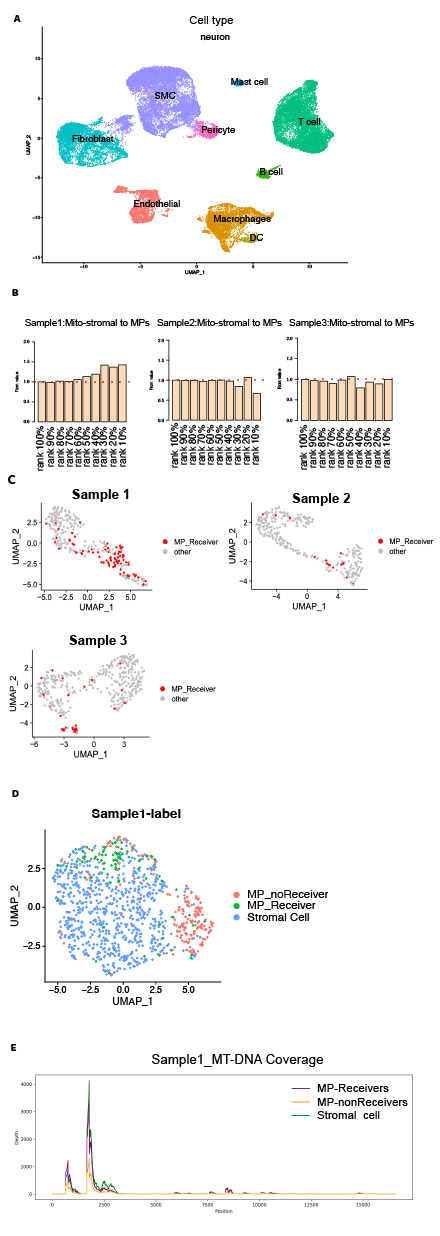
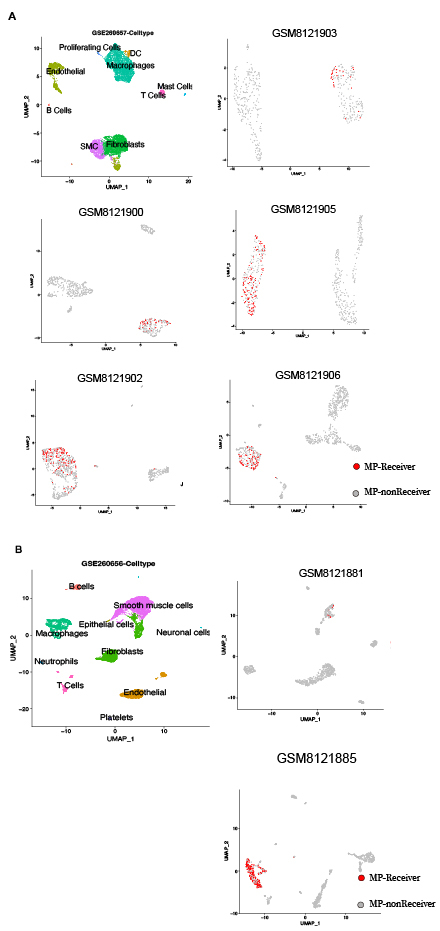
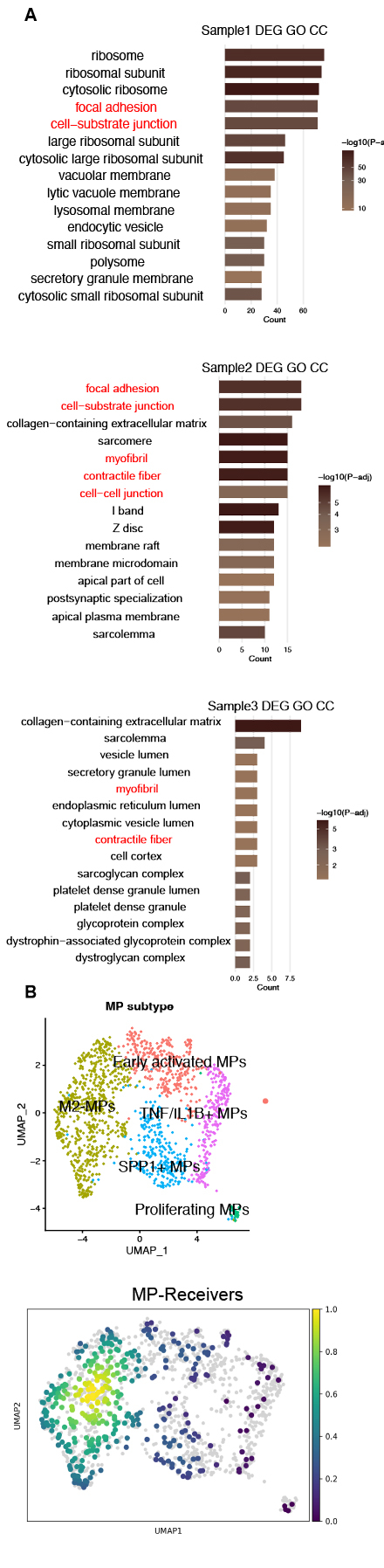
Coronary artery specimens were procured from heart transplant recipients. Pathological staging was determined through histological assessment by certified pathologists. Single-cell RNA sequencing (10X Genomics) was performed on dissociated cells, followed by cell type annotation. Mitochondrial transfer were predicted via the MERCI algorithm (positive threshold: > max of 1,000 permutations). MERCI-mtSNP identified cell type-specific mitochondrial SNP enrichments and deconvoluted mitochondrial genome coverage profiles from scRNA data. Validation cohorts included public human (GSE260657) and murine (GSE260656) atherosclerotic plaque scRNA-seq datasets. Differential expression analysis compared mitochondrial-receiving macrophages (MP-Receivers) versus non-receiving counterparts (MP-nonReceivers), with Gene Ontology (GO) enrichment elucidating associated biological pathways. Functional alterations in MP-Receivers were assessed through subcluster analysis.

Results:
Single-cell RNA sequencing of 34,791 cells from 7 human coronary arteries identified 10 distinct cell types. MERCI analysis demonstrated mitochondrial transfer from stromal cells (endothelial/smooth muscle/fibroblasts) to macrophages in 42% (3/7) of specimens. Algorithm-predicted MP-Receivers exhibited spatial clustering in uniform manifold approximation and projection (UMAP) embeddings and displayed transitional mitochondrial gene expression profiles bridging stromal cells and MP-nonReceivers. These findings were conserved in external human and murine atherosclerotic scRNA-seq datasets. Differential expression analysis implicated tunneling nanotubes in mitochondrial trafficking pathways, while macrophage subcluster analysis revealed predominant localization of MP-Receivers within M2-polarized subsets.

Conclusion:
Mitochondrial transfer between cells occurs within the atherosclerotic plaque microenvironment, with a significant transfer of mitochondria from stromal cells to macrophages. Following mitochondrial transferred, macrophages may undergo phenotypic conversion, exhibiting a tendency toward the M2 subtype.
  • Jinhua, Chen  ( Fuwai Hospital , Beijing , China )
  • Li, Fangzhou  ( Fuwai Hospital , Beijing , China )
  • Gai, Shujie  ( Fuwai Hospital , Beijing , China )
  • Zheng, Zhe  ( Fuwai Hospital , Beijing , China )
  • Author Disclosures:
    Chen Jinhua: DO NOT have relevant financial relationships | fangzhou Li: No Answer | Shujie Gai: No Answer | Zhe Zheng: No Answer
Meeting Info:

Scientific Sessions 2025

2025

New Orleans, Louisiana

Session Info:

Atherosclerosis and Vascular Diseases: New Molecular and Cellular Mechanisms

Monday, 11/10/2025 , 01:45PM - 02:40PM

Moderated Digital Poster Session

You have to be authorized to contact abstract author. Please, Login
Not Available