
Outcomes of Transcatheter Mitral Repair in Cardiogenic Shock With and Without Mechanical Circulatory Support
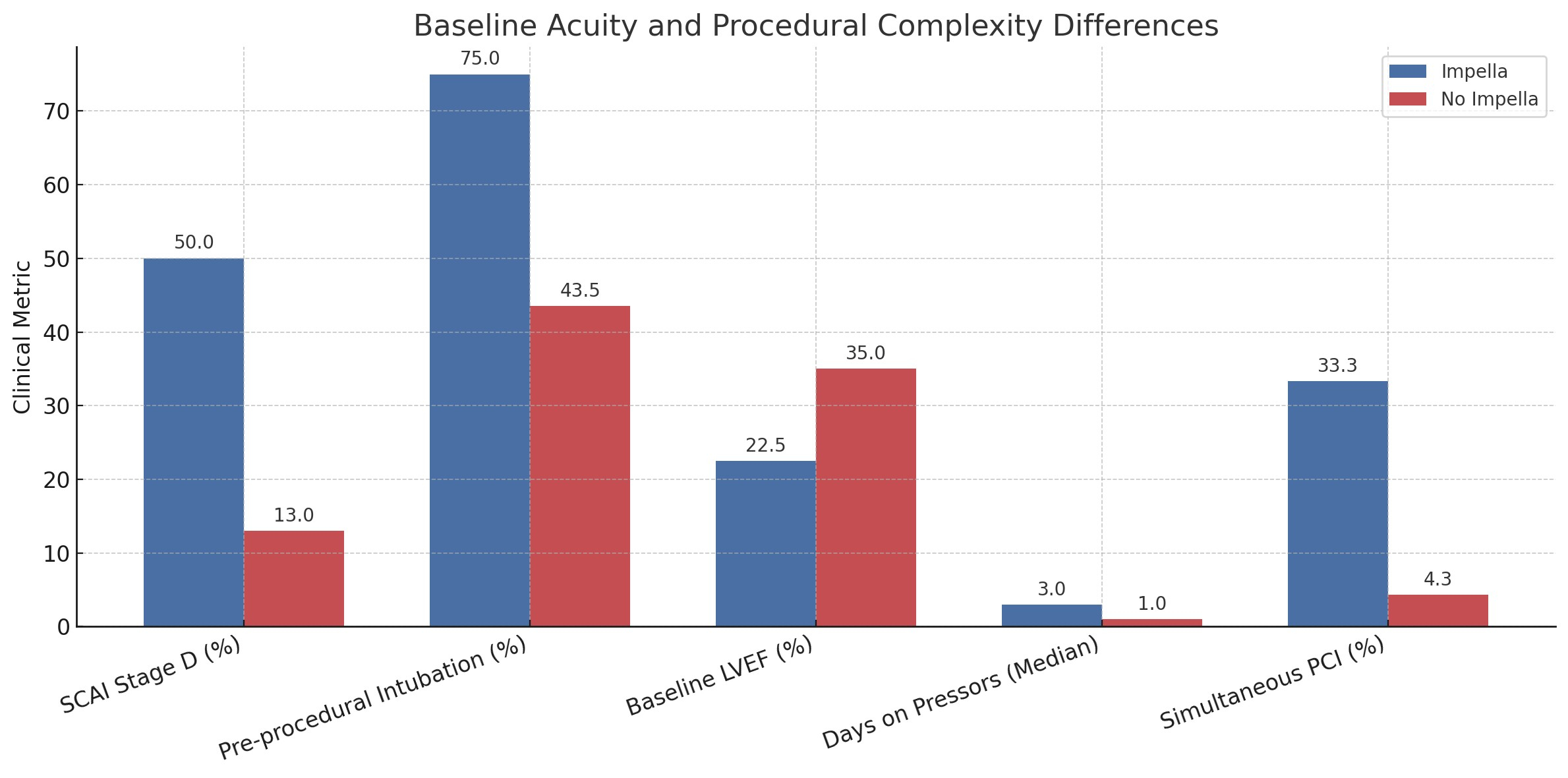
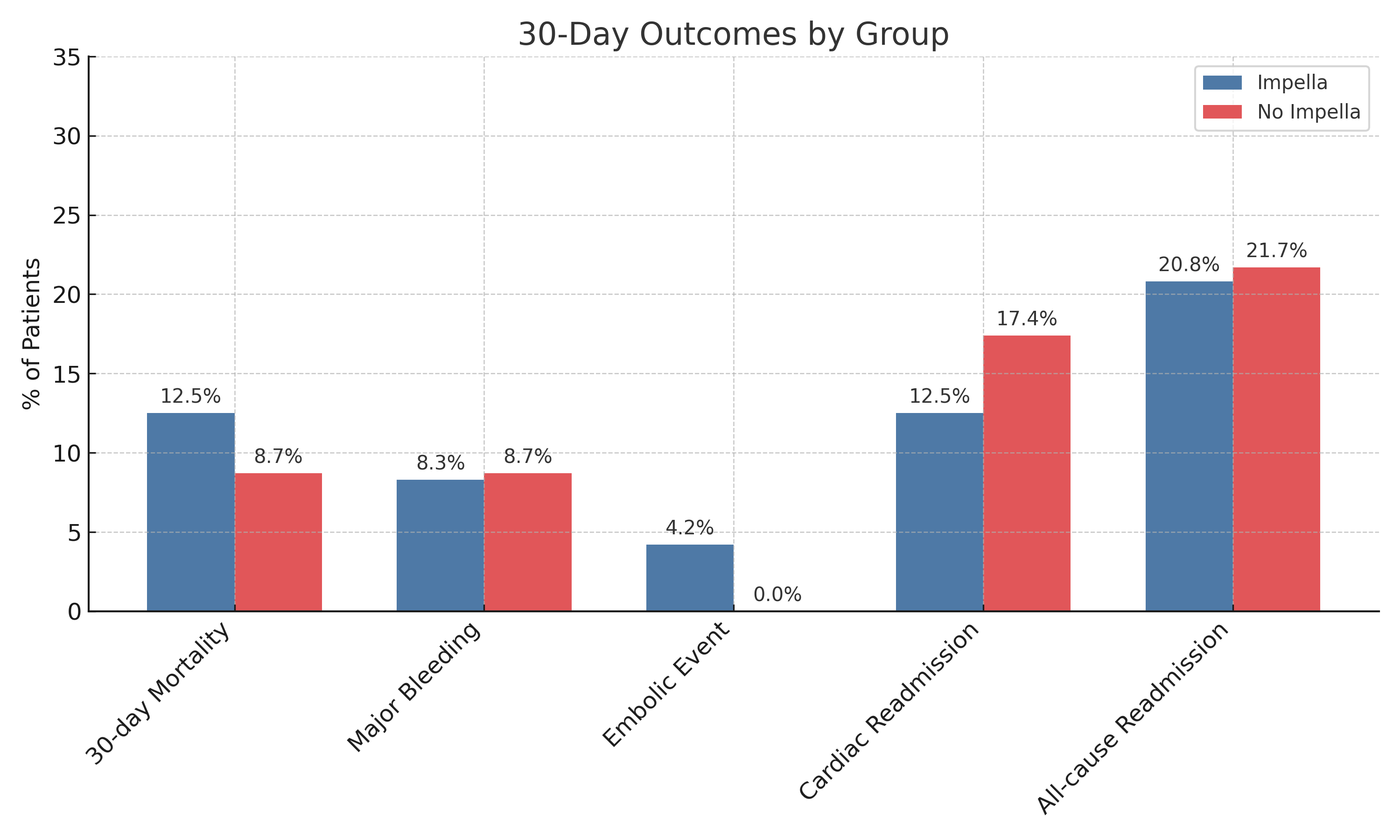
Abstract Body (Do not enter title and authors here): Background: Severe mitral regurgitation (MR) in cardiogenic shock (CS) presents unique therapeutic challenges, especially in patients with prohibitive surgical risk. Transcatheter edge-to-edge repair (TEER) with MitraClip offers a less invasive alternative, yet optimal strategies for hemodynamic support in this setting remain unclear. Methods: We conducted a retrospective study of patients undergoing MitraClip implantation for severe MR and CS between 2018 and 2024 at a tertiary academic center. Of 440 screened cases, 47 met CS criteria and were stratified based on receipt of periprocedural Impella support. Clinical, procedural, and survival outcomes were compared between Impella-supported and unsupported cohorts using appropriate statistical methods. Results: Among the 47 patients, 24 received Impella support and 23 did not. The Impella group had greater illness severity, including higher rates of preprocedural intubation (75.0% vs. 43.5%) and SCAI stage D shock (50.0% vs. 13.0%). Despite these differences, procedural success was 100% in both groups. In-hospital (8.3% vs. 8.7%), 30-day (12.5% vs. 8.7%), and 1-year mortality (25.0% vs. 26.0%) were similar between Impella and non-Impella patients, respectively. Impella recipients had longer hospital stays (median 18 vs. 11 days; p=0.032) and higher 1-year readmission rates (55.0% vs. 21.7%; p=0.024), reflecting baseline acuity. There were no differences in major procedural complications or re-intervention rates. Conclusions: MitraClip implantation in CS patients supported with Impella is feasible and safe. Despite significantly worse hemodynamic profiles, outcomes were comparable to those without mechanical support. These findings suggest a potential role for tailored Impella use in expanding TEER to critically ill patients and underscore the need for prospective studies to guide support strategies in high-risk MR intervention.
Suppah, Mustafa
(
Creighton University
, Phoenix , Arizona , United States )
Kumar, Sant
(
Creighton University
, Phoenix , Arizona , United States )
Rahban, Habib
(
Creighton University
, Phoenix , Arizona , United States )
Mohmand, Billal
(
University of Arizona Phoenix
, Scottsdale , Arizona , United States )
Naqvi, Abeeha
(
St Josephs Hospital
, Scottsdale , Arizona , United States )
Mughal, Mohsin
(
Monmouth Medical Center
, Long Branch , New Jersey , United States )
Andrade, Ambar
(
University of Arizona Phoenix
, Scottsdale , Arizona , United States )
Yeneneh, Beeletsega
(
University of Arizona Phoenix
, Scottsdale , Arizona , United States )
Bellamkonda, Pallavi
(
Creighton University
, Phoenix , Arizona , United States )
Alsidawi, Said
(
Mayo Clinic
, Phoenix , Arizona , United States )
Naik, Hursh
(
Creighton University
, Phoenix , Arizona , United States )
Author Disclosures:
Mustafa Suppah:DO NOT have relevant financial relationships
| Said Alsidawi:DO NOT have relevant financial relationships
| Hursh Naik:No Answer
| Sant Kumar:DO NOT have relevant financial relationships
| Habib Rahban:No Answer
| Billal Mohmand:DO NOT have relevant financial relationships
| Abeeha Naqvi:DO NOT have relevant financial relationships
| Mohsin Mughal:No Answer
| Ambar Andrade:No Answer
| Beeletsega Yeneneh:DO NOT have relevant financial relationships
| PALLAVI BELLAMKONDA:No Answer