
Logo

American Heart Association

  20
  0


Final ID: MP2146

Real-World analysis of systemic vascular resistance using a cuffless photoplethysmography-based device for 24-hours ambulatory blood pressure monitoring across diverse patient groups

Abstract Body (Do not enter title and authors here): Introduction
Photoplethysmography-based (PPG) devices represent a significant advancement in noninvasive cardiovascular monitoring. These cuffless technologies enable assessment of hemodynamic parameters with improved comfort, usability and compliance. Modern PPG systems have expanded their capabilities to include advanced metrics such as systemic vascular resistance (SVR) and cardiac output (CO).
Many antihypertensive drugs lower blood pressure by reducing SVR through vasodilatation of the systemic and renal vasculature. Limited data is available on SVR during ambulatory monitoring. PPG devices become more common as they allow us to assess SVR in real life, in ambulatory blood pressure monitoring (ABPM) patients.
Aim
To evaluate and compare SVR using the Biobeat (WP613) device across patient groups.
Methods
Adults from the Hypertension Clinic at University of Miami, Florida, from Aug. 2023–Jan. 2025 underwent 24-h ABPM monitoring using Biobeat device. Patient data was matched with Biobeat. PPG data was available every 15 minutes; The raw data included SBP and DBP, the heart rate, stroke volume, CO and SVR.
Results
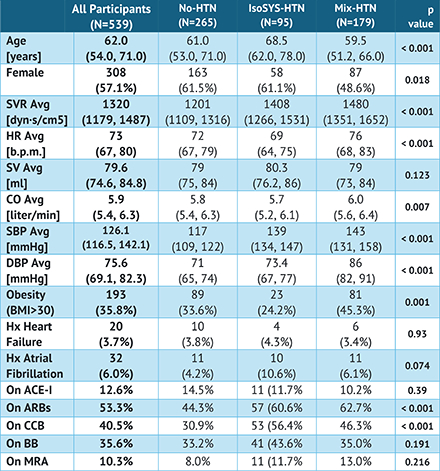
A total of 539 patients underwent PPG ABPM during the study period. The median was 62 (IQR 54, 71) years, with 57% females (Tab 1). Patients were defined as hypertensive per AHA 2017 guidelines [SBP≥130 and DBP≥80 mmHg]. Overall, 265 patients were classified as having normal BP, 95 as having isolated systolic hypertension, and 179 as having mixed hypertension. Within the Mix-HTN group, 42 patients had isolated diastolic hypertension and the remaining 137 systolic and diastolic hypertension (Fig 2).
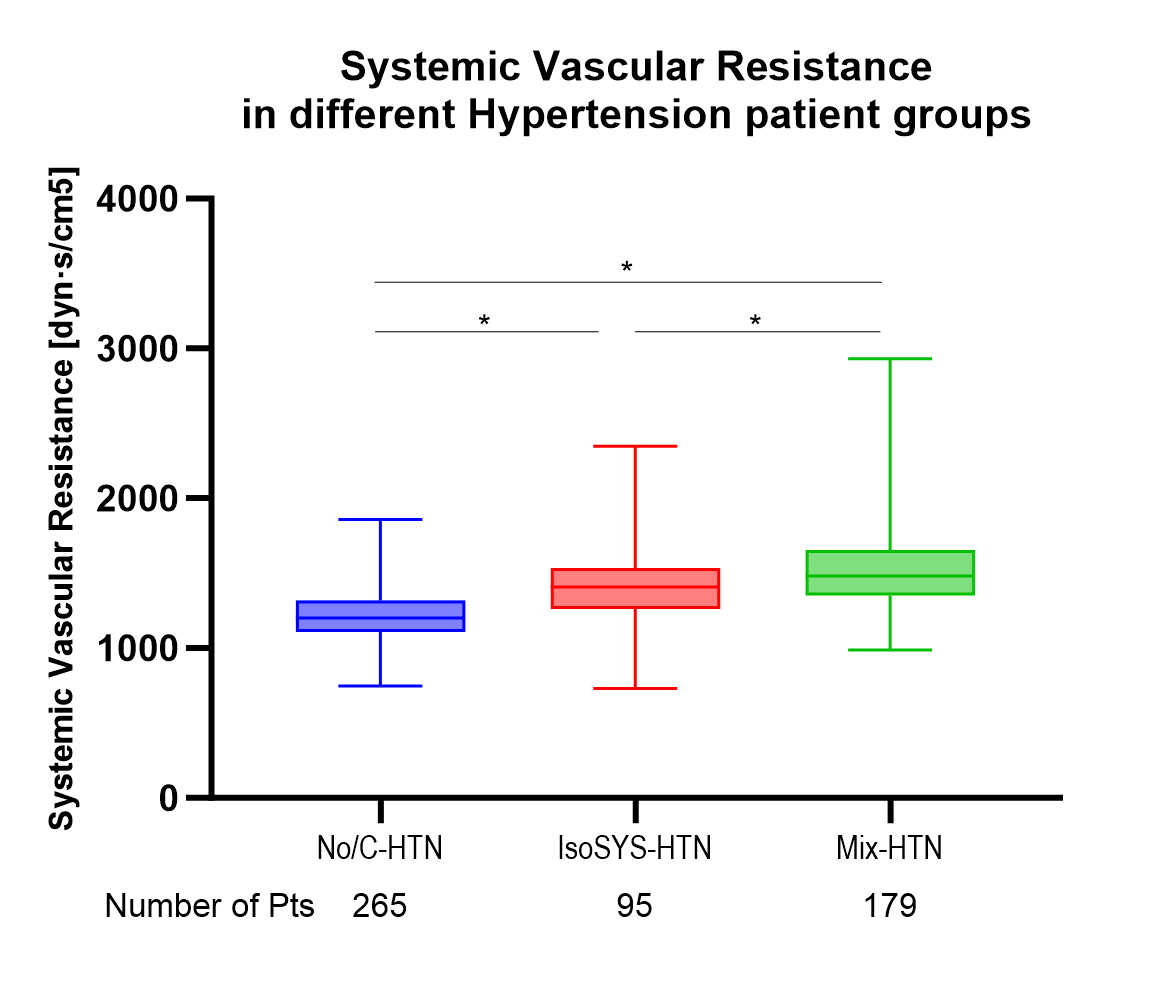
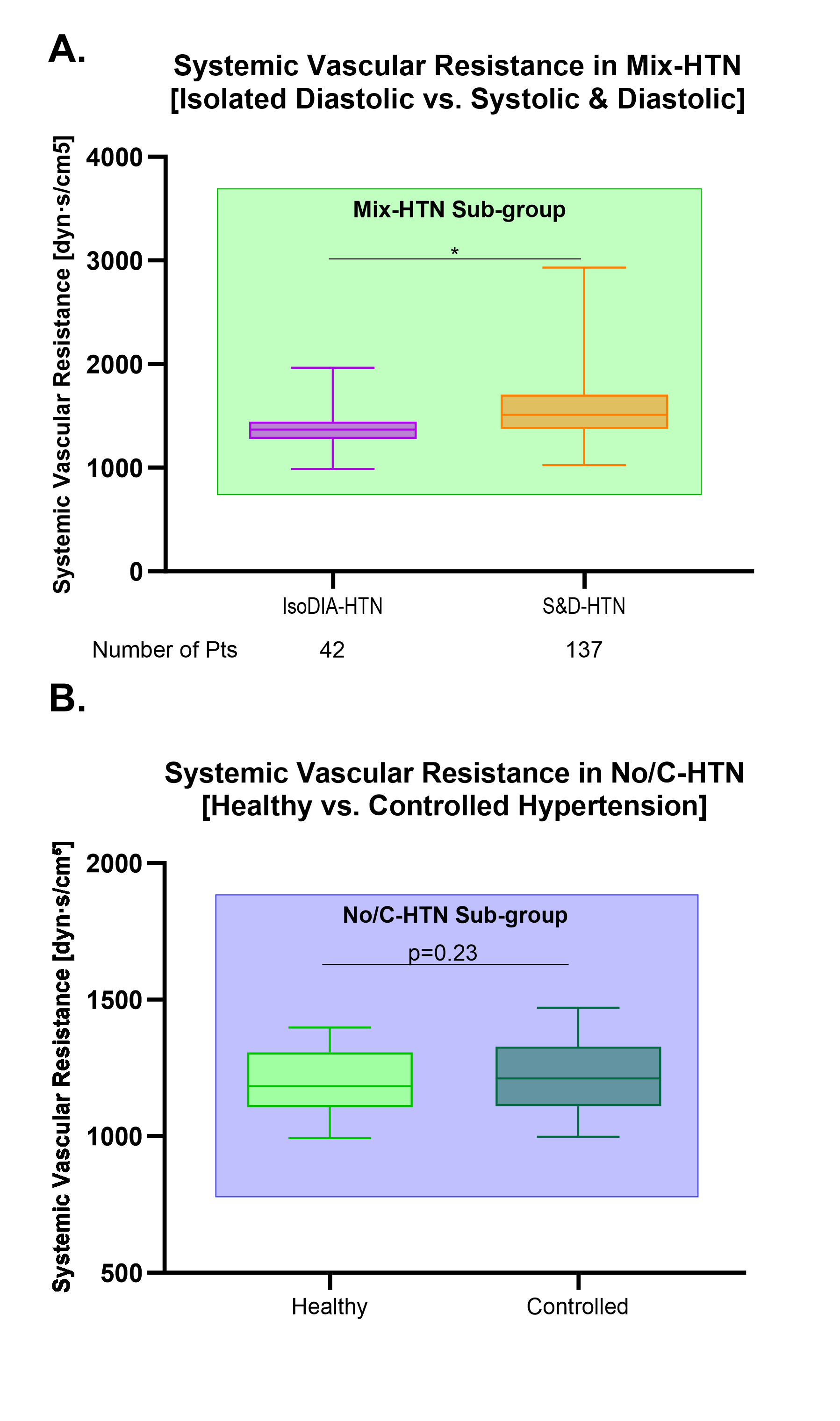
In subgroup analysis (Fig 3); SVR was significantly different between the groups: lowerst in No/C-HTN and highest in Mix-HTN. particularly among the mixed-hypertension group, SVR was higher in the Systolic and Diastolic HTN compared to the Isolated diastolic HTN group.
Among the No/C-HTN group, 60 patients were not hypertensives and 205, were hypertensives on at least 1 drug. The SVR was not statistically significant between these 2 subgroups, suggesting that SVR may be a helpful target biomarker used to up-titrate antihypertensives.
CONCLUSION
PPG devices offer a valuable enhancement to conventional ABPM by providing additional physiological measurements such as SVR that can help differentiate between various hypertension phenotypes and potentially provide personalized therapy that target the driver of hypertension.
  • Hellou, Elias  ( University of Miami Miller School of Medicine , Miami , Florida , United States )
  • Zoghby, Ziad  ( Mayo Clinic Rochester MN , Rochester , Minnesota , United States )
  • Cromer, Kirin  ( University of Miami Medical School , Doral , Florida , United States )
  • Donald, Taylor  ( University of Miami Medical School , Doral , Florida , United States )
  • Kalhor, Parvin  ( Mayo Clinic Rochester MN , Rochester , Minnesota , United States )
  • Manzato, Matteo  ( Mayo Clinic Rochester MN , Rochester , Minnesota , United States )
  • Nogami, Kai  ( Mayo Clinic Rochester MN , Rochester , Minnesota , United States )
  • Lerman, Amir  ( Mayo Clinic Rochester MN , Rochester , Minnesota , United States )
  • Delgado Lelievre, Maria  ( University of Miami Miller School of Medicine , Miami , Florida , United States )
  • Author Disclosures:
    Elias Hellou: DO NOT have relevant financial relationships | Ziad Zoghby: No Answer | Kirin Cromer: DO NOT have relevant financial relationships | Taylor Donald: No Answer | parvin kalhor: DO NOT have relevant financial relationships | Matteo Manzato: DO NOT have relevant financial relationships | Kai Nogami: No Answer | Amir Lerman: DO NOT have relevant financial relationships | Maria Delgado Lelievre: DO have relevant financial relationships ; Consultant:Biobeat:Active (exists now) ; Consultant:Medtronic:Active (exists now)
Meeting Info:

Scientific Sessions 2025

2025

New Orleans, Louisiana

Session Info:

Using New Technologies in Hypertension Treatment

Monday, 11/10/2025 , 09:15AM - 10:10AM

Moderated Digital Poster Session

More abstracts on this topic:
A Daily Diary Examination of the Associations of Adverse Childhood Experiences, Anticipated Discrimination, and Blood Pressure among Sexual and Gender Minority Adults

Pardee Lisa, Bochicchio Lauren, Caceres Billy

A First-In-Human Phase 1 Study of the Safety, Tolerability, and Pharmacodynamics of REGN7544, a Novel Natriuretic Peptide Receptor 1–Blocking Monoclonal Antibody

Ahmed Mohsin, Morton Lori, Olenchock Benjamin, Herman Gary, Wynne Chris, Marin Ethan, Tuckwell Katie, Xu Meng, Cheng Xiping, Redington Emily, Koyani Bharatkumar, Mateo Katrina, Thakur Mazhar, Devalaraja-narashimha Kishor

More abstracts from these authors:
Monocyte to Lymphocytes Ratio as a Superior Predictor of Major Cardiovascular Events compared to hs-CRP in Patients with Angina and Nonobstructive Coronary Artery Disease

Kalhor Parvin, Mahmoudi Hamidabad Negin, Hellou Elias, Nogami Kai, Manzato Matteo, Lerman Lilach, Lerman Amir

Performance of a cuffless photoplethysmography-based device for continuous monitoring of blood pressure

Hellou Elias, Jamal Tamer, Zuroff Elchanan, Kalhor Parvin, Delgado Lelievre Maria, Lerman Lilach, Lerman Amir, Kachel Erez, Zoghby Ziad

You have to be authorized to contact abstract author. Please, Login
Not Available