Temporal and Demographic Trends in Mortality Among Patients with Intracranial Bleed and Concurrent Heart Failure: A 25-Year Analysis Using the CDC WONDER Database (1999–2024)
Abstract Body (Do not enter title and authors here): BACKGROUND: Co-morbid heart failure has been associated with increased mortality and worse outcomes in patients with intracranial bleeds. This occurs because such patients are more susceptible to cardiac decompensation. The mechanism behind this is debatable, with antithrombotic therapy and sympathetic stimulation playing significant roles.
OBJECTIVE: This study aimed to analyze and report the trends and disparities in mortality in patients suffering from heart failure and intracranial bleeds.
METHODS: We analyzed the CDC WONDER database (1999–2021 and 2018-2024) to track mortality from concurrent chronic heart failure and intracranial bleed in adults aged 25 and older (ICD-10: I50, I60, I61, I62). The age-adjusted mortality rates (AAMRs) were calculated per million people, and annual percent changes (APCs) were calculated with 95% confidence intervals. Data were broken down by sex, age, ethnicity, urbanization, state, and census region to highlight disparities and trends.
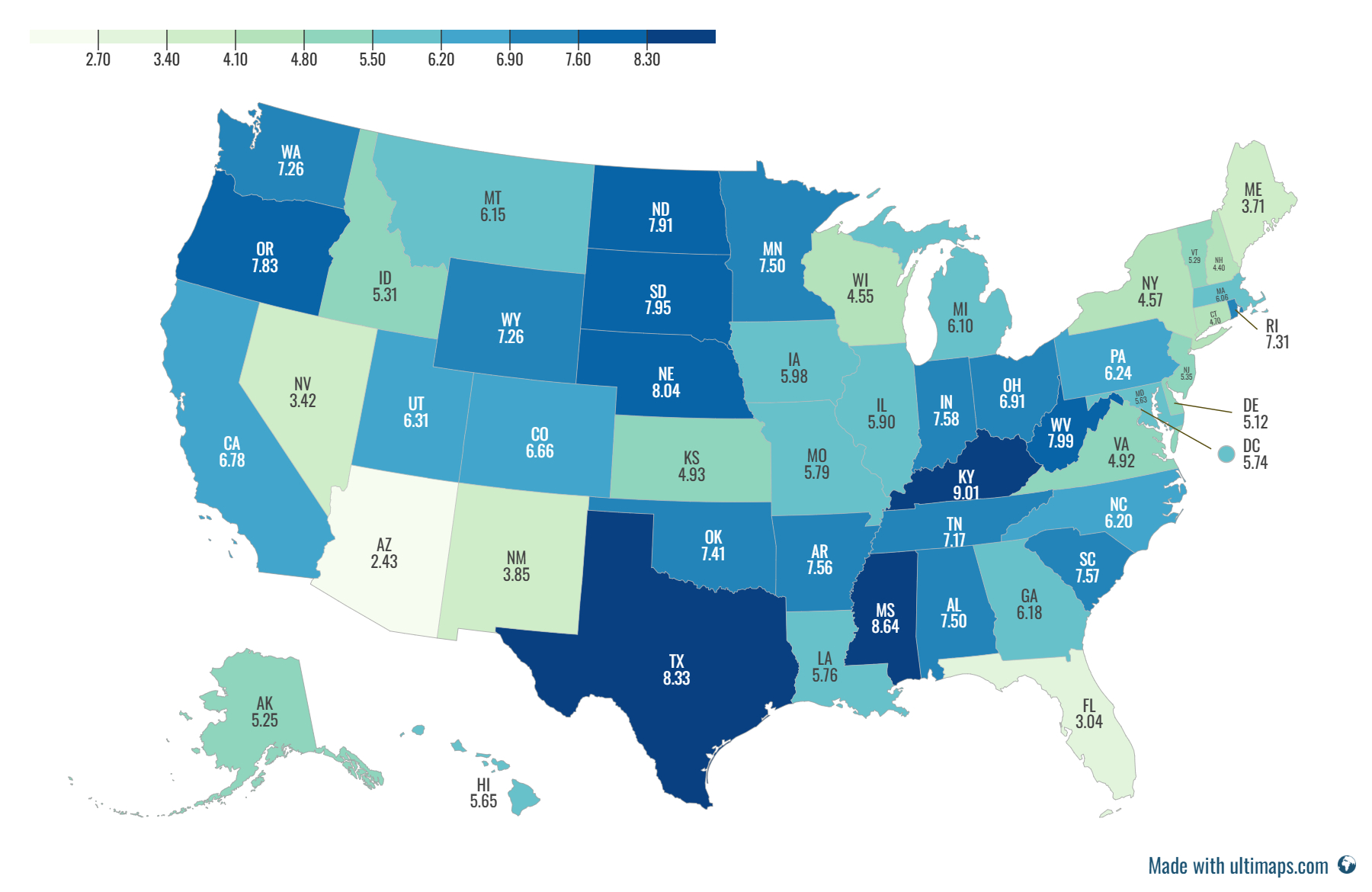
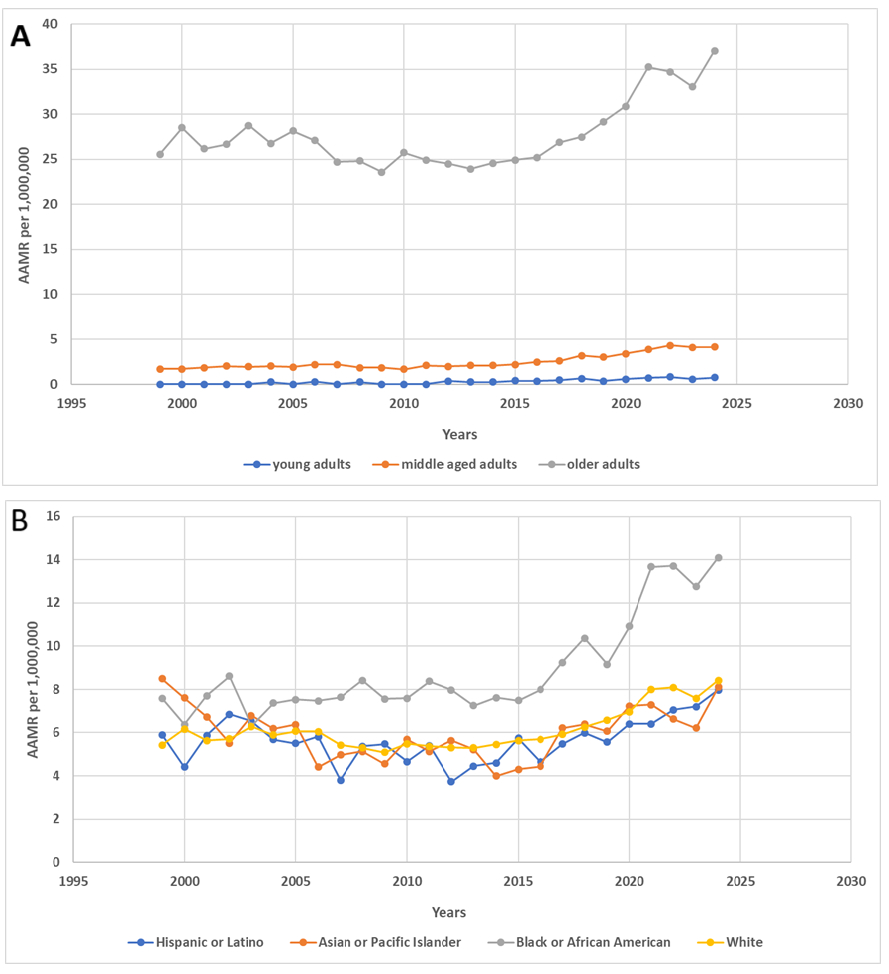
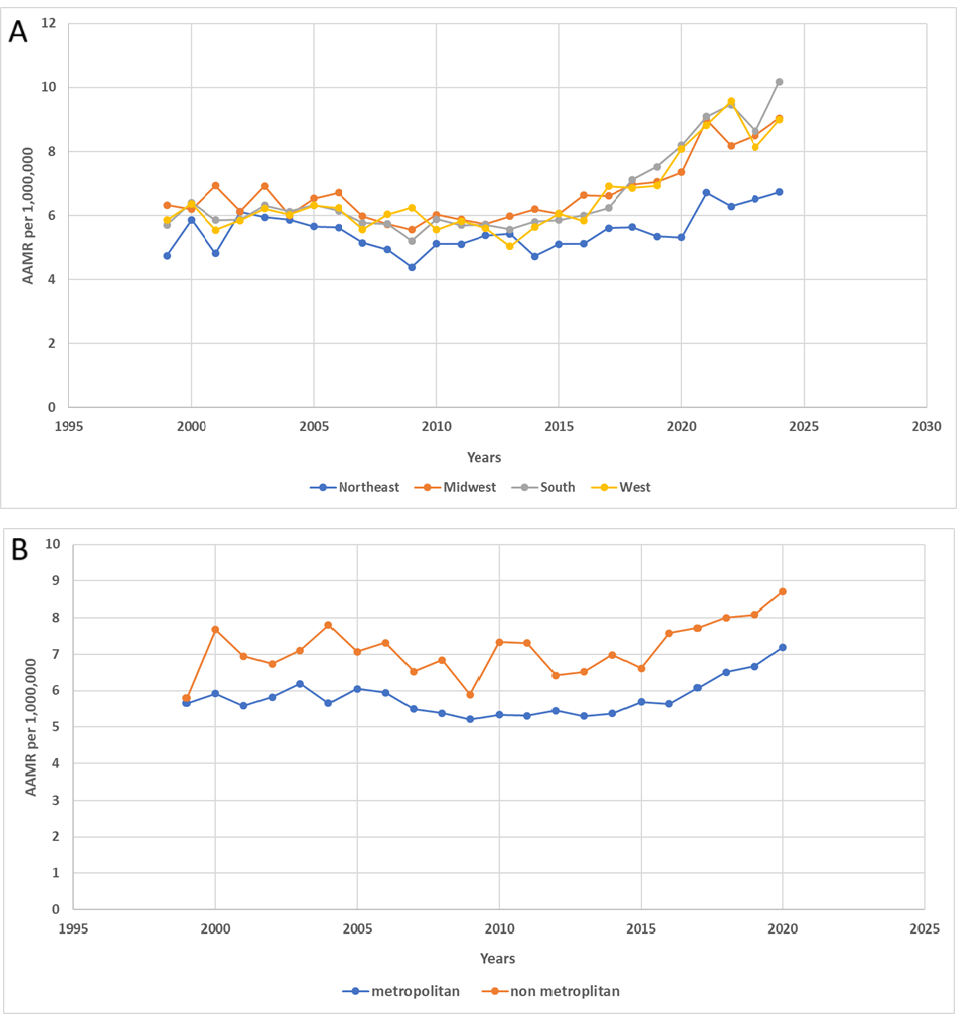
RESULTS: From the year 1999 to 2024, 37919 people with intracranial bleed and concurrent heart failure died. It showed an increasing trend from 2014 to 2024 (APC= 5.1%, 95% CI= 4.3 to 6.3, p<0.001). Males had a higher chance of mortality than females (AAMR 7.852 vs 5.397). Older adults had the highest chance of mortality (AAMR 27.647), followed by middle-aged adults (AAMR=2.495) and younger adults (AAMR=0.466). Blacks or African Americans had the highest AAMR (8.877). Individuals residing in the non-metropolitan region had a higher AAMR (7.139) versus those in metropolitan areas (AAMR= 5.794).
CONCLUSION: Death due to concurrent chronic heart failure and intracranial bleed had a declining trend at first, but since then, the mortality rate has been steadily increasing. Disparities persist between different ages, ethnicities, genders, census regions, and states, underscoring the need for better policies.
Hamid, Hamza
(
Rawalpindi Medical University
, Rawalpindi , Pakistan )
Dawood, Muhammad Hamza
(
United Medical and Dental College
, Karachi , Pakistan )
Shahzad, Faizan
(
Rawalpindi Medical University
, Rawalpindi , Pakistan )
Khalid, Marwah Bintay
(
Rawalpindi Medical University
, Rawalpindi , Pakistan )
Ali, Muhammad
(
Akhtar Saeed Medical and Dental College
, Lahore , Pakistan )
Shahzad, Farhan
(
Rawalpindi Medical University
, Rawalpindi , Pakistan )
Ayub, Muhammad
(
LSU Health Shreveport
, Shreveport , Louisiana , United States )
Author Disclosures:
Hamza Hamid:DO NOT have relevant financial relationships
| Muhammad Hamza Dawood:DO NOT have relevant financial relationships
| Faizan Shahzad:DO NOT have relevant financial relationships
| Marwah Bintay Khalid:DO NOT have relevant financial relationships
| Muhammad Ali:No Answer
| Farhan Shahzad:DO NOT have relevant financial relationships
| Muhammad Ayub:No Answer
Qazi Shurjeel, Siddiqi Tariq Jamal, Hall Michael And Jo Alice, Ali Hassan, Ansari Huzaifa, Qazii Sana, Dawood Muhammad Hamza, Batool Ruqiat, Shaikh Muhammad Ahmed, Ahmed Syed Zaeem, Aisha Eliza