Rising Mortality from Atrial Fibrillation in Diabetic Patients in the U.S., 1999–2023: A Neglected Epidemic in Cardiometabolic Health.
Abstract Body (Do not enter title and authors here): Introduction Atrial fibrillation (AF) has emerged as a critical and escalating public health threat, particularly among individuals with diabetes mellitus, a population already burdened with elevated cardiovascular risk. In 2023, an estimated 1.8 million Americans are living with AF along with diabetes, a dangerous convergence of two chronic conditions that dramatically amplifies the risk of cardiovascular mortality. Diabetic patients face a 1.4–1.6 times greater risk of developing AF, yet national surveillance data on mortality trends in this high-risk group remain limited. This study urgently examines the growing burden and pronounced disparities in atrial fibrillation-related mortality among diabetic patients across the United States to guide targeted interventions and shape equitable health policy responses.
Methods The CDC WONDER database was used to analyze trends in mortality due to atrial fibrillation in patients with diabetes mellitus from 1999 to 2023, calculating mortality rates and a 95% confidence interval to assess national trends.
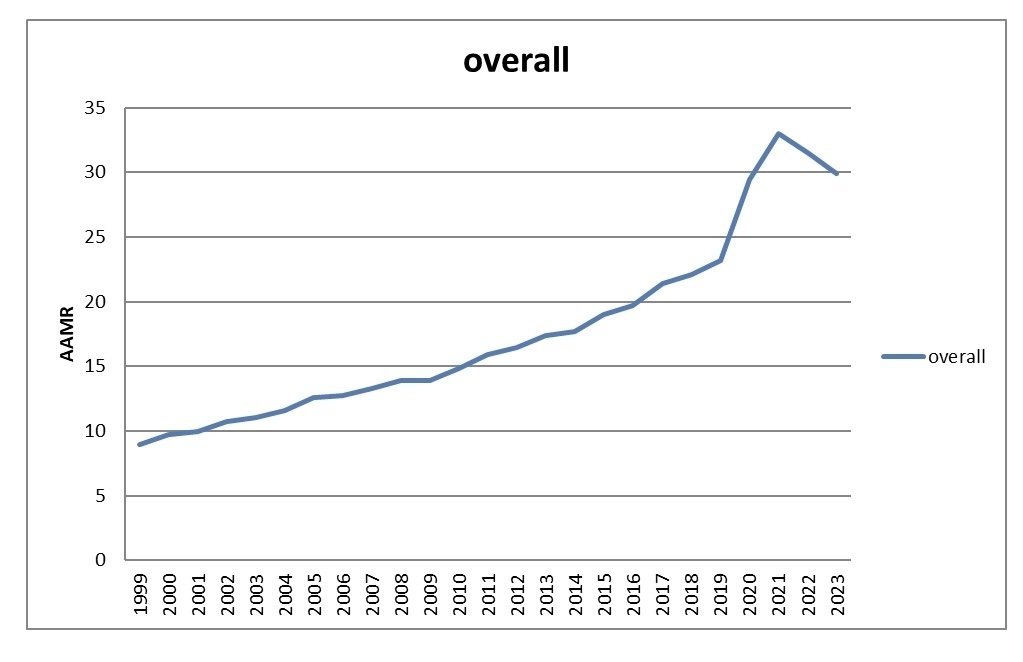
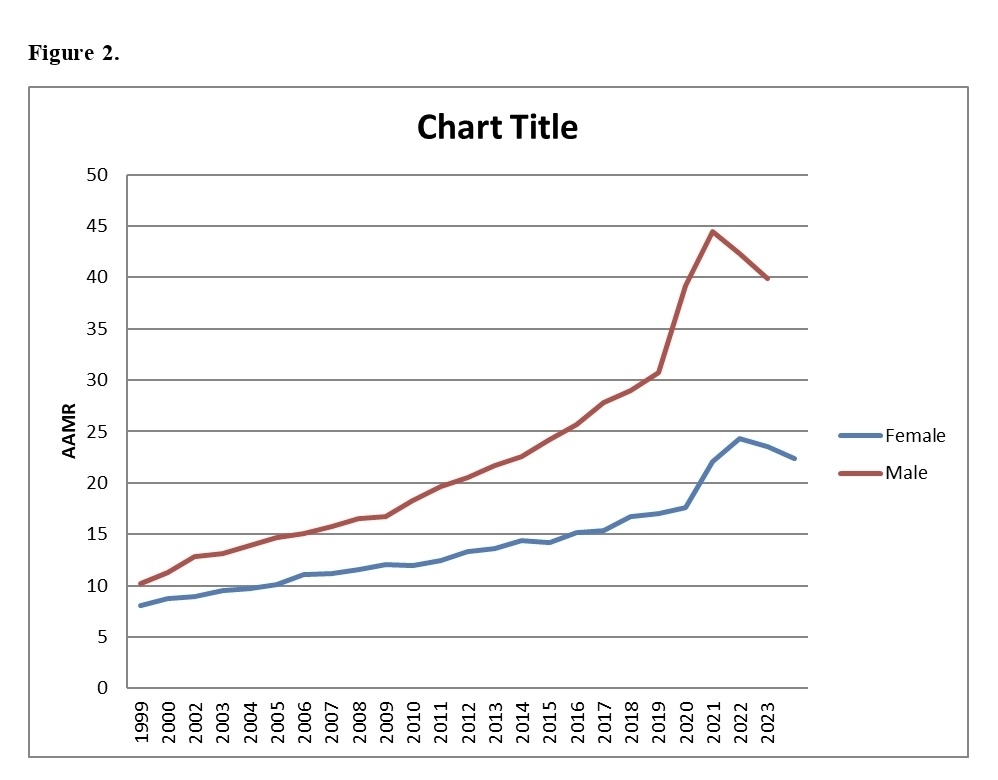
Results Throughout the study period, males consistently exhibited a higher age-adjusted mortality rate (AAMR) from atrial fibrillation in diabetic patients—148.92 (95% CI: 148.37–149.48)—compared to females, 106.11 (95% CI: 105.73–106.49). The African American population had the highest AAMR, reaching 342.37 in 2023 (95% CI: 335.99–348.74), significantly exceeding rates in White 158.45 (95% CI: 157.66–159.24), Hispanic 96.88 (95% CI: 95.45–98.30), and Asian/Pacific Islander populations 75.21 (95% CI: 73.79–76.72). From 1999 to 2023, the AAMR in non-metropolitan areas rose from 112.47 (95% CI: 110.21–114.73) to 386.21 (APC: 6.30; 95% CI: 377.66–394.76), reflecting a significant and sustained increase. AAMRs also varied by state, ranging from 119.90 (95% CI: 119.20–120.61) in Hawaii to 211.97 (95% CI: 209.39–214.55) in West Virginia.
Conclusion From 1999 to 2023, mortality attributable to atrial fibrillation among diabetic patients rose at an alarming rate, disproportionately affecting males, African American individuals, and those residing in non-metropolitan regions. These stark disparities highlight a growing crisis in cardiovascular health equity. Addressing this alarming trend requires urgent action focused on early screening, improving equitable access to healthcare, and implementing targeted interventions. Without intervention, the rising toll of preventable deaths in vulnerable populations will worsen.
Ashraf, Danish Ali
(
TruGift Health LLC
, Wilmington , Delaware , United States )
Bhatti, Hurmat Fatima
(
Foundation University Medical College
, Islamabad , Islamabad , Pakistan )
Iqbal, Muhammad Saad
(
Foundation University Medical College
, Islamabad , Islamabad , Pakistan )
Singh, Rudra Pratap
(
University of New Mexico
, Albuquerque , New Mexico , United States )
Ashfaq, Muhammad Omar
(
Foundation University Medical College
, Islamabad , Islamabad , Pakistan )
Akhtar, Awais
(
Foundation University Medical College
, Islamabad , Islamabad , Pakistan )
Sheikh, Abu Baker
(
University of New Mexico
, Albuquerque , New Mexico , United States )
Author Disclosures:
Danish Ali Ashraf:DO NOT have relevant financial relationships
| Hurmat Fatima Bhatti:No Answer
| Muhammad Saad Iqbal:No Answer
| Rudra Pratap Singh:DO NOT have relevant financial relationships
| Muhammad Omar Ashfaq:DO NOT have relevant financial relationships
| Awais Akhtar:DO NOT have relevant financial relationships
| Abu Baker Sheikh:DO NOT have relevant financial relationships