Patient and Procedural Characteristics Associated with GERD and Chest Pain After Atrial Fibrillation Ablation with Esophageal Cooling: Results from the Multicenter EVERCOOL AF Registry.
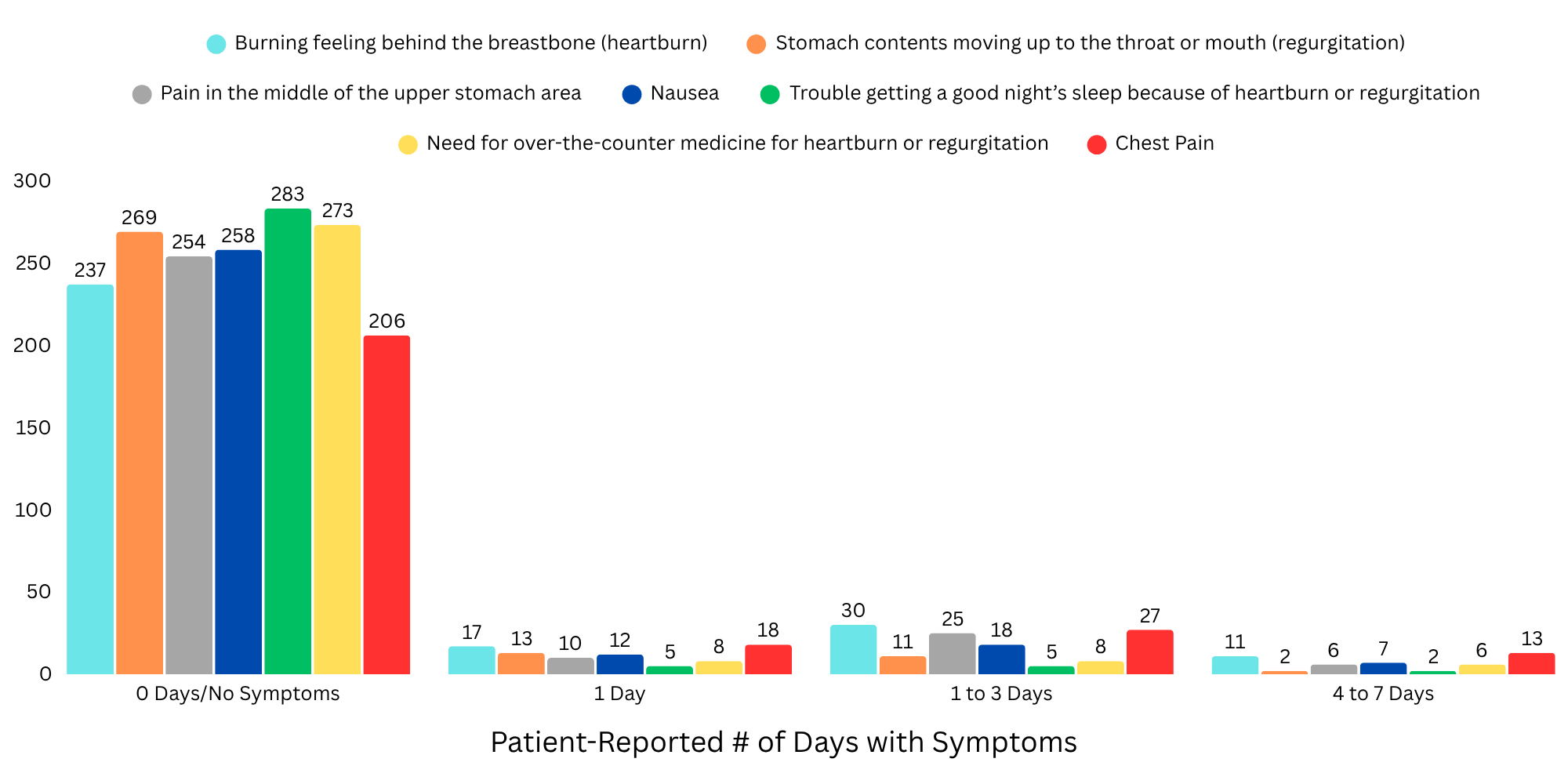
Abstract Body (Do not enter title and authors here): Background: Gastroesophageal reflux disease (GERD) and chest pain are common complications following catheter ablation for atrial fibrillation (AF), often attributed to esophageal thermal injury. Active esophageal cooling reduces esophageal temperature and injury risk and has been shown to reduce post-ablation chest pain, yet some patients continue to experience GERD-like symptoms. Factors associated with these complications, despite esophageal cooling, remain unclear. Objective: To identify patient and procedural characteristics associated with post-ablation GERD symptoms and chest pain in AF patients undergoing pulmonary vein isolation with esophageal cooling. Methods: In this multicenter study, patients undergoing left atrial ablation with esophageal cooling for paroxysmal or persistent AF completed a standardized questionnaire post-procedure. GERD symptoms were assessed using the GERD-Q (score ≥8 indicating high probability of GERD) at 7–14 days. Chest pain was queried separately using the same response scale. Associations with demographic and procedural variables were evaluated. Results: Among 295 patients completing post-ablation questionnaires, 44 (14.9%) met criteria for GERD and 71 (24.1%) reported chest pain. GERD symptoms were more common in patients who underwent ablation with lower anterior maximum power (50.0 ± 9.3 W vs. 54.0 ± 14.0 W, p=0.020). No significant associations were observed between GERD symptoms and age, sex, BMI, catheter type, or lesion strategy. In the chest pain analysis, patients reporting post-ablation chest pain were younger (64.5 ± 9.3 vs. 67.5 ± 10.2 years, p=0.026) and had higher mean LVEF (57.1 ± 6.6% vs. 53.1 ± 10.2%, p=0.001). Chest pain was less common among those achieving bilateral first-pass isolation (59.2% vs. 72.6%, p=0.033). No differences were found for catheter type, ablation power, or use of high-power short-duration ablation. Conclusion: In patients undergoing AF ablation with active esophageal cooling, lower anterior ablation power was associated with post-ablation GERD symptoms. Younger age, higher LVEF, and lack of bilateral first-pass isolation were associated with post-ablation chest pain. These findings suggest that despite esophageal protection, both procedural and patient-specific factors may contribute to symptom development.
Silverstein, Joshua
(
Allegheny Health Network
, Baden , Pennsylvania , United States )
Shaw, George
(
Allegheny Health Network
, Pittsburgh , Pennsylvania , United States )
Phan, Huy
(
Valley Heart Rhythm Specialists
, Chandler , Arizona , United States )
Belden, William
(
Allegheny General Hospital
, Pittsburgh , Pennsylvania , United States )
Thosani, Amit
(
ALLEGHENY GENERAL HOSPITAL
, Pittsburgh , Pennsylvania , United States )
Liu, Emerson
(
ALLEGHENY GENERAL HOSPITAL
, Pittsburgh , Pennsylvania , United States )
Costea, Alexandru
(
The Christ Hospital
, Cincinatti , Ohio , United States )
Patel, Parin
(
Ascension St Vincent
, Indianapolis , Indiana , United States )
Sharkoski, Tiffany
(
Haemonetics
, Boston , Massachusetts , United States )
Sha, Qun
(
Haemonetics
, Boston , Massachusetts , United States )
Kulstad, Erik
(
UTSW
, Dallas , Texas , United States )
Bezenek, Susan
(
HRCRS
, Birmingham , Alabama , United States )
Varley, Allyson
(
HRCRS
, Birmingham , Alabama , United States )
Singh, David
(
QUEENS MEDICAL CENTER
, Honolulu , Hawaii , United States )
Metzl, Mark
(
Endeavor Health
, Evanston , Illinois , United States )
Author Disclosures:
Joshua Silverstein:DO have relevant financial relationships
;
Consultant:Johnson & Johnson:Active (exists now)
; Consultant:Boston Scientific:Expected (by end of conference)
; Speaker:Impulse Dynamics:Past (completed)
; Consultant:Medtronic:Active (exists now)
| Qun Sha:DO have relevant financial relationships
;
Employee:Haemonetics Corporation:Active (exists now)
| Erik Kulstad:DO have relevant financial relationships
;
Consultant:Haemonetics:Active (exists now)
| Susan Bezenek:No Answer
| Allyson Varley:DO have relevant financial relationships
;
Employee:Heart Rhythm Clinical And Research Solutions:Active (exists now)
| David Singh:No Answer
| Mark Metzl:No Answer
| George Shaw:DO NOT have relevant financial relationships
| huy phan:No Answer
| William Belden:No Answer
| Amit Thosani:No Answer
| Emerson Liu:DO NOT have relevant financial relationships
| Alexandru Costea:No Answer
| Parin Patel:No Answer
| Tiffany Sharkoski:No Answer