The Prevalence of Clinical Atherosclerosis in Denmark
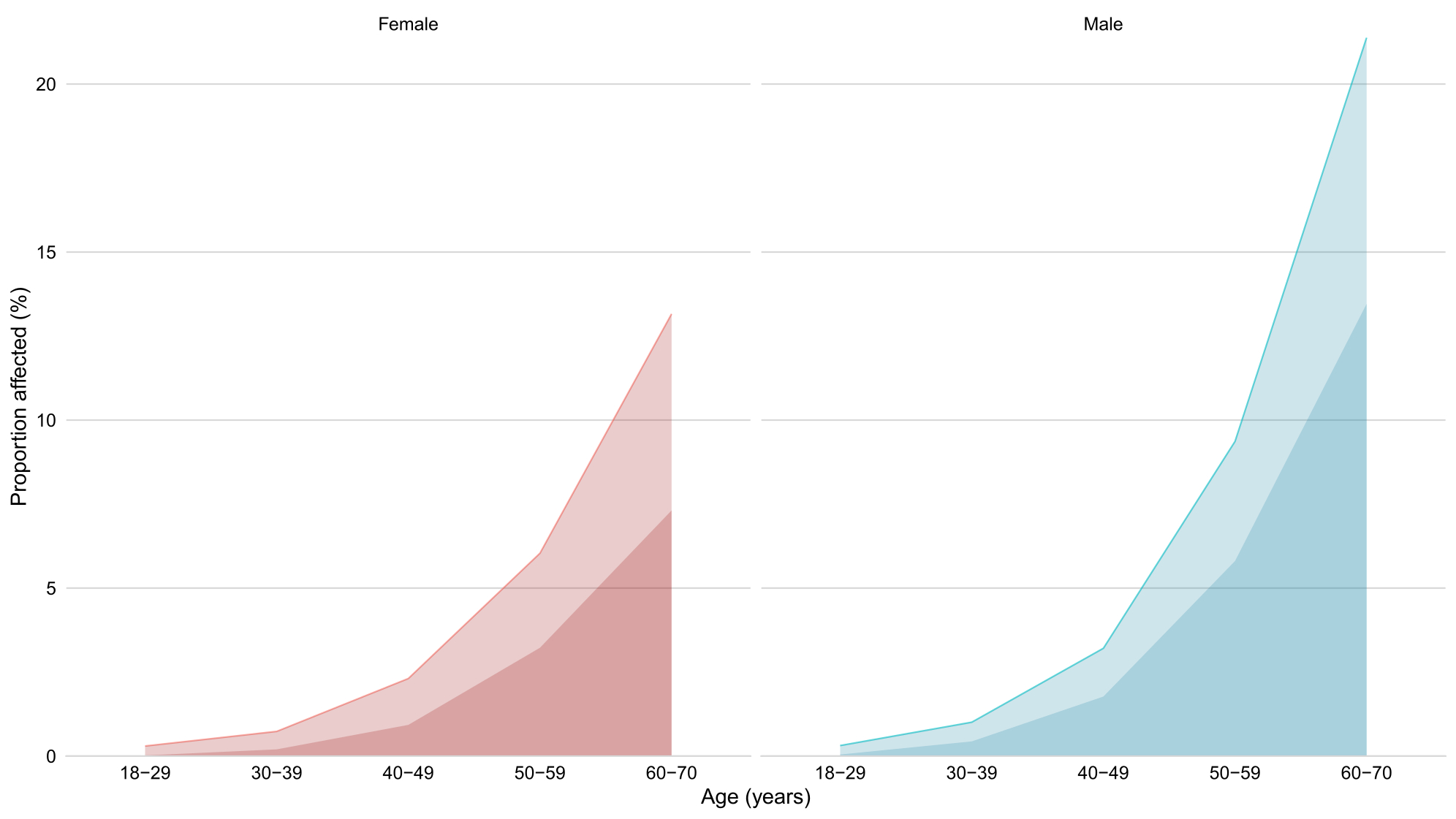
Abstract Body (Do not enter title and authors here): Background Atherosclerotic cardiovascular disease is a leading cause of death globally, accounting for approximately a third of all deaths. Atherosclerosis is a systemic and progressive condition and contributes to ischemic heart disease, stroke, and peripheral artery disease. REACT (Early Cure for Atherosclerosis) is a large international initiative designed to improve the understanding, detection, and early treatment of subclinical atherosclerosis. Here, we aim to estimate the burden of clinical atherosclerotic disease in individuals aged 18–70 years. Research Questions What is the frequency of clinical atherosclerosis throughout all vascular territories. Methods A representative sample of Danish individuals aged 18-70 years was selected in December 2024 based on socioeconomic data through national registries. We defined clinical atherosclerosis using diagnosis ICD10 diagnostic codes and procedure codes for ischemic heart disease, stroke, and peripheral artery disease. We stratified the prevalence of atherosclerosis by age and sex and vascular territories. Risks were compared using risk ratios (RR) with 95% confidence intervals (95% CI). Results We included data from 160,000 individuals with an equal sex distribution. The median age was 46 years (IQR 33-58 years). There were 9,825 individuals (6.1%) with a history of atherosclerotic disease. Figure 1 shows the prevalence of any clinical atherosclerosis and ischemic heart disease stratified by age and sex. The prevalence of any atherosclerotic disease increased from 0.3% in the youngest age-strata (18–29 years) to 17.3% in the oldest age-strata (60–70 years) and was significantly higher in all age strata in males, RR 1.6 (95% CI 1.5-1.6, p<0.001). Ischemic heart disease was the most frequent atherosclerotic disease (n=5,665, 3.5% of the entire sample), followed by stroke (n=3,567, 2.2%), and peripheral artery disease (n=1,581, 1.0%). The mean age was similar for individuals with a history of ischemic heart disease and peripheral artery disease (60.7 years vs 60.8, p=0.75) but was lower for stroke (59.1 years, p<0.001 for both comparisons). Conclusion Among adults aged 18–70 years, clinical atherosclerotic disease was present in 6% of the population, with parallel increases in the three major vascular territories with increasing age, quantitatively dominated by coronary artery disease, and with male preponderance.
Hasselbalch, Rasmus
(
The Heart Center
, Copenhagen , Denmark )
Kragh, Maja Valentin
(
The Heart Center
, Copenhagen , Denmark )
Perez-garcia, Carlos
(
CNIC
, Madrid , Spain )
Eldrup, Nikolaj
(
The Heart Center
, Copenhagen , Denmark )
Fuster, Jose
(
CNIC
, Madrid , Spain )
Boettcher, Morten
(
Gødstrup Hospital and institute of clinical medicine Aarhus University
, Herning , Denmark )
Kofoed, Klaus
(
The Heart Center
, Copenhagen , Denmark )
Ibanez, Borja
(
CNIC
, Madrid , Spain )
Bundgaard, Henning
(
The Heart Center
, Copenhagen , Denmark )
Author Disclosures:
Rasmus Hasselbalch:DO have relevant financial relationships
;
Other (please indicate in the box next to the company name):Work on project funded by Novo Nordisk Foundation:Active (exists now)
| Henning Bundgaard:DO NOT have relevant financial relationships
| Maja Valentin Kragh:DO NOT have relevant financial relationshipsNikolaj Eldrup:No Answer
| Jose Fuster:DO NOT have relevant financial relationships
| Morten Boettcher:No Answer
| Kasper Iversen:No Answer
| Klaus Kofoed:No Answer
| Borja Ibanez:DO NOT have relevant financial relationships