
Logo

American Heart Association

  20
  0


Final ID: MP1879

Identification and Functional Role of a Novel Macrophage Subset in Myocardial Infarction

Abstract Body (Do not enter title and authors here): Introduction
Myocardial infarction (MI) triggers complex inflammatory responses, during which myeloid cells, particularly macrophages, play pivotal roles in tissue healing and remodeling. Recent evidence suggests macrophages possess substantial heterogeneity and plasticity, contributing variably to cardiac repair processes. However, specific macrophage subsets and their functions during different phases of myocardial infarction remain inadequately defined.

Methods
In this study, we utilized two publicly available single-cell RNA sequencing datasets from murine (mmu) and human (hsa) myocardial infarction tissues to explore myeloid cell heterogeneity. We focused our analysis specifically on macrophage populations to identify distinct subsets with unique transcriptional profiles. Subsequently, dual-reporter mice models were employed to validate and visualize the identified macrophage subset in vivo during MI. Finally, targeted genetic knockout mice lacking this macrophage subset were generated and utilized to determine their functional role in cardiac recovery post-infarction.

Results
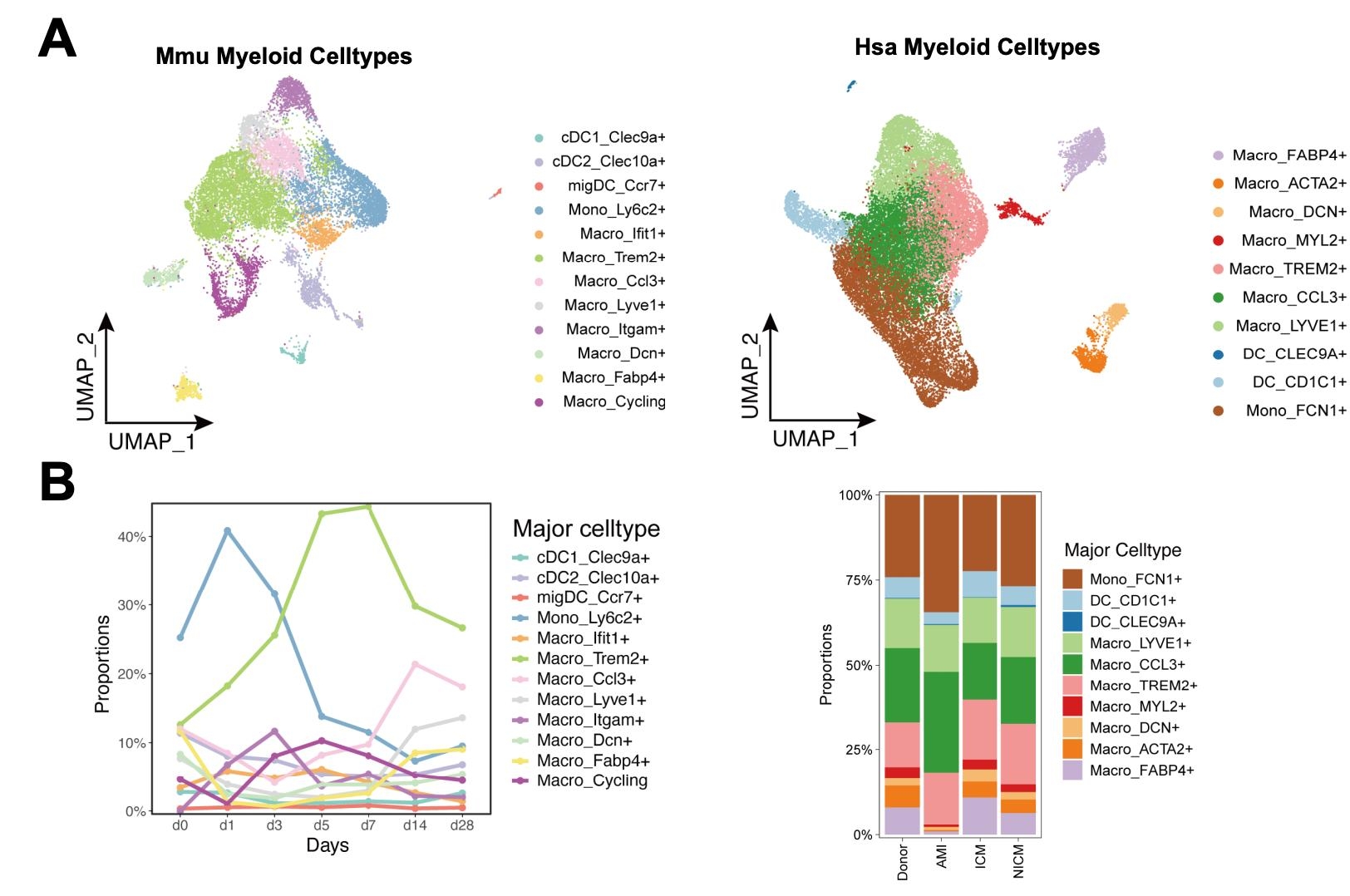
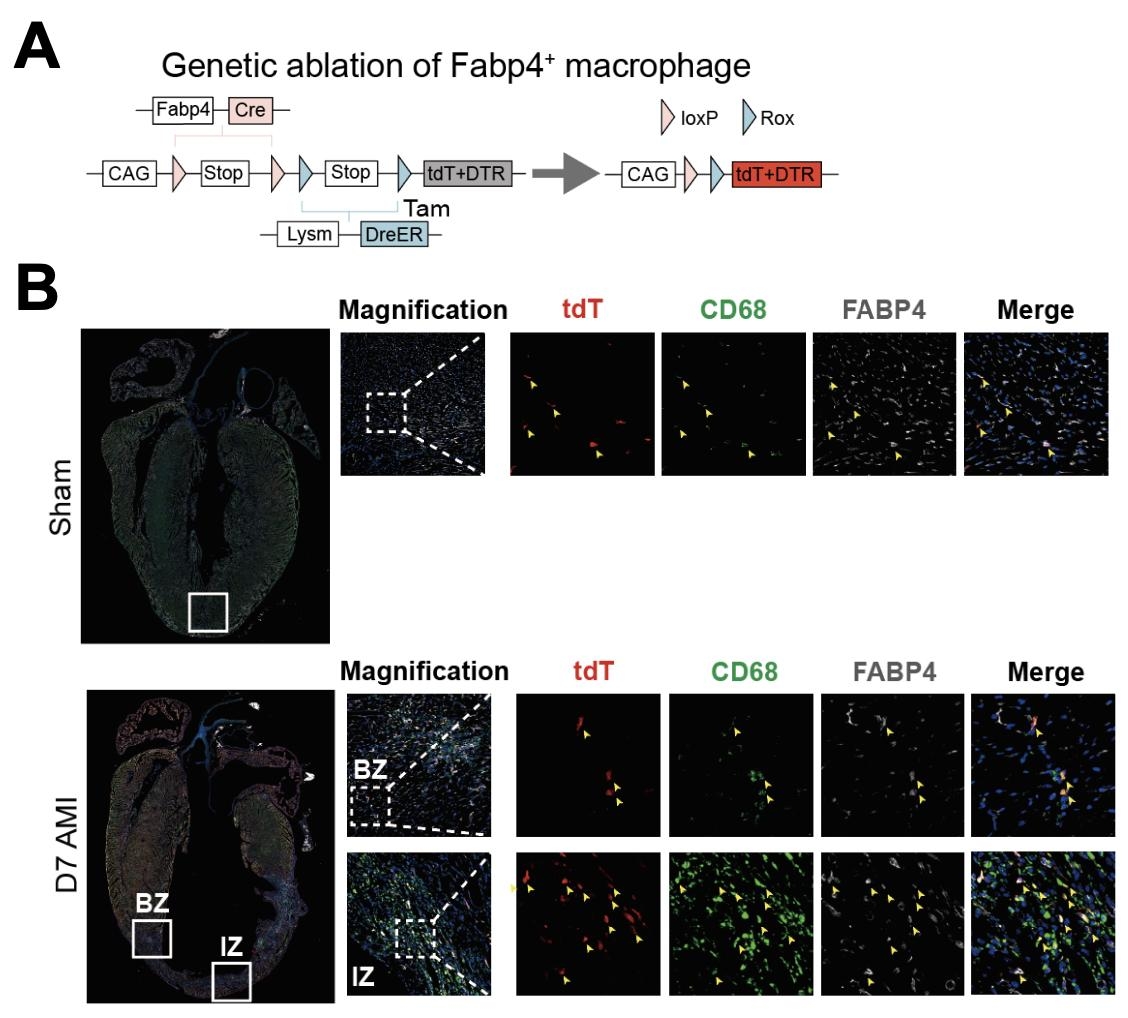
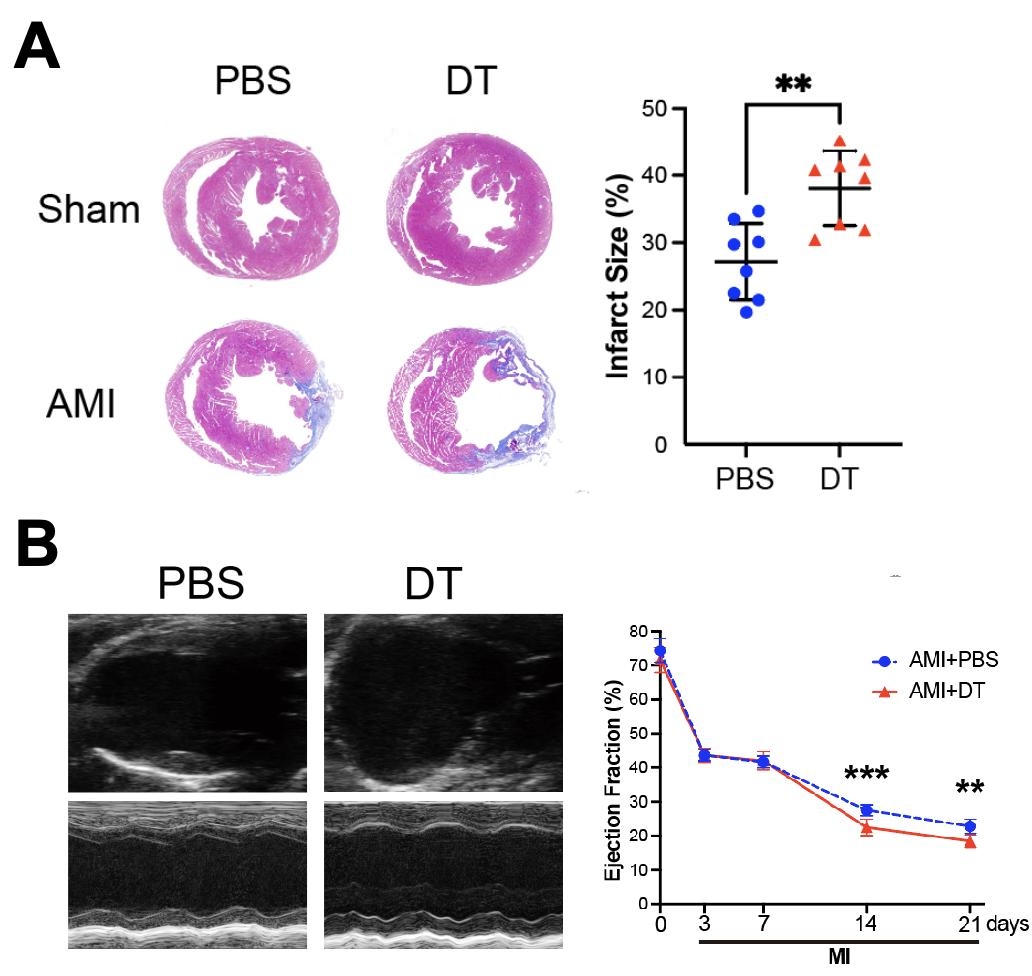
We identified a previously uncharacterized macrophage subset uniquely expressing endothelial cell markers in both human and mouse scRNA-seq datasets (Figure 1A). Importantly, this specific macrophage population progressively increased across distinct phases of myocardial infarction (control, inflammation, proliferation, and maturation) (Figure 1B), predominantly localizing within the myocardial border zone. Using dual-reporter mice (Figure 2A), we validated these findings in vivo, observing identical temporal and spatial distributions (Figure 2B). Notably, targeted knockout of this macrophage subset resulted in a significant enlargement of infarct areas (Figure 3A) and decline of cardiac function (Figure 3B), underscoring its protective role in myocardial healing.

Conclusion
Our study highlights a novel macrophage subset characterized by endothelial marker expression, crucially involved in the reparative response following myocardial infarction. The increased infarct zone following its knockout underscores the therapeutic potential of targeting this subset to enhance myocardial recovery and regeneration after cardiac injury.
  • Chen, Qixin  ( Zhongshan Hospital, Fudan University , Shanghai , Shanghai , China )
  • Jia, Daile  ( Zhongshan Hospital, Fudan University , Shanghai , Shanghai , China )
  • Zhang, Jinghong  ( Zhongshan Hospital, Fudan University , Shanghai , Shanghai , China )
  • Li, Qianhe  ( Zhongshan Hospital, Fudan University , Shanghai , Shanghai , China )
  • Huang, Sirui  ( Zhongshan Hospital, Fudan University , Shanghai , Shanghai , China )
  • Sun, Aijun  ( Zhongshan Hospital, Fudan University , Shanghai , Shanghai , China )
  • Ge, Junbo  ( Zhongshan Hospital, Fudan University , Shanghai , Shanghai , China )
  • Author Disclosures:
    Qixin Chen: DO NOT have relevant financial relationships | Daile Jia: No Answer | Jinghong Zhang: No Answer | Qianhe Li: No Answer | Sirui Huang: No Answer | Aijun Sun: No Answer | Junbo Ge: DO NOT have relevant financial relationships
Meeting Info:

Scientific Sessions 2025

2025

New Orleans, Louisiana

Session Info:

Autophagy, Lipid Metabolism, and Cellular Crosstalk in Cardiac Injury

Sunday, 11/09/2025 , 11:50AM - 01:00PM

Moderated Digital Poster Session

More abstracts on this topic:
A Bridge from Sweet to Sour: A Case of Recurrent Myocardial Stunning in Diabetic Ketoacidosis

Satish Vikyath, Pargaonkar Sumant, Slipczuk Leandro, Schenone Aldo, Maliha Maisha, Chi Kuan Yu, Sunil Kumar Sriram, Borkowski Pawel, Vyas Rhea, Rodriguez Szaszdi David Jose Javier, Kharawala Amrin, Seo Jiyoung

24-Dehydrocholesterol Reductase Plays a Significant Role in Inflammation During Peripheral Arterial Disease

Lassance-soares Roberta, Falero-diaz Gustavo, Montoya Christopher, Barboza Catarina

More abstracts from these authors:
You have to be authorized to contact abstract author. Please, Login
Not Available